
Loading...
Per 100g
Nutrition data source: USDA FoodData Central
Common measurement equivalents in grams
Raw pork butt typically lasts 3 to 5 days in the refrigerator when stored at 40°F (4°C) or below.
Yes, it freezes very well. Wrap it tightly in plastic wrap and then foil or a freezer bag to prevent freezer burn; it stays good for 6-12 months.
In colonial New England, less popular cuts of pork were packed into barrels called 'butts' for storage and shipment. The way the shoulder was cut in Boston became known as the 'Boston Butt'.
The best substitute is the Pork Picnic Shoulder. Other alternatives include pork loin (though it is much leaner and drier) or beef chuck roast for non-pork recipes.
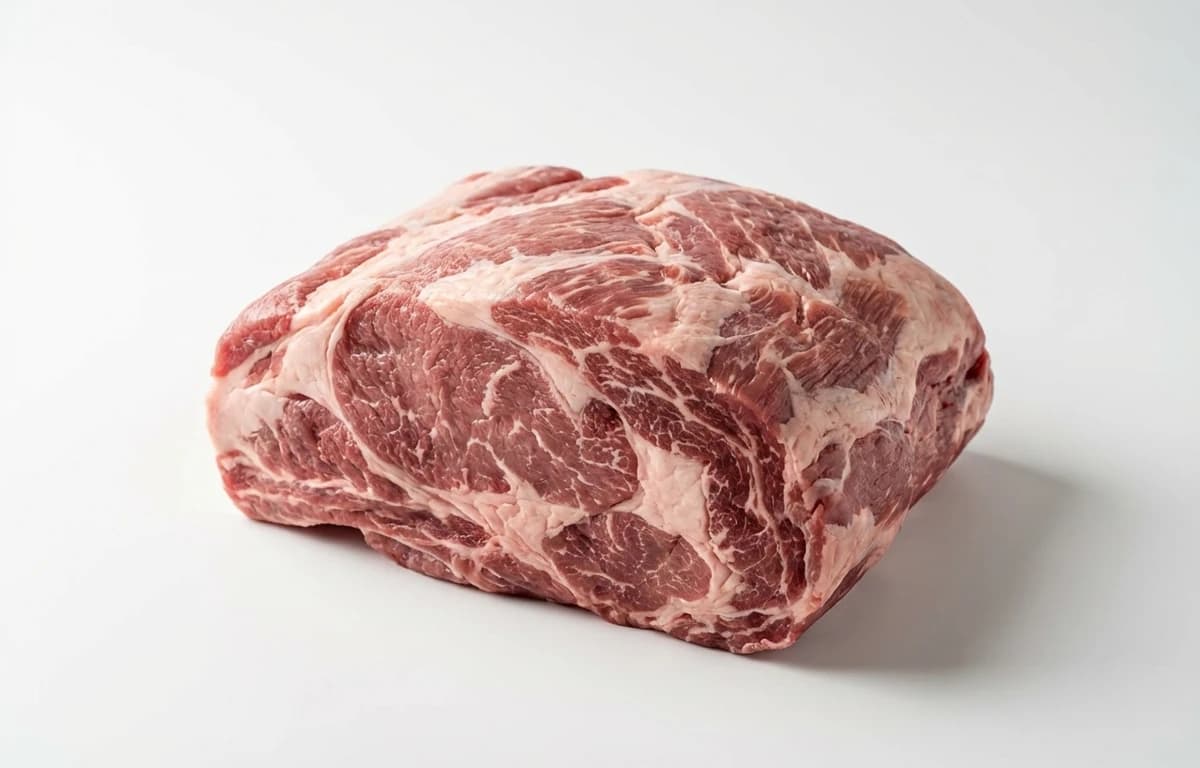
Look for meat that is pinkish-red in color with plenty of white marbling (intramuscular fat). Avoid meat that looks grey or has dark spots.
It is generally recommended to leave most of the fat cap on during long cooking processes as it renders down, basting the meat and adding flavor and moisture.
It is a nutrient-dense source of protein and vitamins, but it is a higher-fat cut. It should be consumed in moderation as part of a balanced diet.
It is the standard cut for pulled pork, carnitas, pork stews, and roasted pork shoulder.
Boston Butt Pork Shoulder is a versatile ingredient found in cuisines around the world. With 242 calories per 100g and 17.5 grams of protein, it's a nutritious addition to many dishes.
Explore more ingredients in the meat category with complete nutrition information.
View all meat →Discover 1 recipes featuring boston butt pork shoulder with step-by-step instructions.
Browse recipes →