
meat product
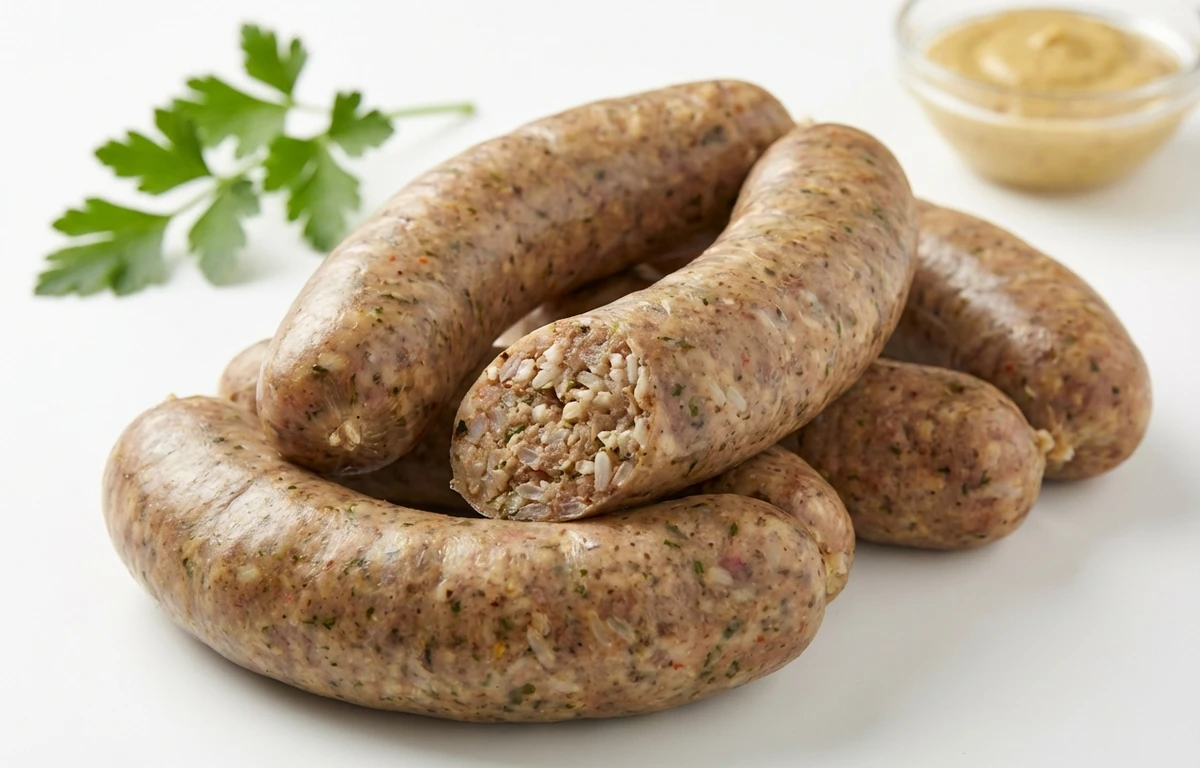
boudin sausage links.
VegetarianVeganGluten-freeDairy-freeNut-freePeanut-freeSoy-freeEgg-freeShellfish-freeHoney-freeAlcohol-free
ALSO KNOWN AS
cajun boudinpork and rice sausage
SERVING
CALORIES
210
PROTEIN
11.2g
CARBS
17.5g
FAT
12.4g
FIBER
0.40g
This ingredient is flagged as naturally gluten-free. Per 100 g, it provides 0.50 µg of vitamin K.
NUTRITION PROFILE · per 100 g
Everything in this ingredient.
MACRONUTRIENTS
Calories210kcal—
Protein11.2g22%
Carbohydrates17.5g6%
Fiber0.40g1%
Sugar0.50g1%
Total fat12.4g16%
Saturated fat4.5g23%
Trans fat0g—
Cholesterol45mg15%
Water56g—
MINERALS
Sodium680mg30%
Potassium180mg4%
Calcium15mg1%
Iron1.2mg7%
Magnesium12mg3%
Phosphorus110mg9%
Zinc1.8mg16%
Copper0.08mg9%
Manganese0.10mg4%
Selenium14.5µg26%
VITAMINS
Vitamin A15µg2%
Vitamin C1.2mg1%
Vitamin D0.40µg2%
Vitamin E0.20mg1%
Vitamin K0.50µg0%
Thiamin (B1)0.25mg21%
Riboflavin (B2)0.15mg12%
Niacin (B3)3.2mg20%
Pantothenic acid (B5)0.50mg10%
Vitamin B60.20mg12%
Folate (B9)8.0µg2%
Vitamin B120.80µg33%
%DV based on a 2,000 cal diet. Source: USDA FoodData Central. A dash in the %DV column means there’s no established Daily Value for that nutrient.
MEASUREMENT CONVERSIONS
How much is what.
1 oz28.4g
1 lb453.6g
1 piece140g
HEALTH BENEFITS
Why eat it.
- ✓Good source of complete protein
- ✓Provides essential B vitamins for energy metabolism
- ✓Contains iron for healthy blood oxygen levels
- ✓Energy-dense food suitable for high-activity needs
COOKING TIPS
In the kitchen.
- 1Steam the links for 10-15 minutes to heat through without bursting the casing.
- 2Grill on medium heat to achieve a crispy skin and smoky flavor.
- 3Remove the filling from the casing to use as a base for dirty rice or as a stuffing.
STORAGE
Keep it fresh.
- Store in the refrigerator in an airtight container for up to 4 days.
- Can be frozen for up to 3 months if tightly wrapped in freezer-safe packaging.
- Keep raw and cooked boudin separate to avoid cross-contamination.
FAQ
Frequently asked questions.
What exactly is boudin sausage?
Boudin is a Cajun specialty made from a blend of cooked pork, rice, onions, green peppers, and various seasonings stuffed into a casing.
How do you eat boudin links?
It is commonly eaten by squeezing the filling out of the casing directly into the mouth, or by eating it whole if the casing is natural and crispy.
Is boudin usually spicy?
Most boudin has a mild to moderate kick from cayenne pepper and black pepper, though 'hot' varieties are common in Louisiana.
Is boudin gluten-free?
Generally yes, as it uses rice as the binder. However, always check the label for any wheat-based additives or fillers.
What is the best way to reheat boudin?
Steaming is the preferred method as it keeps the rice moist. You can also microwave it wrapped in a damp paper towel or pan-fry it.
What is the difference between white and red boudin?
White boudin (the most common) contains pork and rice. Red boudin includes pork blood, giving it a darker color and distinct flavor.
How long does cooked boudin last in the fridge?
Cooked boudin should be consumed within 3 to 4 days when stored properly in the refrigerator.
Can you eat the casing of boudin?
Yes, if it is a natural pork casing. However, many people prefer to discard the casing if it is chewy or if the boudin was steamed.
What are common side dishes for boudin?
It is often served simply with saltine crackers, yellow mustard, or hot sauce.



















