
Other
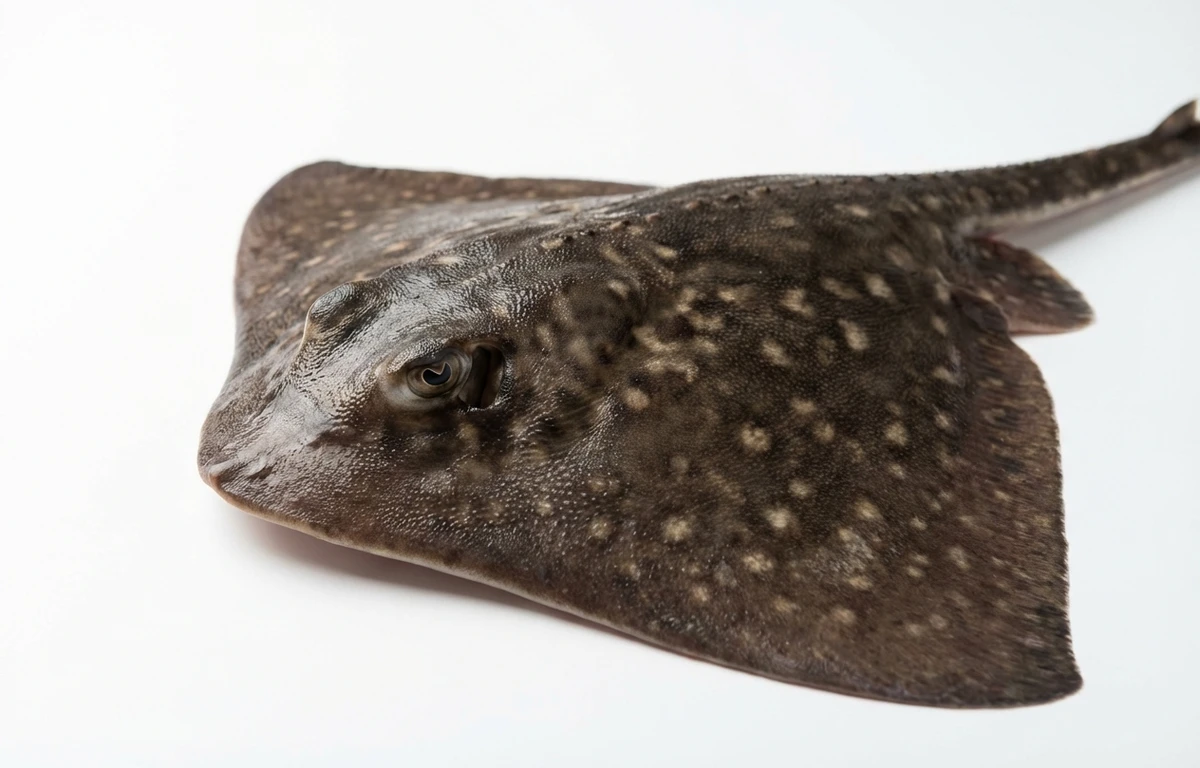
bow head spotted ray fish.
VegetarianVeganGluten-freeDairy-freeNut-freePeanut-freeSoy-freeEgg-freeShellfish-freeHoney-freeAlcohol-freeKosher
SERVING
CALORIES
83
PROTEIN
19g
CARBS
0g
FAT
0.70g
FIBER
0g
NUTRITION PROFILE · per 100 g
Everything in this ingredient.
MACRONUTRIENTS
Calories83.4kcal—
Protein19g38%
Carbohydrates0g0%
Fiber0g0%
Sugar0g0%
Total fat0.70g1%
Saturated fat0.19g1%
Trans fat0g—
Cholesterol13.9mg5%
Water80.3g—
MINERALS
Sodium105mg5%
Potassium353mg8%
Calcium9.6mg1%
Iron0.25mg1%
Magnesium19.3mg5%
Phosphorus196mg16%
Zinc0.49mg4%
Copper0.03mg3%
Manganese0.01mg0%
Selenium44.4µg81%
VITAMINS
Vitamin A2.0µg0%
Vitamin C0mg0%
Vitamin D0.83µg4%
Vitamin E0.33mg2%
Vitamin K1.5µg1%
Thiamin (B1)0.05mg4%
Riboflavin (B2)0.03mg2%
Niacin (B3)2.0mg12%
Pantothenic acid (B5)0.23mg5%
Vitamin B6120mg7059%
Biotin (B7)1244µg4147%
Folate (B9)0µg0%
%DV based on a 2,000 cal diet. Source: USDA FoodData Central. A dash in the %DV column means there’s no established Daily Value for that nutrient.
MEASUREMENT CONVERSIONS
How much is what.
1 cup150g
1 oz28.4g
1 lb453.6g
1 piece120g
HEALTH BENEFITS
Why eat it.
- ✓Excellent source of lean protein, which is essential for muscle building and repair.
- ✓Rich in B vitamins, particularly Vitamin B12, crucial for nerve function and the formation of red blood cells.
- ✓Provides important minerals like phosphorus and selenium, supporting bone health and antioxidant functions.
- ✓Low in fat and calories, making it a heart-healthy choice for weight management.
COOKING TIPS
In the kitchen.
- 1The 'wings' are the most commonly consumed part. The flesh has a unique, striated texture similar to scallops or crab meat.
- 2Ray is well-suited for poaching, pan-searing, or baking. A classic French preparation is 'Raie au Beurre Noir' (skate with brown butter and capers).
- 3The meat is delicate and cooks quickly. Cook until it is opaque and flakes easily away from the central cartilage. Avoid overcooking to prevent it from becoming tough.
- 4Due to the presence of urea in their flesh (common in cartilaginous fish), it's important to cook ray when it is very fresh to avoid any ammonia-like smell.
STORAGE
Keep it fresh.
- Store fresh ray fish in the coldest part of the refrigerator (below 40°F/4°C), preferably on a bed of ice, and use within 1-2 days.
- For freezing, wrap the fish tightly in plastic wrap and then in freezer paper or a vacuum-sealed bag. It can be stored at 0°F (-18°C) for up to 3 months.
FAQ
Frequently asked questions.
Is bow head spotted ray fish healthy?
Yes, it is a highly nutritious lean protein source. It is low in fat and calories while providing essential B vitamins, phosphorus, and selenium, which support heart health, bone strength, and nerve function.
How much protein is in bow head spotted ray fish?
A 100g serving contains approximately 19.03g of protein. This makes it an excellent choice for muscle repair and maintenance, offering a protein density similar to other lean white fish.
Is bow head spotted ray fish good for weight loss?
Absolutely. With only 83.41 calories and less than 1 gram of fat per 100g, it is a very low-calorie, high-protein food that helps promote satiety while maintaining a calorie deficit.
Is bow head spotted ray fish keto-friendly?
Yes, it is perfectly suited for a ketogenic diet as it contains 0g of carbohydrates. It provides high-quality protein without any sugars or starches.
Is bow head spotted ray fish gluten-free?
In its natural state, the fish is 100% gluten-free. However, always check preparation methods, as common recipes involving breading or flour-based sauces will introduce gluten.
How do you cook bow head spotted ray fish?
Ray is most commonly pan-seared, poached, or baked. A classic preparation involves sautéing the wings in brown butter with capers and lemon to complement its unique texture.
What does bow head spotted ray fish taste like?
It has a mild, slightly sweet flavor often compared to scallops or lobster. Unlike flaky white fish, its texture is firm and stringy because the edible portions are the muscles of the wings.
How do you store fresh ray fish?
Store fresh ray in the coldest part of your refrigerator and consume it within 1-2 days. For longer storage, wrap it tightly in moisture-proof packaging and freeze it for up to three months.
How can you tell if bow head spotted ray fish is fresh?
Fresh ray should have a clean, briny scent. If it emits a strong ammonia smell, it is no longer fresh; rays have a unique physiology that causes ammonia to develop quickly if not stored properly.
Does bow head spotted ray fish have bones?
No, rays are cartilaginous fish, meaning their skeleton is made of cartilage rather than bone. When eating the wings, the meat is easily pulled away from long, thin strands of cartilage.



















