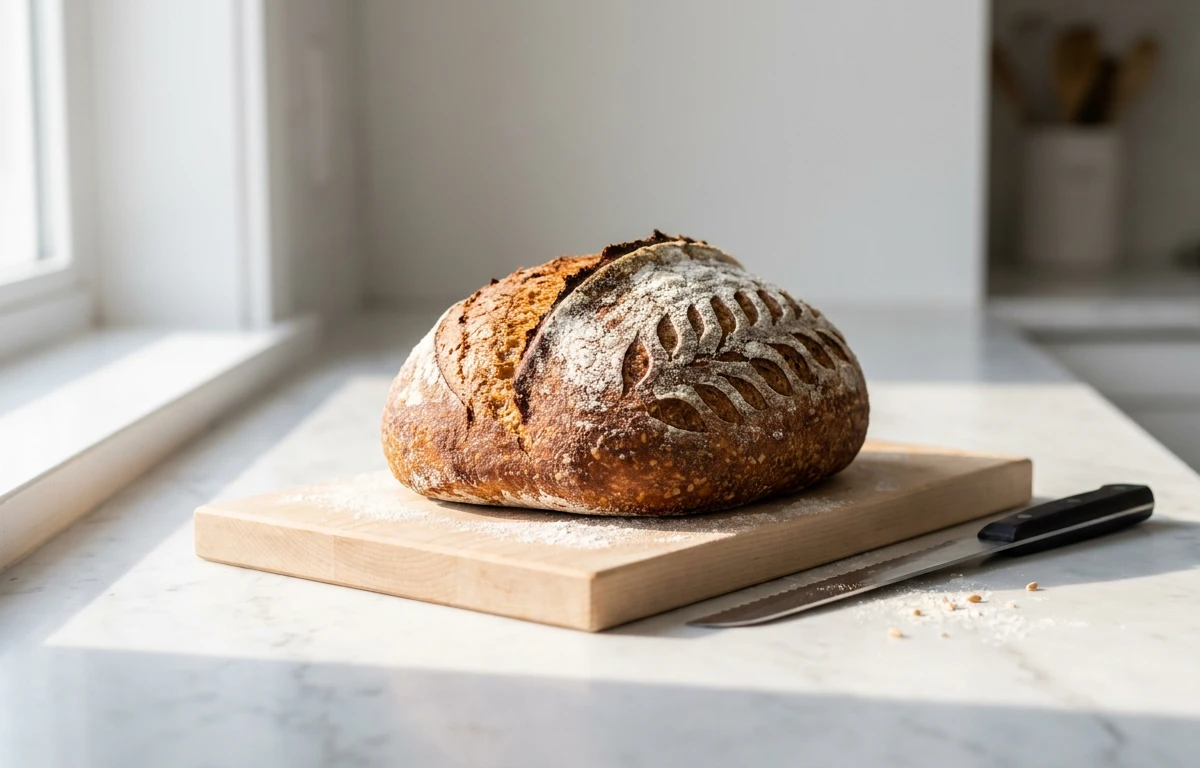
Grain10 recipes
bread flour.
VegetarianVeganGluten-freeDairy-freeNut-freePeanut-freeSoy-freeEgg-freeShellfish-freeHoney-freeAlcohol-free
ALSO KNOWN AS
high-gluten flourstrong flour
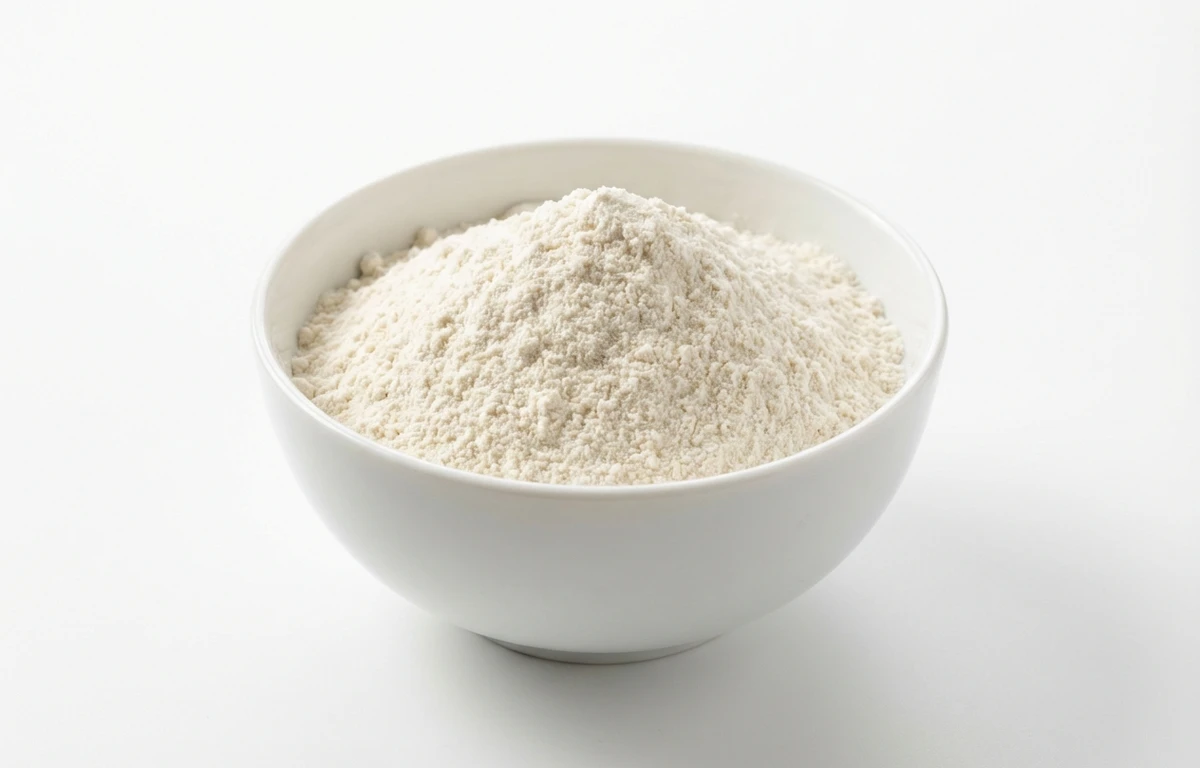
SERVING
CALORIES
361
PROTEIN
13.3g
CARBS
72.8g
FAT
1.2g
FIBER
3.4g
Per 100 g, it provides 1.0 µg of vitamin K.
NUTRITION PROFILE · per 100 g
Everything in this ingredient.
MACRONUTRIENTS
Calories361kcal—
Protein13.3g27%
Carbohydrates72.8g26%
Fiber3.4g12%
Sugar0.30g1%
Total fat1.2g2%
Saturated fat0.20g1%
Cholesterol0mg0%
Water11.9g—
MINERALS
Sodium2.0mg0%
Potassium120mg3%
Calcium15mg1%
Iron3.5mg19%
Magnesium34.3mg8%
Phosphorus133mg11%
Zinc1.2mg11%
Copper0.25mg28%
Manganese1.1mg47%
Selenium54.4µg99%
VITAMINS
Vitamin A0µg0%
Vitamin C0mg0%
Vitamin D0µg0%
Vitamin E0.55mg4%
Vitamin K1.0µg1%
Thiamin (B1)0.11mg9%
Riboflavin (B2)0.08mg6%
Niacin (B3)1.4mg9%
Pantothenic acid (B5)0.60mg12%
Vitamin B60.05mg3%
Folate (B9)45.2µg11%
Vitamin B120µg0%
%DV based on a 2,000 cal diet. Source: USDA FoodData Central. A dash in the %DV column means there’s no established Daily Value for that nutrient.
MEASUREMENT CONVERSIONS
How much is what.
1 cup120g
1 tablespoon7.5g
1 teaspoon2.5g
1 ml0.5g
1 liter500g
HEALTH BENEFITS
Why eat it.
- ✓Provides carbohydrates, the body's primary source of energy.
- ✓Enriched bread flour is fortified with B vitamins (like folic acid, niacin, thiamin) and iron, which support energy metabolism and red blood cell formation.
COOKING TIPS
In the kitchen.
- 1Ideal for yeast-leavened baked goods like artisan breads, pizza dough, and bagels, as its high protein content (12-14%) creates a strong gluten network for a chewy texture and good structure.
- 2When substituting for all-purpose flour in bread recipes, you may need to add slightly more liquid (about 1-2 teaspoons per cup of flour) as the higher protein absorbs more moisture.
- 3Allowing the dough to rest for 20-30 minutes after mixing the flour and water (a process called autolyse) helps the flour fully hydrate, making the dough easier to knead and more extensible.
- 4Do not use bread flour for delicate cakes, pastries, or biscuits, as the strong gluten can result in a tough, rubbery texture.
STORAGE
Keep it fresh.
- Store in a cool, dry, dark place in an airtight container to prevent spoilage and pest infestation. It can be kept at room temperature for 6-8 months.
- For long-term storage (up to 2 years), place the flour in a sealed, freezer-safe container or bag and store it in the freezer to prevent its natural oils from becoming rancid.
FAQ
Frequently asked questions.
Is bread flour healthy?
Bread flour is a dense source of energy-providing carbohydrates and is typically fortified with iron and B vitamins like folic acid and niacin. While it provides essential minerals like manganese for metabolism, it is a refined grain and should be consumed in moderation as part of a balanced diet.
How much protein is in bread flour?
Bread flour contains approximately 13.3 grams of protein per 100 grams. This higher protein content compared to all-purpose flour is essential for creating the strong gluten network required for chewy, well-structured yeast breads.
Is bread flour gluten-free?
No, bread flour is not gluten-free. It is specifically milled from hard wheat to have a high protein content, which results in high gluten development when mixed with water and kneaded.
What is the difference between bread flour and all-purpose flour?
The main difference is the protein content; bread flour has about 12-14% protein, while all-purpose flour has 10-12%. This extra protein in bread flour produces more gluten, leading to a loftier rise and a chewier texture in baked goods.
Can I substitute all-purpose flour for bread flour?
Yes, you can substitute all-purpose flour for bread flour in a 1:1 ratio, but the texture will change. Your bread will likely be softer, less chewy, and may not rise as high due to the lower protein and gluten levels.
Is bread flour vegan and keto-friendly?
Bread flour is vegan as it is a plant-based product made from wheat. However, it is not keto-friendly because it is very high in carbohydrates, containing about 72.8g of carbs per 100g.
Why is bread flour better for making pizza dough?
Bread flour is preferred for pizza dough because its high protein content creates a strong, elastic dough. This allows the crust to be stretched very thin without breaking and results in a crispy, chewy texture after baking.
How do I know if my bread flour has gone bad?
Fresh bread flour should have a neutral, slightly sweet smell. If it develops a sour or musty odor, shows signs of yellowing, or contains small insects (weevils), it has spoiled and should be discarded.
RECIPES
Cook with bread flour.
10 recipes · sorted by what’s quick