
Nut Seed
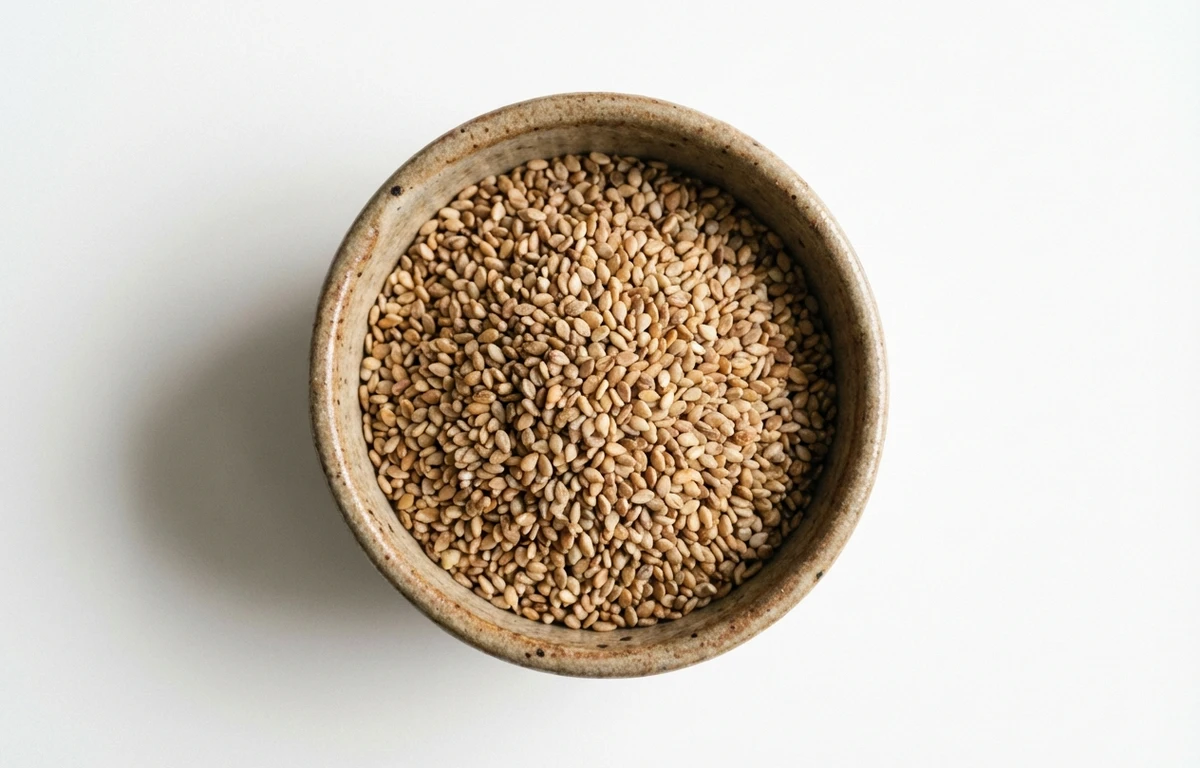
brown gingelly seeds.
VegetarianVeganGluten-freeDairy-freeNut-freePeanut-freeSoy-freeEgg-freeShellfish-freeHoney-freeAlcohol-free
SERVING
CALORIES
516
PROTEIN
21.6g
CARBS
9.8g
FAT
43.2g
FIBER
17.2g
NUTRITION PROFILE · per 100 g
Everything in this ingredient.
MACRONUTRIENTS
Calories516kcal—
Protein21.6g43%
Carbohydrates9.8g4%
Fiber17.2g61%
Sugar1.4g3%
Total fat43.2g55%
Saturated fat6.3g31%
Trans fat0g—
Cholesterol0mg0%
Water3.6g—
MINERALS
Sodium11.9mg1%
Potassium491mg10%
Calcium1174mg90%
Iron14.9mg83%
Magnesium328mg78%
Phosphorus613mg49%
Zinc7.8mg71%
Copper1.7mg187%
Manganese1.8mg77%
Selenium52.6µg96%
VITAMINS
Vitamin A5.4µg1%
Vitamin C0mg0%
Vitamin D76.5µg383%
Vitamin E0.23mg2%
Vitamin K113µg94%
Thiamin (B1)0.27mg23%
Riboflavin (B2)0.08mg6%
Niacin (B3)3.0mg19%
Pantothenic acid (B5)0.49mg10%
Vitamin B60.49mg29%
Biotin (B7)3.5µg12%
Folate (B9)92.6µg23%
%DV based on a 2,000 cal diet. Source: USDA FoodData Central. A dash in the %DV column means there’s no established Daily Value for that nutrient.
MEASUREMENT CONVERSIONS
How much is what.
1 cup140g
1 tablespoon8.8g
1 teaspoon2.9g
1 oz28.4g
1 lb453.6g
1 ml0.6g
1 liter592g
HEALTH BENEFITS
Why eat it.
- ✓Excellent source of calcium and magnesium, particularly because the hull is intact, which supports bone health.
- ✓Rich in dietary fiber, aiding digestion, promoting satiety, and supporting gut health.
- ✓Contains healthy monounsaturated and polyunsaturated fats, which can help reduce bad cholesterol levels and support heart health.
- ✓Provides antioxidants, such as lignans (sesamin), which may help fight oxidative stress in the body.
COOKING TIPS
In the kitchen.
- 1Toast the seeds in a dry skillet over medium-low heat for 2-3 minutes, stirring frequently, to enhance their nutty flavor and aroma before use.
- 2Grind the seeds to make homemade tahini or use them to create crusts for fish or chicken.
- 3Sprinkle whole over salads, stir-fries, soups, and baked goods for added texture and nutritional value.
- 4Incorporate into traditional sweets like sesame brittle (chikki) or energy balls.
STORAGE
Keep it fresh.
- Store in an airtight container in a cool, dark, and dry place like a pantry for up to 6 months.
- To extend shelf life and prevent the natural oils from becoming rancid, store them in the refrigerator for up to a year or in the freezer for longer.
FAQ
Frequently asked questions.
Are brown gingelly seeds healthy?
Yes, brown gingelly seeds are highly nutritious. They are an excellent source of calcium and magnesium for bone health, rich in dietary fiber for digestion, and contain healthy fats and antioxidants like sesamin that support heart health.
How much protein and calcium are in brown gingelly seeds?
Brown gingelly seeds provide approximately 21.61g of protein per 100g. Because they are unhulled, they contain significantly higher levels of calcium and magnesium compared to white sesame seeds, making them superior for mineral intake.
Are brown gingelly seeds keto-friendly?
Yes, they are very keto-friendly. With 43.22g of fat and only about 9.76g of carbohydrates per 100g, they provide the high-fat, low-carb profile necessary for a ketogenic diet.
What is the difference between brown and white gingelly seeds?
Brown gingelly seeds are unhulled, meaning the outer skin is intact, which gives them a crunchier texture and more fiber and minerals. White seeds have been hulled, resulting in a milder flavor and slightly lower nutritional density.
How do you cook or prepare brown gingelly seeds?
They can be eaten raw, but toasting them in a dry pan over medium heat for 2-3 minutes enhances their nutty flavor and aroma. They are commonly used as a garnish for salads, stir-fries, or ground into a nutrient-dense paste.
Are brown gingelly seeds gluten-free and vegan?
Yes, brown gingelly seeds are naturally gluten-free and 100% vegan. They are an excellent plant-based protein and mineral source for those with dietary restrictions.
What do brown gingelly seeds taste like?
They have a rich, earthy, and intensely nutty flavor that is slightly more bitter than white sesame seeds. Their intact hull provides a distinct snap and a more robust savory profile.
How should I store brown gingelly seeds?
Store them in an airtight container in a cool, dry, and dark place to protect their healthy fats from oxidation. For a longer shelf life of up to a year, they can be kept in the refrigerator or freezer.
Can brown gingelly seeds help with weight loss?
In moderation, yes. Their high fiber content (9.76g carbs, mostly fiber) and protein levels promote satiety, helping you feel full longer and reducing the likelihood of overeating.
Do I need to grind brown gingelly seeds to get the nutrients?
While you can eat them whole, lightly crushing or grinding the seeds can help your body better access the nutrients inside the tough outer hull. This is especially true for absorbing the healthy fats and minerals.



















