Vegetable
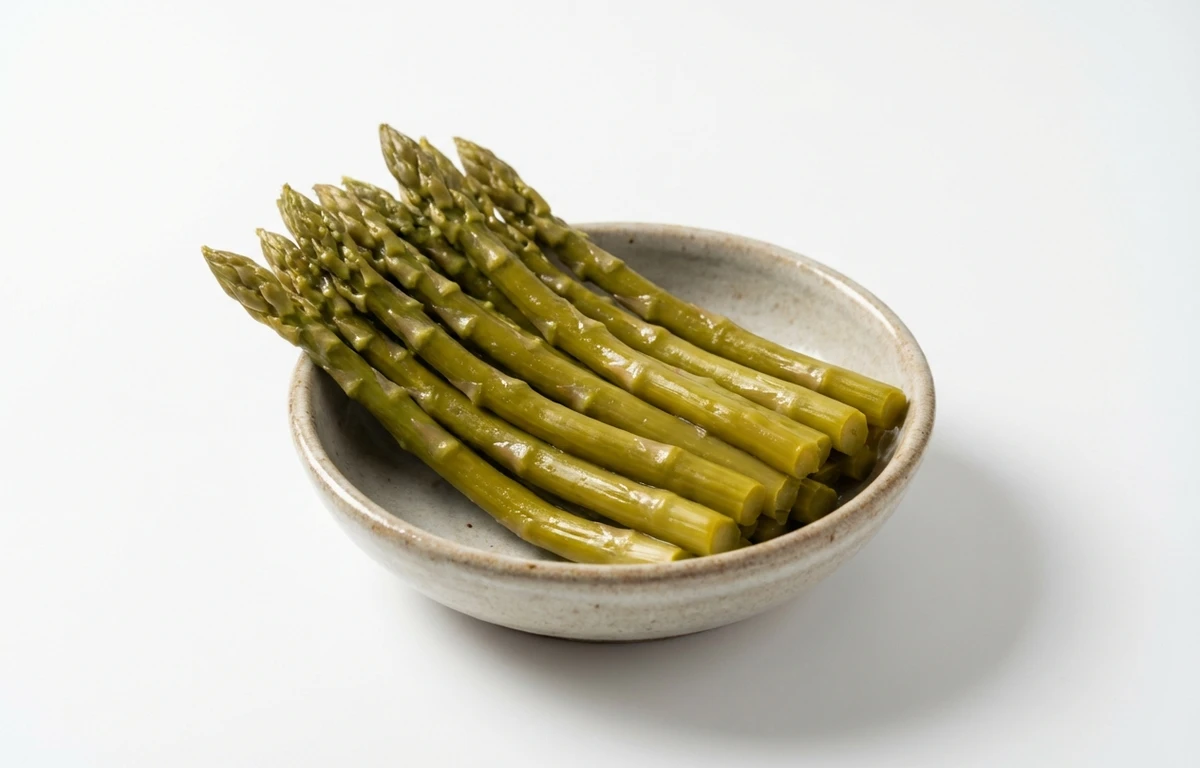
canned asparagus.
VegetarianVeganGluten-freeDairy-freeNut-freePeanut-freeSoy-freeEgg-freeShellfish-freeHoney-freeAlcohol-free
SERVING
CALORIES
24
PROTEIN
2.1g
CARBS
2.5g
FAT
0.65g
FIBER
1.6g
NUTRITION PROFILE · per 100 g
Everything in this ingredient.
MACRONUTRIENTS
Calories24.3kcal—
Protein2.1g4%
Carbohydrates2.5g1%
Fiber1.6g6%
Sugar1.1g2%
Total fat0.65g1%
Saturated fat0.15g1%
Trans fat0g—
Cholesterol0mg0%
Water94g—
MINERALS
Sodium287mg12%
Potassium172mg4%
Calcium16mg1%
Iron1.8mg10%
Magnesium10mg2%
Phosphorus43mg3%
Zinc0.40mg4%
Copper0.10mg11%
Manganese0.17mg7%
Selenium1.7µg3%
VITAMINS
Vitamin A41µg5%
Vitamin C18.4mg20%
Vitamin D0µg0%
Vitamin E1.2mg8%
Vitamin K41.3µg34%
Thiamin (B1)0.06mg5%
Riboflavin (B2)0.10mg8%
Niacin (B3)0.95mg6%
Pantothenic acid (B5)0.14mg3%
Vitamin B60.11mg6%
Folate (B9)96µg24%
Vitamin B120µg0%
%DV based on a 2,000 cal diet. Source: USDA FoodData Central. A dash in the %DV column means there’s no established Daily Value for that nutrient.
MEASUREMENT CONVERSIONS
How much is what.
1 cup242g
1 tablespoon15.1g
1 teaspoon5g
1 ml1g
1 liter1008.3g
HEALTH BENEFITS
Why eat it.
- ✓Good source of fiber, which aids in digestion and promotes a healthy gut.
- ✓Contains vitamin K, important for bone health and blood clotting, though levels are lower than fresh.
- ✓Provides folate (vitamin B9), which is crucial for cell growth and DNA formation.
- ✓A convenient source of antioxidants like flavonoids and polyphenols that help combat oxidative stress.
COOKING TIPS
In the kitchen.
- 1Rinse canned asparagus gently under cold water before use to reduce the sodium content from the canning liquid.
- 2Since it is already fully cooked, add it near the end of cooking in hot dishes like casseroles, soups, or stir-fries to prevent it from becoming mushy.
- 3The soft texture is ideal for pureeing into creamy soups, dips, or sauces.
- 4Serve chilled or at room temperature in salads, or as a simple side dish drizzled with vinaigrette or melted butter.
STORAGE
Keep it fresh.
- Store unopened cans in a cool, dark, and dry place, such as a pantry, for up to 2-5 years.
- After opening, transfer unused asparagus and its liquid to an airtight glass or plastic container and refrigerate for 3-4 days.
FAQ
Frequently asked questions.
Is canned asparagus healthy?
Yes, canned asparagus is a healthy vegetable choice that provides essential nutrients like fiber, folate, and vitamin K. While the canning process may reduce some heat-sensitive vitamins compared to fresh, it remains a low-calorie source of antioxidants that support digestion and heart health.
How many calories and carbs are in canned asparagus?
Canned asparagus is very low in calories and carbohydrates, containing approximately 19 calories and 2.46g of carbs per 100g. It also provides about 2.14g of protein and less than 1g of fat, making it a nutrient-dense addition to most meals.
Is canned asparagus keto-friendly?
Yes, canned asparagus is excellent for a keto or low-carb diet. With only about 2.5g of total carbohydrates per 100g, it can be consumed in generous portions without significantly impacting daily carb limits.
Is canned asparagus vegan and gluten-free?
Plain canned asparagus is naturally both vegan and gluten-free as it consists only of the vegetable, water, and usually salt. However, always check the label if the asparagus is canned in a sauce or seasoned, as those additives may contain animal products or gluten.
How do you cook with canned asparagus?
Because canned asparagus is already cooked and quite soft, it is best used in recipes where a tender texture is desired, such as soups, quiches, or casseroles. If you want to serve it as a side, gently heat it in a pan with butter or olive oil for 1-2 minutes to avoid making it mushy.
What does canned asparagus taste like?
Canned asparagus has a much softer, more delicate texture than the crunchy snap of fresh asparagus. Its flavor is slightly more muted and salty due to the canning brine, making it a convenient pantry staple for blending into sauces or dips.
Do I need to cook canned asparagus before eating it?
No, canned asparagus is fully cooked during the canning process and is safe to eat straight from the can. Many people enjoy it cold in salads or as a quick snack, though rinsing it first can help remove excess sodium.
How do you store canned asparagus once it is opened?
Once opened, you should transfer the asparagus and its liquid into a glass or plastic airtight container. Store it in the refrigerator and consume it within 3 to 4 days for the best quality and safety.
Is canned asparagus high in sodium?
Canned vegetables often have added salt for preservation, which can make them higher in sodium than fresh versions. To reduce the salt content, look for 'no salt added' varieties or thoroughly rinse the spears under cold running water before use.
Is canned asparagus good for weight loss?
Yes, it is an ideal food for weight loss because it is very low in calories but high in fiber. The fiber content helps promote satiety, making you feel full longer, while the high water content helps with hydration.