
Seafood
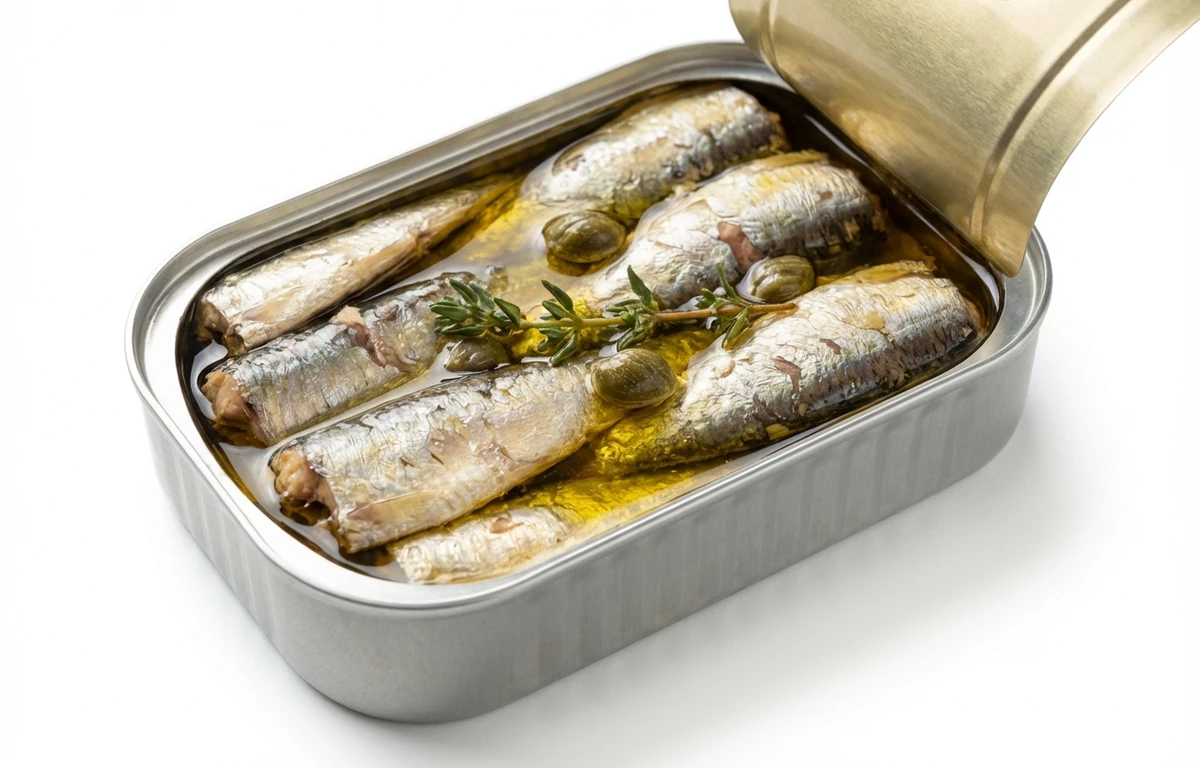
canned atlantic sardine.
VegetarianVeganGluten-freeDairy-freeNut-freePeanut-freeSoy-freeEgg-freeShellfish-freeHoney-freeAlcohol-free
ALSO KNOWN AS
sardine
SERVING
CALORIES
208
PROTEIN
24.6g
CARBS
0g
FAT
11.4g
FIBER
0g
NUTRITION PROFILE · per 100 g
Everything in this ingredient.
MACRONUTRIENTS
Calories208kcal—
Protein24.6g49%
Carbohydrates0g0%
Fiber0g0%
Sugar0g0%
Total fat11.4g15%
Saturated fat1.5g8%
Cholesterol142mg47%
Water59.6g—
MINERALS
Sodium307mg13%
Potassium397mg8%
Calcium382mg29%
Iron2.9mg16%
Magnesium39mg9%
Phosphorus490mg39%
Zinc1.3mg12%
Copper0.19mg21%
Manganese0.11mg5%
Selenium52.7µg96%
VITAMINS
Vitamin A32µg4%
Vitamin C0mg0%
Vitamin D4.8µg24%
Vitamin E2.0mg14%
Vitamin K2.6µg2%
Thiamin (B1)0.08mg7%
Riboflavin (B2)0.23mg18%
Niacin (B3)5.3mg33%
Pantothenic acid (B5)0.64mg13%
Vitamin B60.17mg10%
Folate (B9)10µg3%
Vitamin B128.9µg373%
%DV based on a 2,000 cal diet. Source: USDA FoodData Central. A dash in the %DV column means there’s no established Daily Value for that nutrient.
MEASUREMENT CONVERSIONS
How much is what.
1 cup149g
1 tablespoon9.3g
1 teaspoon3.1g
1 ml0.6g
1 liter620.8g
HEALTH BENEFITS
Why eat it.
- ✓Excellent source of Omega-3 fatty acids (EPA and DHA), which support cardiovascular and brain health.
- ✓Rich in calcium and Vitamin D, especially when the edible bones are consumed, promoting strong bones and teeth.
- ✓Provides high-quality complete protein, essential for muscle maintenance, repair, and overall body function.
- ✓Low on the food chain, resulting in lower levels of mercury and other contaminants compared to larger fish.
COOKING TIPS
In the kitchen.
- 1Mash sardines with lemon juice, herbs, and a bit of mayonnaise or yogurt for a simple and nutritious spread for toast or crackers.
- 2Toss whole or flaked sardines into pasta dishes with garlic, olive oil, and chili flakes for a quick and flavorful meal.
- 3Add to salads for a protein and omega-3 boost; they pair well with bitter greens, capers, and a vinaigrette dressing.
- 4Lightly grill or pan-fry sardines for a few minutes to warm them through and enhance their flavor before serving.
STORAGE
Keep it fresh.
- Store unopened cans in a cool, dark, and dry place like a pantry for up to 5 years; check the expiration date.
- Once opened, transfer any leftover sardines and their packing liquid to an airtight container and refrigerate for up to 2 days.
FAQ
Frequently asked questions.
Are canned Atlantic sardines healthy?
Yes, canned Atlantic sardines are highly nutritious. They are an excellent source of Omega-3 fatty acids for heart health, provide 24.62g of protein per 100g, and are rich in Vitamin D and calcium, especially when the edible bones are consumed.
How much protein and fat are in canned sardines?
A 100g serving of canned Atlantic sardines contains approximately 24.62g of high-quality protein and 11.45g of fat. They contain 0g of carbohydrates, making them a nutrient-dense, low-carb food source.
Are canned sardines keto-friendly?
Yes, canned sardines are ideal for a ketogenic diet. With 0g of carbohydrates and a high healthy fat content (11.45g per 100g), they provide the necessary fats and proteins while keeping you in ketosis.
Can you eat the bones and skin in canned sardines?
Yes, the skin and bones in canned sardines are completely edible and safe. The canning process softens the bones to a point where they are easily mashed, providing a significant boost of dietary calcium.
Are canned sardines high in mercury?
No, sardines are considered one of the safest seafood options regarding mercury. Because they are low on the food chain and have short lifespans, they accumulate significantly less mercury and contaminants than larger fish like tuna.
How do you eat or prepare canned sardines?
Canned sardines are precooked and ready to eat straight from the tin. Common ways to enjoy them include mashing them onto whole-grain toast, adding them to salads, or tossing them into pasta dishes with olive oil and lemon.
What do canned Atlantic sardines taste like?
They have a rich, savory, and salty flavor with a firm, oily texture. While they have a distinct 'fishy' profile, they are generally milder than anchovies and readily absorb the flavors of the oil, water, or sauce they are packed in.
How long do canned sardines last after opening?
Once the tin is opened, sardines should be transferred to a sealed container and refrigerated. They are best consumed within 2 to 3 days to maintain freshness and flavor.
Are canned sardines gluten-free?
Plain sardines packed in water or olive oil are naturally gluten-free. However, you should check the label for sardines packed in tomato sauce, mustard, or other flavorings, as those additives may contain gluten-based thickeners.
Should I drain the oil or water from the can?
Draining is a matter of personal preference. Draining the liquid can reduce the overall calorie and sodium content, but the packing oil often contains some of the Omega-3 fats that have leached out of the fish during storage.



















