
Fruit
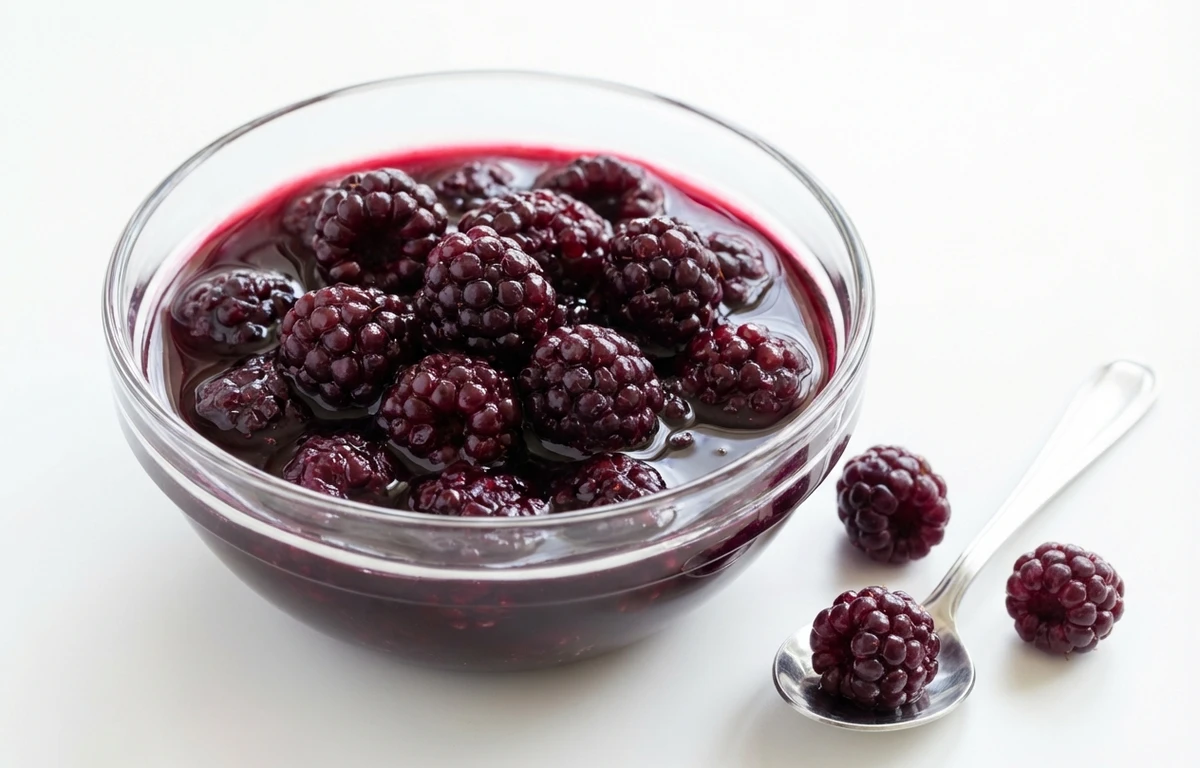
canned boysenberries.
VegetarianVeganGluten-freeDairy-freeNut-freePeanut-freeSoy-freeEgg-freeShellfish-freeHoney-freeAlcohol-freeHalalKosher
SERVING
CALORIES
91
PROTEIN
1.1g
CARBS
23.1g
FAT
0.30g
FIBER
3.5g
NUTRITION PROFILE · per 100 g
Everything in this ingredient.
MACRONUTRIENTS
Calories91kcal—
Protein1.1g2%
Carbohydrates23.1g8%
Fiber3.5g13%
Sugar18.5g37%
Total fat0.30g0%
Saturated fat0g0%
Trans fat0g—
Cholesterol0mg0%
Water74.5g—
MINERALS
Sodium6.0mg0%
Potassium135mg3%
Calcium21mg2%
Iron0.80mg4%
Magnesium15mg4%
Phosphorus20mg2%
Zinc0.20mg2%
Copper0.08mg9%
Manganese0.40mg17%
Selenium0.40µg1%
VITAMINS
Vitamin A4.0µg0%
Vitamin C3.2mg4%
Vitamin D0µg0%
Vitamin E0.90mg6%
Vitamin K6.2µg5%
Thiamin (B1)0.02mg2%
Riboflavin (B2)0.03mg2%
Niacin (B3)0.40mg3%
Pantothenic acid (B5)0.20mg4%
Vitamin B60.05mg3%
Folate (B9)18µg5%
Vitamin B120µg0%
%DV based on a 2,000 cal diet. Source: USDA FoodData Central. A dash in the %DV column means there’s no established Daily Value for that nutrient.
MEASUREMENT CONVERSIONS
How much is what.
1 cup256g
1 tablespoon16g
1 teaspoon5.3g
1 ml1.1g
1 liter1066.7g
HEALTH BENEFITS
Why eat it.
- ✓Rich in antioxidants, particularly anthocyanins, which help protect cells from damage.
- ✓Good source of dietary fiber, which aids in digestion and promotes a feeling of fullness.
- ✓Provides essential nutrients like Vitamin C for immune function and manganese for bone health and metabolism.
- ✓May support brain health and memory due to its high flavonoid content.
COOKING TIPS
In the kitchen.
- 1Drain the syrup for use in baked goods like pies, muffins, or cobblers to control moisture and sweetness.
- 2Puree the berries with their liquid to create a vibrant coulis for desserts like cheesecake, panna cotta, or ice cream.
- 3Use the liquid from the can as a flavorful base for sauces, glazes for pork or duck, or as a sweetener in smoothies and cocktails.
- 4Gently fold whole berries into yogurt, oatmeal, or cottage cheese for a simple and nutritious addition.
STORAGE
Keep it fresh.
- Store unopened cans in a cool, dark, and dry place, such as a pantry, for up to 2-3 years.
- Once opened, transfer the boysenberries and their liquid to a non-metallic, airtight container and refrigerate for up to 5-7 days.
FAQ
Frequently asked questions.
Are canned boysenberries healthy?
Yes, canned boysenberries are healthy as they are rich in antioxidants like anthocyanins, which protect cells from damage. They also provide essential Vitamin C for immune support and manganese for bone health, though it is best to choose varieties packed in water or natural juice to avoid excess added sugar.
How many calories and carbs are in canned boysenberries?
A 100g serving of canned boysenberries contains approximately 91 calories and 23.1g of carbohydrates. They are very low in fat (0.3g) and provide about 1.1g of protein per serving.
Are canned boysenberries good for weight loss?
They can be part of a weight loss diet because they are a good source of dietary fiber, which promotes a feeling of fullness. However, because they contain 23.1g of carbs per 100g—often from syrup—portion control is important to manage total calorie intake.
Are canned boysenberries vegan and gluten-free?
Yes, canned boysenberries are naturally vegan and gluten-free. They typically contain only fruit, water, juice, or sugar, making them safe for those with celiac disease or those following a plant-based diet.
Are canned boysenberries keto-friendly?
No, canned boysenberries are generally not keto-friendly. With 23.1g of carbohydrates per 100g, they are too high in sugar and carbs to fit within the strict daily limits of a standard ketogenic diet.
What do canned boysenberries taste like?
Boysenberries have a complex flavor that is a cross between a blackberry and a raspberry. They are sweet and tangy with a slight floral note, though the canning process often makes them softer and sweeter than fresh berries.
How can I use canned boysenberries in cooking?
They are perfect for baking into pies, cobblers, and muffins. You can also use them as a topping for pancakes, waffles, or yogurt, or simmer the berries and their juice to create a fruit sauce for desserts.
Do I need to drain canned boysenberries before using them?
It depends on the recipe. For pies and tarts, you should drain them to prevent the crust from becoming soggy, whereas for smoothies or as a topping for oatmeal, the liquid can be used for extra flavor and sweetness.
How long do canned boysenberries last once opened?
Once opened, you should transfer the berries and their liquid to a sealed glass or plastic container. They will remain fresh in the refrigerator for approximately 5 to 7 days.
How can I tell if canned boysenberries have gone bad?
Discard the berries if you notice a fermented or sour smell, visible mold, or if the fruit appears unusually discolored. Additionally, never consume berries from a can that was bulging, leaking, or heavily rusted, as this indicates spoilage.



















