
Vegetable
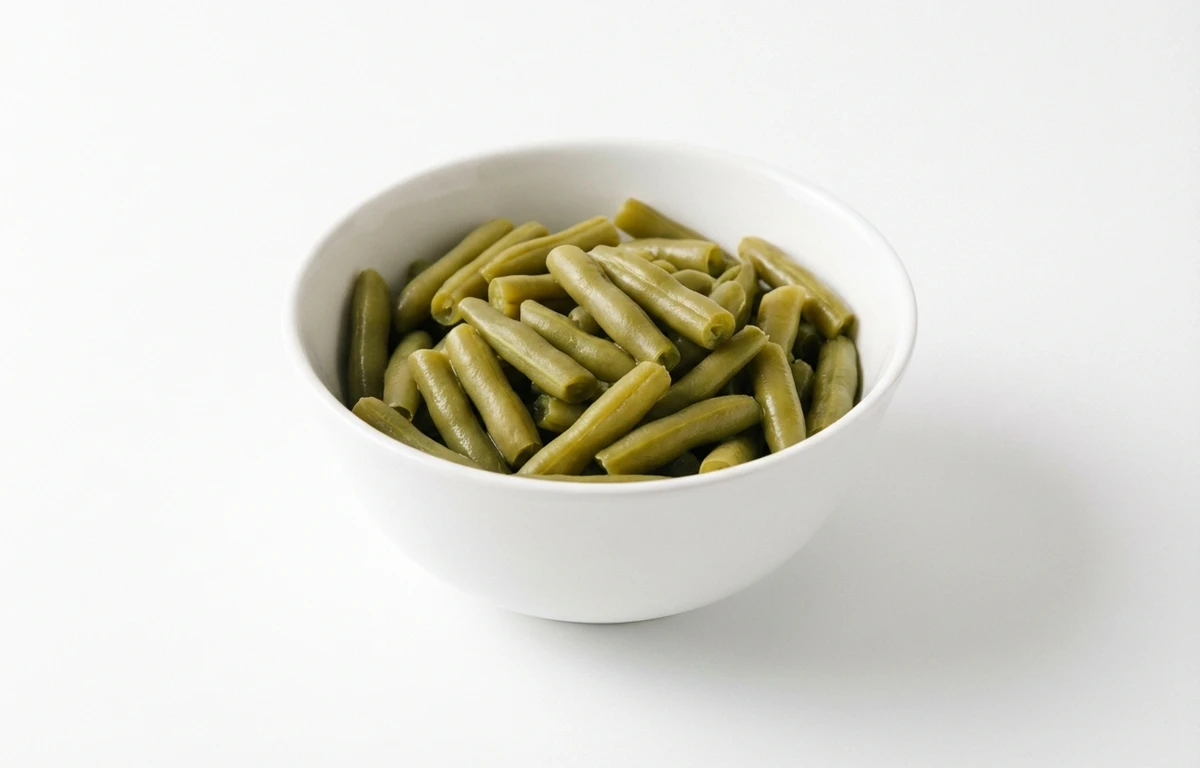
canned cut green beans.
VegetarianVeganGluten-freeDairy-freeNut-freePeanut-freeSoy-freeEgg-freeShellfish-freeHoney-freeAlcohol-free
ALSO KNOWN AS
tinned cut green beanscanned green beanscanned string beanscanned snap beanstinned green beans
SERVING
CALORIES
20
PROTEIN
1.1g
CARBS
4.3g
FAT
0.10g
FIBER
1.9g
NUTRITION PROFILE · per 100 g
Everything in this ingredient.
MACRONUTRIENTS
Calories20kcal—
Protein1.1g2%
Carbohydrates4.3g2%
Fiber1.9g7%
Sugar1.2g2%
Total fat0.10g0%
Saturated fat0.02g0%
Trans fat0g—
Cholesterol0mg0%
Water93.5g—
MINERALS
Sodium236mg10%
Potassium132mg3%
Calcium35mg3%
Iron0.80mg4%
Magnesium14mg3%
Phosphorus21mg2%
Zinc0.20mg2%
Copper0.05mg6%
Manganese0.15mg7%
Selenium0.50µg1%
VITAMINS
Vitamin A34µg4%
Vitamin C3.5mg4%
Vitamin D0µg0%
Vitamin E0.40mg3%
Vitamin K38.5µg32%
Thiamin (B1)0.03mg3%
Riboflavin (B2)0.05mg4%
Niacin (B3)0.40mg3%
Pantothenic acid (B5)0.08mg2%
Vitamin B60.05mg3%
Folate (B9)28µg7%
Vitamin B120µg0%
%DV based on a 2,000 cal diet. Source: USDA FoodData Central. A dash in the %DV column means there’s no established Daily Value for that nutrient.
MEASUREMENT CONVERSIONS
How much is what.
1 cup135g
1 tablespoon9g
1 teaspoon3g
1 oz28.4g
1 lb453.6g
1 ml0.6g
1 liter600g
HEALTH BENEFITS
Why eat it.
- ✓Low in calories and fat for weight management
- ✓Good source of Vitamin K for bone health
- ✓Provides dietary fiber for digestive regularity
- ✓Contains antioxidants like lutein and zeaxanthin
- ✓Convenient source of plant-based nutrients
COOKING TIPS
In the kitchen.
- 1Drain and rinse under cold water to reduce sodium content by up to 40%
- 2Avoid overcooking; they are already pre-cooked and only need heating
- 3Sauté with garlic, lemon juice, or herbs to enhance the flavor
STORAGE
Keep it fresh.
- Store unopened cans in a cool, dry place for up to 2-5 years
- Once opened, transfer to a glass or plastic airtight container
- Refrigerate opened beans and consume within 3 to 4 days
FAQ
Frequently asked questions.
How long do canned green beans last after opening?
Once opened, canned green beans should be transferred to a sealed container and refrigerated. They will stay fresh for 3 to 4 days.
Are canned green beans as healthy as fresh ones?
While they lose some heat-sensitive vitamins like Vitamin C during canning, they retain most minerals and fiber. Rinsing them helps reduce added sodium.
Can I freeze canned green beans?
Yes, you can freeze them after draining. Place them in a freezer-safe bag; they will last for about 2 months, though the texture may become softer.
What is the best way to reduce the salt in canned green beans?
The most effective way is to drain the liquid from the can and rinse the beans thoroughly under cold running water for about 30 seconds.
Do canned green beans need to be cooked?
No, they are fully cooked during the canning process. You can eat them straight from the can or heat them briefly to your preferred temperature.
What can I substitute for canned green beans?
Frozen green beans are the best substitute as they have a similar texture when cooked. Fresh green beans can also be used but require longer cooking times.
How can I tell if canned green beans have gone bad?
Discard the can if it is bulging, leaking, or badly dented. If the beans have an off-smell, unusual color, or if mold is present after opening, do not consume.
Are canned green beans keto-friendly?
Yes, they are relatively low in net carbs (about 2.4g per 100g) and can be included in a ketogenic diet in moderation.
What are common dishes using canned green beans?
They are most famously used in Green Bean Casserole, but are also great in soups, stews, and cold bean salads.
Why are canned green beans softer than fresh ones?
The high-heat sterilization process used in canning breaks down the cell walls of the vegetable, resulting in a softer, more tender texture.



















