
Vegetable2 recipes
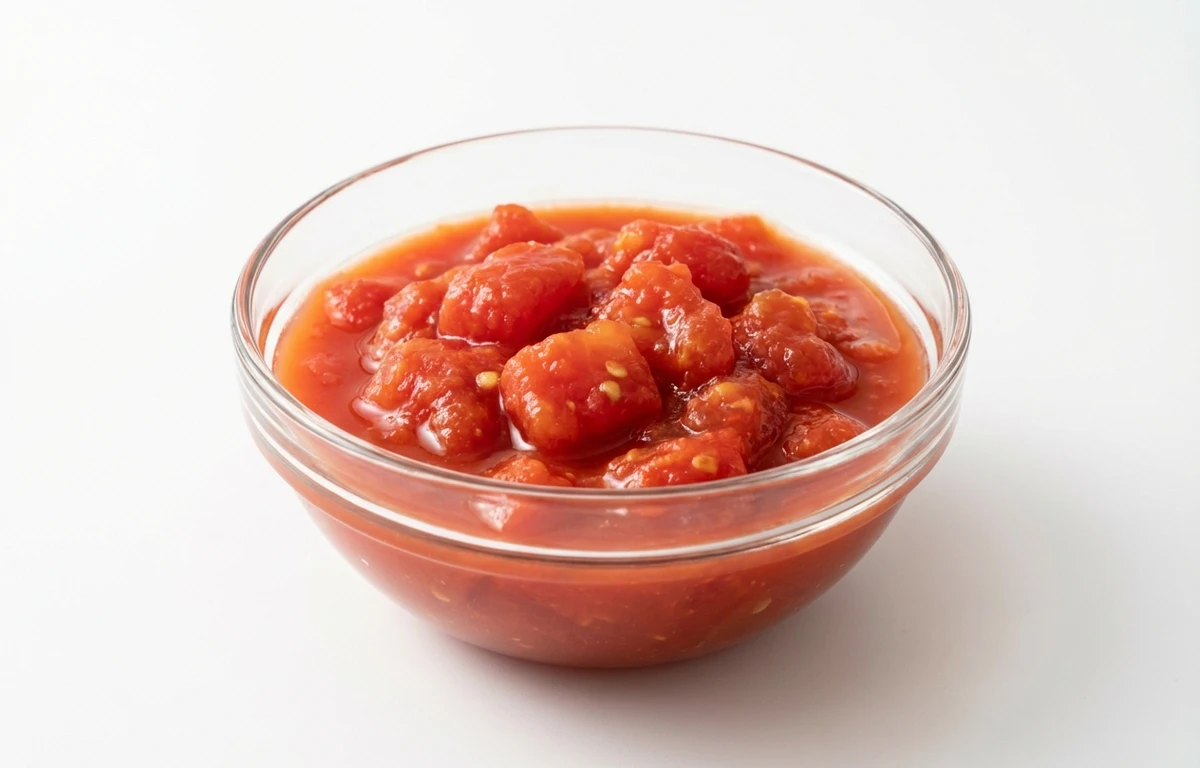
canned diced tomatoes.
VegetarianVeganGluten-freeDairy-freeNut-freePeanut-freeSoy-freeEgg-freeShellfish-freeHoney-freeAlcohol-free
ALSO KNOWN AS
tinned diced tomatoescanned chopped tomatoestinned chopped tomatoesdiced tomatoes in juice
SERVING
CALORIES
32
PROTEIN
1.2g
CARBS
7.3g
FAT
0.20g
FIBER
1.9g
NUTRITION PROFILE · per 100 g
Everything in this ingredient.
MACRONUTRIENTS
Calories32kcal—
Protein1.2g2%
Carbohydrates7.3g3%
Fiber1.9g7%
Sugar4.4g9%
Total fat0.20g0%
Saturated fat0.03g0%
Trans fat0g—
Cholesterol0mg0%
Water90.5g—
MINERALS
Sodium186mg8%
Potassium223mg5%
Calcium11mg1%
Iron0.70mg4%
Magnesium11mg3%
Phosphorus24mg2%
Zinc0.17mg2%
Copper0.07mg8%
Manganese0.11mg5%
Selenium0.40µg1%
VITAMINS
Vitamin A15µg2%
Vitamin C12.2mg14%
Vitamin D0µg0%
Vitamin E0.54mg4%
Vitamin K2.8µg2%
Thiamin (B1)0.05mg4%
Riboflavin (B2)0.03mg2%
Niacin (B3)0.60mg4%
Pantothenic acid (B5)0.10mg2%
Vitamin B60.08mg5%
Folate (B9)13µg3%
Vitamin B120µg0%
%DV based on a 2,000 cal diet. Source: USDA FoodData Central. A dash in the %DV column means there’s no established Daily Value for that nutrient.
MEASUREMENT CONVERSIONS
How much is what.
1 cup240g
1 tablespoon15g
1 teaspoon5g
1 oz28.4g
1 lb453.6g
1 liter1020g
HEALTH BENEFITS
Why eat it.
- ✓High in lycopene, a powerful antioxidant that supports heart health.
- ✓Good source of Vitamin C for immune system support.
- ✓Low in calories and fat, making it weight-loss friendly.
- ✓Contains potassium which helps manage blood pressure levels.
- ✓Canning process actually increases the bioavailability of certain antioxidants.
COOKING TIPS
In the kitchen.
- 1Do not drain the liquid unless the recipe specifically asks for it; the juice is full of flavor.
- 2Add a pinch of sugar if the tomatoes taste too acidic in your sauce.
- 3For a deeper flavor, sauté the diced tomatoes with onions and garlic before adding liquids.
STORAGE
Keep it fresh.
- Store unopened cans in a cool, dry place for up to 2 years.
- Once opened, transfer to a glass or plastic airtight container and refrigerate.
- Use refrigerated leftovers within 3 to 5 days.
FAQ
Frequently asked questions.
How long do canned diced tomatoes last after opening?
Once opened, they should be transferred to a non-metallic airtight container and refrigerated. They will stay fresh for 3 to 5 days.
Can I freeze leftover canned diced tomatoes?
Yes, you can freeze them in a freezer-safe container or bag for up to 3 months. The texture may soften, but they are perfect for soups and sauces.
Are canned tomatoes as healthy as fresh ones?
In some ways, yes. The heating process used in canning increases the availability of lycopene, though some Vitamin C may be lost compared to raw tomatoes.
What can I use as a substitute for canned diced tomatoes?
You can use fresh chopped tomatoes (add a little water or broth), canned whole peeled tomatoes that you crush yourself, or tomato purée if texture isn't important.
Should I wash or rinse canned diced tomatoes?
No, you should not rinse them. The juice they are packed in is flavorful and contains many of the nutrients.
Why do some canned tomatoes contain calcium chloride?
Calcium chloride is often added as a firming agent to help the diced pieces maintain their shape during the canning process and cooking.
How do I choose the best quality canned tomatoes?
Look for cans without dents or swelling. Check the label for 'no salt added' if you are monitoring sodium, and look for BPA-free lining if that is a concern.
Can I use diced tomatoes instead of tomato sauce?
Yes, but you may need to simmer them longer to break them down or pulse them in a blender to achieve a smoother consistency.
RECIPES
Cook with canned diced tomatoes.
2 recipes · sorted by what’s quick



















