
Loading...
Per 100g
Nutrition data source: USDA FoodData Central
Common measurement equivalents in grams
Unopened cans last about 12 months in a cool pantry. Once opened, it must be refrigerated and used within 3-5 days.
Yes, you can freeze it for up to 3 months, but the texture may become grainy. It is best used for cooking or baking after thawing.
Evaporated milk is unsweetened milk with 60% of water removed. Condensed milk is also concentrated but has a very high amount of added sugar.
You can use half-and-half, heavy cream, or simmer regular milk until it reduces by half. For a dairy-free option, use coconut milk.
Avoid cans that are heavily dented, rusted, or bulging, as these are signs of potential spoilage or contamination.
It is nutrient-dense and high in calcium, but it is also higher in calories and fat than regular milk due to the concentration.
Yes, it is a popular creamer substitute because it provides a creamy richness without the high fat content of heavy cream.
Mix one part evaporated milk with one part water to achieve the consistency and nutritional profile of standard whole milk.
Yes, plain evaporated milk is naturally gluten-free, though always check labels for any added flavorings or thickeners.
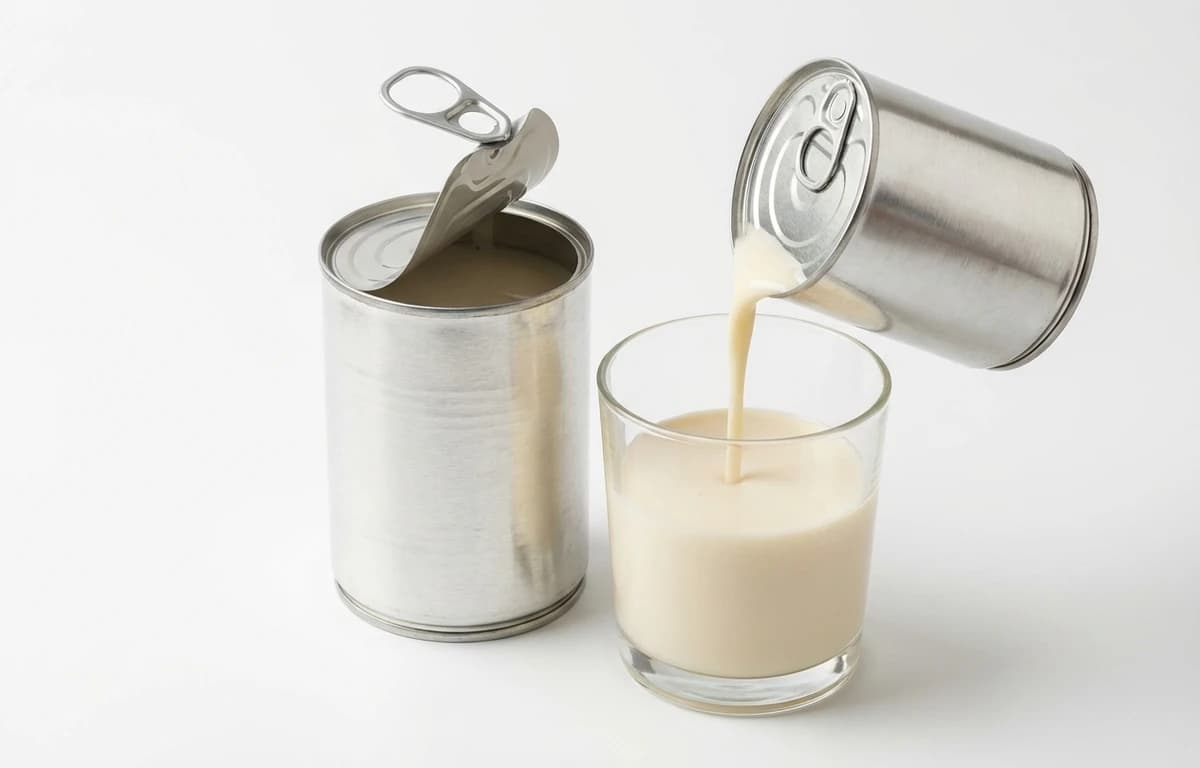
canned evaporated milk is a versatile ingredient found in cuisines around the world. With 134 calories per 100g and 6.8 grams of protein, it's a nutritious addition to many dishes.
Explore more ingredients in the dairy category with complete nutrition information.
View all dairy →Discover 0 recipes featuring canned evaporated milk with step-by-step instructions.
Browse recipes →