
Loading...
Also known as: fire roasted tomatoes, canned roasted tomatoes
Per 100g
Nutrition data source: USDA FoodData Central
Common measurement equivalents in grams
Once opened, they should be transferred to an airtight container and refrigerated, where they will last for 3 to 5 days.
Yes, you can freeze them in a freezer-safe container or heavy-duty freezer bag for up to 6 months.
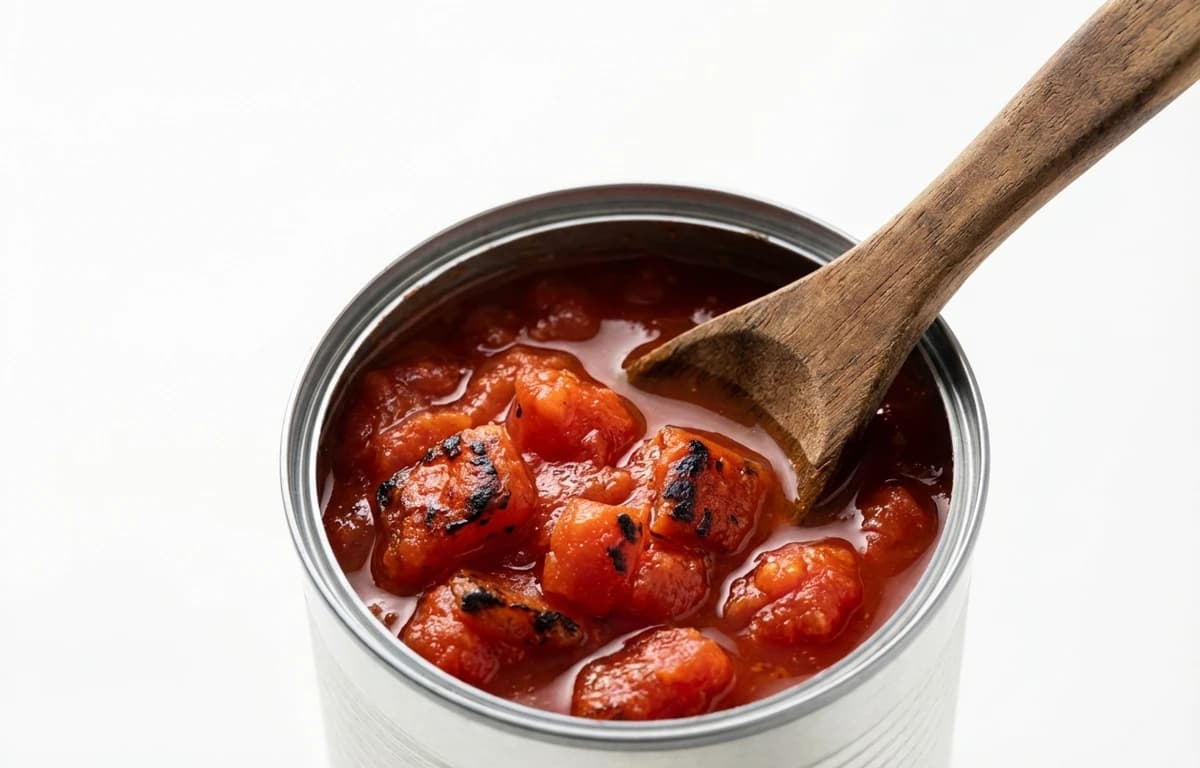
Fire roasted tomatoes are charred over a flame before canning, giving them a smoky flavor and visible black charred bits.
You can use regular canned tomatoes and add a pinch of smoked paprika or a drop of liquid smoke to mimic the flavor.
Yes, they are highly nutritious. The canning process actually increases the bioavailability of the antioxidant lycopene.
No, they are already cooked during the canning process and can be eaten straight from the can, though they are usually heated in dishes.
Standard fire roasted tomatoes are not spicy; they are smoky. However, some brands sell versions with added green chiles.
They are excellent in tortilla soup, chili, pasta sauces, shakshuka, and homemade salsas.
Canned Fire Roasted Tomatoes is a versatile ingredient found in cuisines around the world. With 28 calories per 100g and 1.1 grams of protein, it's a nutritious addition to many dishes.
Explore more ingredients in the vegetable category with complete nutrition information.
View all vegetable →Discover 1 recipes featuring canned fire roasted tomatoes with step-by-step instructions.
Browse recipes →