
Vegetable
canned hearts of palm.
VegetarianVeganGluten-freeDairy-freeNut-freePeanut-freeSoy-freeEgg-freeShellfish-freeHoney-freeAlcohol-free
ALSO KNOWN AS
hearts of palm
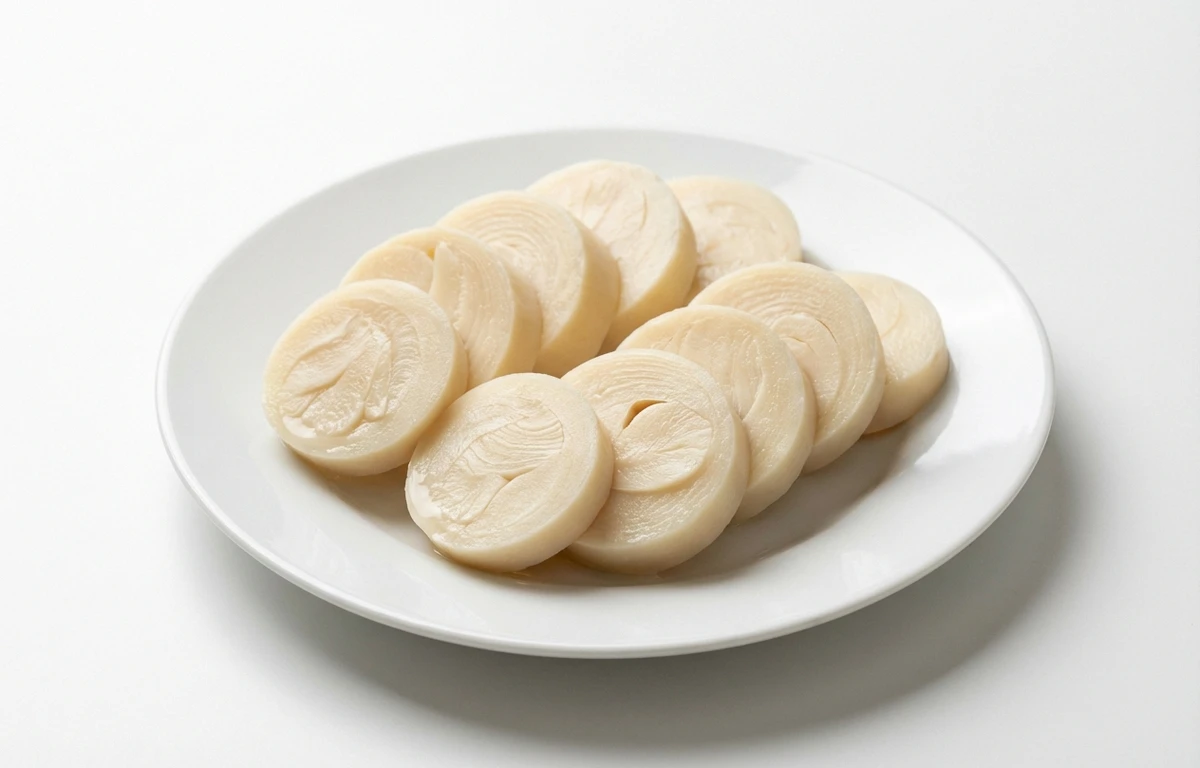
SERVING
CALORIES
28
PROTEIN
2.5g
CARBS
4.6g
FAT
0.60g
FIBER
2.4g
NUTRITION PROFILE · per 100 g
Everything in this ingredient.
MACRONUTRIENTS
Calories28kcal—
Protein2.5g5%
Carbohydrates4.6g2%
Fiber2.4g9%
Sugar0.70g1%
Total fat0.60g1%
Saturated fat0.10g1%
Trans fat0g—
Cholesterol0mg0%
Water90.2g—
MINERALS
Sodium426mg19%
Potassium177mg4%
Calcium18mg1%
Iron1.7mg9%
Magnesium38mg9%
Phosphorus65mg5%
Zinc1.1mg10%
Copper0.10mg11%
Manganese1.4mg61%
Selenium0.70µg1%
VITAMINS
Vitamin A0µg0%
Vitamin C8.0mg9%
Vitamin D0µg0%
Vitamin E0.50mg3%
Vitamin K0µg0%
Thiamin (B1)0.05mg4%
Riboflavin (B2)0.06mg5%
Niacin (B3)0.90mg6%
Pantothenic acid (B5)0.20mg4%
Vitamin B60.08mg5%
Folate (B9)24µg6%
Vitamin B120µg0%
%DV based on a 2,000 cal diet. Source: USDA FoodData Central. A dash in the %DV column means there’s no established Daily Value for that nutrient.
MEASUREMENT CONVERSIONS
How much is what.
1 cup146g
1 tablespoon9.1g
1 teaspoon3g
1 ml0.6g
1 liter608.3g
1 piece33g
HEALTH BENEFITS
Why eat it.
- ✓Low in calories and fat, making it a good choice for weight management diets.
- ✓Provides a good source of dietary fiber, which supports digestive health and promotes feelings of fullness.
- ✓Rich in essential minerals such as potassium for blood pressure regulation, and manganese, which acts as an antioxidant.
- ✓Contains various vitamins, including Vitamin C and B6, which support immune function and metabolism.
COOKING TIPS
In the kitchen.
- 1Rinse canned hearts of palm under cold water before use to reduce their sodium content from the canning liquid.
- 2Their firm yet tender texture makes them an excellent vegan substitute for seafood; try slicing them into rounds and pan-searing them like scallops.
- 3Shred or chop them to use as a filling for vegan 'crab' cakes, tacos, or as a key ingredient in creamy dips.
- 4Serve them chilled and sliced in salads for a refreshing crunch, or grill or roast them to enhance their subtle, nutty flavor.
STORAGE
Keep it fresh.
- Store unopened cans in a cool, dark, and dry place like a pantry for up to 2-3 years, checking the expiration date.
- Once opened, transfer any unused hearts of palm along with their brine to an airtight container and refrigerate for up to one week.
FAQ
Frequently asked questions.
Are canned hearts of palm healthy?
Yes, canned hearts of palm are very healthy as they are low in calories and fat while providing essential minerals like potassium and manganese. They also offer dietary fiber, which supports digestion and helps maintain a feeling of fullness.
Are hearts of palm good for weight loss?
Absolutely. With only 28 calories per 100g, they are a high-volume, low-calorie food that can help you feel satisfied without consuming many calories. They are frequently used as a low-carb substitute for heavier ingredients in salads and main dishes.
Are canned hearts of palm keto-friendly?
Yes, they are keto-friendly. They contain approximately 4.6g of carbohydrates per 100g, making them a suitable vegetable choice for low-carb and ketogenic diets when consumed in moderation.
What do canned hearts of palm taste like?
They have a mild, slightly nutty, and delicate flavor often compared to artichoke hearts or white asparagus. Their texture is firm yet tender, which allows them to absorb the flavors of dressings and sauces easily.
How do you use canned hearts of palm in cooking?
They are commonly sliced into salads, used in dips, or served as a side dish. Recently, they have become popular as a vegan substitute for seafood (like 'crab' cakes or 'calamari') and are even processed into low-carb 'pasta' strands.
Do I need to cook canned hearts of palm before eating?
No, canned hearts of palm are already cooked during the canning process and are ready to eat straight from the container. It is recommended to rinse them under cold water first to remove excess sodium from the brine.
Are canned hearts of palm vegan and gluten-free?
Yes, canned hearts of palm are naturally vegan and gluten-free. They are a plant-based ingredient harvested from the inner core of certain palm trees and typically processed only with water, salt, and citric acid.
How should I store leftover canned hearts of palm?
Once opened, transfer the hearts of palm and their brine into a glass or plastic airtight container. Store them in the refrigerator to maintain their texture and prevent them from drying out.
How long do canned hearts of palm last once opened?
When refrigerated in their brine in an airtight container, they typically last for about 5 to 7 days. If the liquid becomes excessively cloudy or they develop an off-smell, they should be discarded.
Are canned hearts of palm high in sodium?
Canned versions can be high in sodium because they are preserved in brine. To reduce your salt intake, look for 'low sodium' labels or thoroughly rinse the hearts of palm under running water before using them in your recipes.



















