
Loading...
Per 100g
Nutrition data source: USDA FoodData Central
Common measurement equivalents in grams
Unopened cans typically have a shelf life of 1 to 2 years when stored in a cool, dry place.
Yes, you can freeze them in an airtight container, but the texture will become much softer upon thawing.
Light syrup contains added sugar and water, resulting in higher calories, while juice packing uses natural fruit juice.
They retain most vitamins, but canning often involves added sugars and some heat-sensitive Vitamin C may be lost.
Discard the can if it is bulging, leaking, rusted, or if the fruit has an off-smell or visible mold upon opening.
Yes, the liquid is safe to consume and can be used in baking, cocktails, or to sweeten yogurt.
Fresh mandarin segments, clementines, or canned peach slices can be used as alternatives.
Yes, plain canned mandarin oranges in syrup or juice are naturally gluten-free.
Commercial processors often use a mild food-grade acid or enzyme bath to remove the white pith (albedo) from the segments.
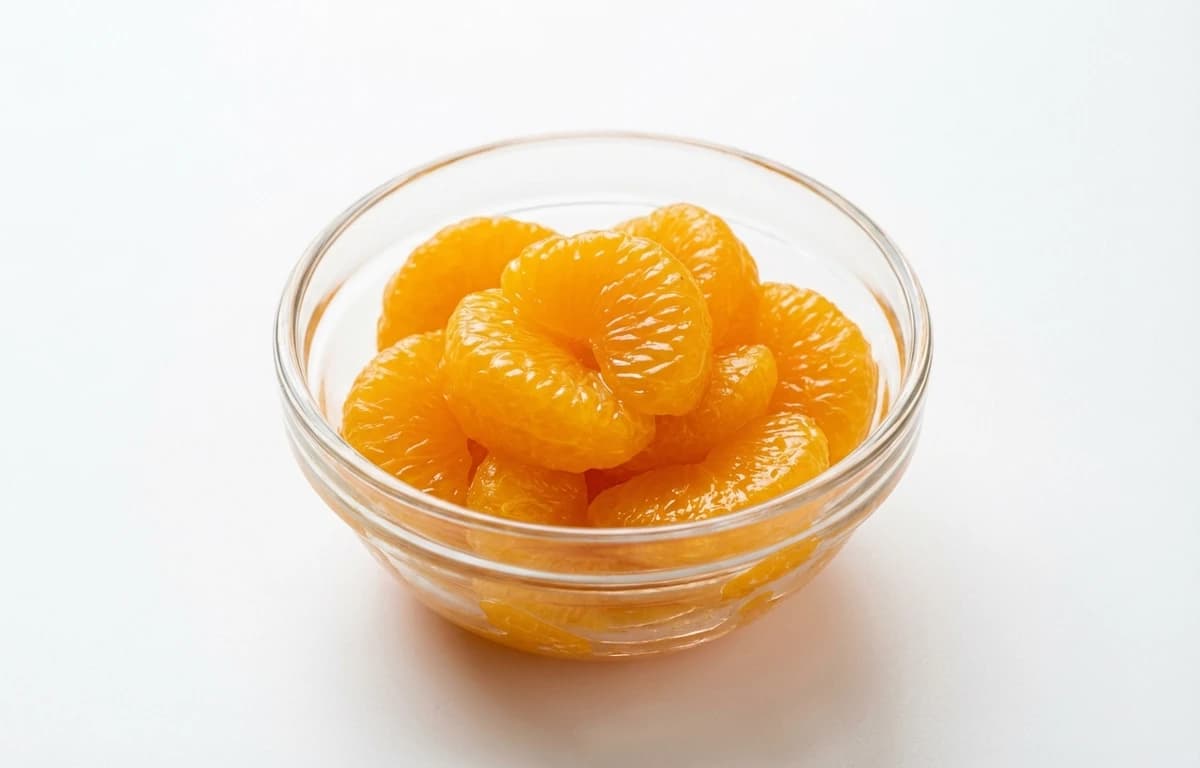
canned mandarin oranges is a versatile ingredient found in cuisines around the world. With 61 calories per 100g and 0.5 grams of protein, it's a nutritious addition to many dishes.
Explore more ingredients in the fruit category with complete nutrition information.
View all fruit →Discover 1 recipes featuring canned mandarin oranges with step-by-step instructions.
Browse recipes →