
Vegetable
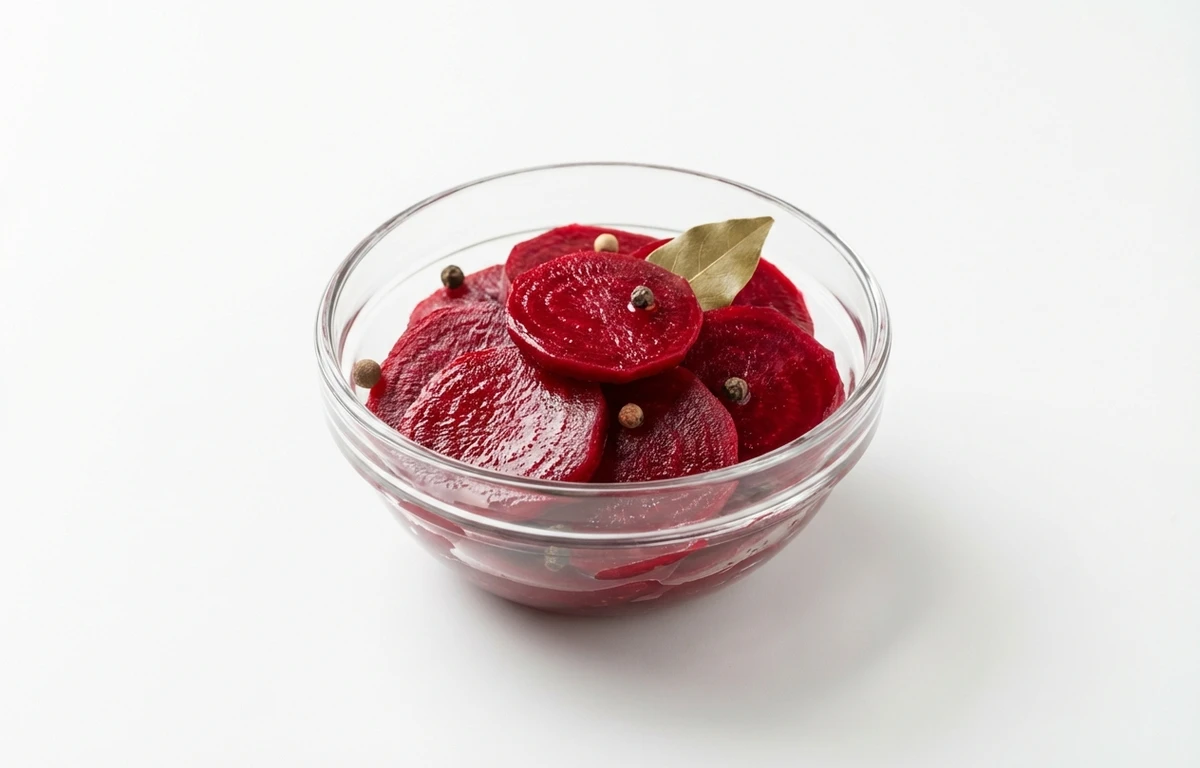
canned pickled beets.
VegetarianVeganGluten-freeDairy-freeNut-freePeanut-freeSoy-freeEgg-freeShellfish-freeHoney-freeAlcohol-free
ALSO KNOWN AS
jarred pickled beetscanned vinegar beetspickled beetrootcanned sliced pickled beetspickled chukandar
SERVING
CALORIES
65
PROTEIN
0.80g
CARBS
15.5g
FAT
0.10g
FIBER
2.0g
NUTRITION PROFILE · per 100 g
Everything in this ingredient.
MACRONUTRIENTS
Calories65kcal—
Protein0.80g2%
Carbohydrates15.5g6%
Fiber2.0g7%
Sugar12.5g25%
Total fat0.10g0%
Saturated fat0g0%
Trans fat0g—
Cholesterol0mg0%
Water80.5g—
MINERALS
Sodium280mg12%
Potassium148mg3%
Calcium15mg1%
Iron0.70mg4%
Magnesium12mg3%
Phosphorus18mg1%
Zinc0.20mg2%
Copper0.06mg7%
Manganese0.20mg9%
Selenium0.10µg0%
VITAMINS
Vitamin A1.0µg0%
Vitamin C2.5mg3%
Vitamin D0µg0%
Vitamin E0.04mg0%
Vitamin K0.20µg0%
Thiamin (B1)0.01mg1%
Riboflavin (B2)0.02mg2%
Niacin (B3)0.10mg1%
Pantothenic acid (B5)0.10mg2%
Vitamin B60.04mg2%
Folate (B9)25µg6%
Vitamin B120µg0%
%DV based on a 2,000 cal diet. Source: USDA FoodData Central. A dash in the %DV column means there’s no established Daily Value for that nutrient.
MEASUREMENT CONVERSIONS
How much is what.
1 cup150g
1 tablespoon15g
1 teaspoon5g
1 oz28.4g
1 lb453.6g
1 liter1050g
1 piece30g
HEALTH BENEFITS
Why eat it.
- ✓Contains dietary nitrates which may help lower blood pressure
- ✓Good source of fiber for digestive health
- ✓Rich in antioxidants like betalains
- ✓Supports liver detoxification processes
- ✓Low in fat and cholesterol-free
COOKING TIPS
In the kitchen.
- 1Rinse under cold water before use to reduce sodium content
- 2Use the leftover pickling liquid to make pickled eggs or pink onions
- 3Add to salads or sandwiches for a tangy, sweet crunch
STORAGE
Keep it fresh.
- Store unopened cans in a cool, dry place for up to 2 years
- Once opened, transfer to a glass container and keep submerged in brine
- Refrigerate after opening and consume within 7 to 10 days
FAQ
Frequently asked questions.
How long do canned pickled beets last after opening?
Once opened, they should be stored in the refrigerator in their liquid and used within 7-10 days for best quality.
Can I freeze canned pickled beets?
Freezing is not recommended as it significantly alters the texture, making the beets mushy and soft.
Are pickled beets as healthy as fresh beets?
They retain many nutrients but are higher in sodium and sugar due to the pickling brine compared to fresh roasted beets.
What is a good substitute for canned pickled beets?
Freshly boiled or roasted beets tossed in a mixture of vinegar, sugar, and salt can replicate the flavor.
How can I tell if canned beets have gone bad?
Discard if the can is bulging, rusted, or leaking, or if the beets have an off-smell, visible mold, or unusual cloudiness in the liquid.
Do I need to cook canned pickled beets?
No, they are already cooked and preserved; they are intended to be eaten cold or at room temperature straight from the jar.
Are canned pickled beets high in sugar?
Yes, most commercial brands add sugar to the vinegar brine, making them higher in carbohydrates than plain canned beets.
Can I use the liquid from the can?
Yes, the brine is flavorful and can be used in salad dressings, as a marinade, or to pickle other vegetables like onions.
Are pickled beets considered a fermented food?
Most canned pickled beets are preserved in vinegar (acetic acid) rather than through natural fermentation (lactic acid), so they usually do not contain probiotics.



















