
Fruit
canned pineapple in juice, drained.
VegetarianVeganGluten-freeDairy-freeNut-freePeanut-freeSoy-freeEgg-freeShellfish-freeHoney-freeAlcohol-free
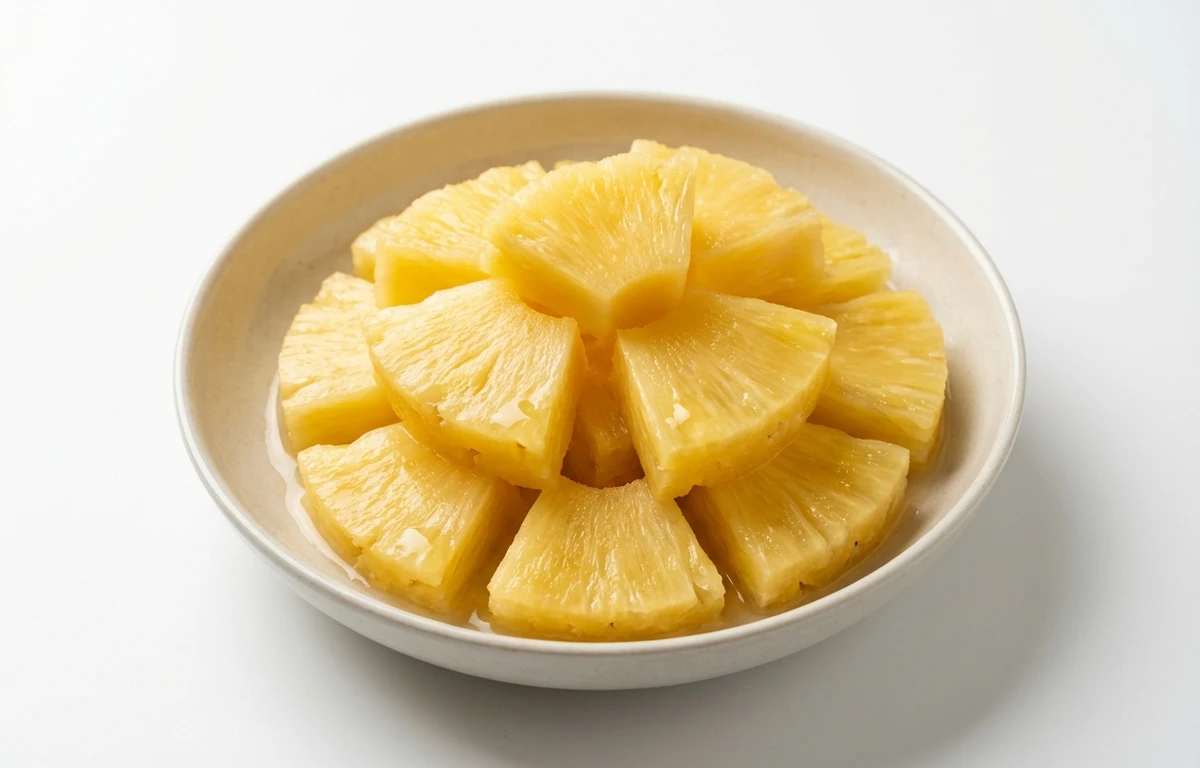
SERVING
CALORIES
60
PROTEIN
0.51g
CARBS
15.6g
FAT
0.11g
FIBER
1.3g
NUTRITION PROFILE · per 100 g
Everything in this ingredient.
MACRONUTRIENTS
Calories60kcal—
Protein0.51g1%
Carbohydrates15.6g6%
Fiber1.3g5%
Sugar14.3g29%
Total fat0.11g0%
Saturated fat0.01g0%
Trans fat0g—
Cholesterol0mg0%
Water83.5g—
MINERALS
Sodium1.0mg0%
Potassium124mg3%
Calcium16mg1%
Iron0.28mg2%
Magnesium15mg4%
Phosphorus7.0mg1%
Zinc0.10mg1%
Copper0.11mg12%
Selenium0.40µg1%
VITAMINS
Vitamin A3.0µg0%
Vitamin C9.4mg10%
Vitamin D0µg0%
Vitamin E0.02mg0%
Vitamin K0.70µg1%
Thiamin (B1)0.10mg8%
Riboflavin (B2)0.02mg2%
Niacin (B3)0.28mg2%
Vitamin B60.08mg5%
Folate (B9)5.0µg1%
Vitamin B120µg0%
%DV based on a 2,000 cal diet. Source: USDA FoodData Central. A dash in the %DV column means there’s no established Daily Value for that nutrient.
MEASUREMENT CONVERSIONS
How much is what.
1 cup162g
1 tablespoon10.1g
1 teaspoon3.4g
1 ml0.7g
1 liter675g
HEALTH BENEFITS
Why eat it.
- ✓Good source of Vitamin C, an antioxidant that supports immune function and skin health.
- ✓Provides manganese, an essential mineral for bone formation, metabolism, and antioxidant defense.
- ✓Contains dietary fiber, which aids in digestion and promotes a feeling of fullness.
- ✓Contains the enzyme bromelain, which may help reduce inflammation and aid protein digestion, though levels are lower than in fresh pineapple.
COOKING TIPS
In the kitchen.
- 1Grill or pan-sear pineapple slices or chunks to caramelize their natural sugars, enhancing their sweetness for use in savory dishes or as a dessert topping.
- 2Incorporate into stir-fries or sweet and sour sauces to add a tropical sweetness that balances salty and spicy flavors.
- 3Use in baked goods like upside-down cakes, muffins, or quick breads to provide natural sweetness and moisture.
- 4Chop and add to salsas with red onion, cilantro, and jalapeño for a sweet and spicy topping for grilled chicken, fish, or tacos.
STORAGE
Keep it fresh.
- Before opening, store the can in a cool, dry place like a pantry. It can last for several years past the printed date if the can is undamaged.
- After opening, transfer the drained pineapple to an airtight glass or plastic container and refrigerate. Consume within 5 to 7 days for best quality.
FAQ
Frequently asked questions.
Is canned pineapple in juice healthy?
Yes, canned pineapple in juice is a healthy choice as it provides essential nutrients like Vitamin C for immune support and manganese for bone health. Choosing the version packed in juice rather than syrup avoids large amounts of added refined sugars while still providing beneficial dietary fiber.
How many calories and carbs are in drained canned pineapple?
A 100g serving of drained canned pineapple in juice contains approximately 60 calories and 15.56g of carbohydrates. It is naturally low in fat (0.11g) and protein (0.51g), making it a light, energy-dense fruit option.
Is canned pineapple in juice better than pineapple in syrup?
Canned pineapple in juice is significantly healthier than the syrup-packed variety because it contains no added sugars. Pineapple in heavy or light syrup can have double the sugar content and much higher calories, which can negatively impact blood sugar levels.
Is canned pineapple keto-friendly?
No, canned pineapple is generally not considered keto-friendly. With over 15g of net carbs per 100g, even a small serving can take up a large portion of a daily carb limit on a strict ketogenic diet.
Is canned pineapple vegan and gluten-free?
Yes, canned pineapple is naturally vegan and gluten-free. It is a plant-based ingredient that contains no animal products or wheat-based proteins, making it safe for those with celiac disease or those following a vegan lifestyle.
Can I use canned pineapple instead of fresh in baking?
Yes, canned pineapple is an excellent substitute for fresh in cakes, muffins, and tarts. Because it is pre-cooked during the canning process, it is softer and more consistent in sweetness, though you must drain it thoroughly to avoid making your batter too watery.
Does canned pineapple contain the same enzymes as fresh pineapple?
Canned pineapple contains the enzyme bromelain, which aids protein digestion, but in much lower amounts than fresh pineapple. The heat used during the canning process deactivates most of the bromelain, which is why canned pineapple can be used in gelatin desserts while fresh pineapple prevents them from setting.
How do you store leftover canned pineapple?
Once opened, you should never store the pineapple in the original tin can as it may develop a metallic taste. Transfer the drained fruit to an airtight glass or plastic container and keep it refrigerated for up to 5 to 7 days.
Can I freeze drained canned pineapple?
Yes, you can freeze drained canned pineapple for up to 6 months. For best results, freeze the pieces in a single layer on a tray before transferring them to a freezer bag to prevent them from sticking together.
Is canned pineapple good for digestion?
Yes, it contains dietary fiber which helps maintain regular bowel movements and promotes gut health. While the canning process reduces the levels of the digestive enzyme bromelain, it still provides some digestive support compared to processed snacks.



















