
Vegetable
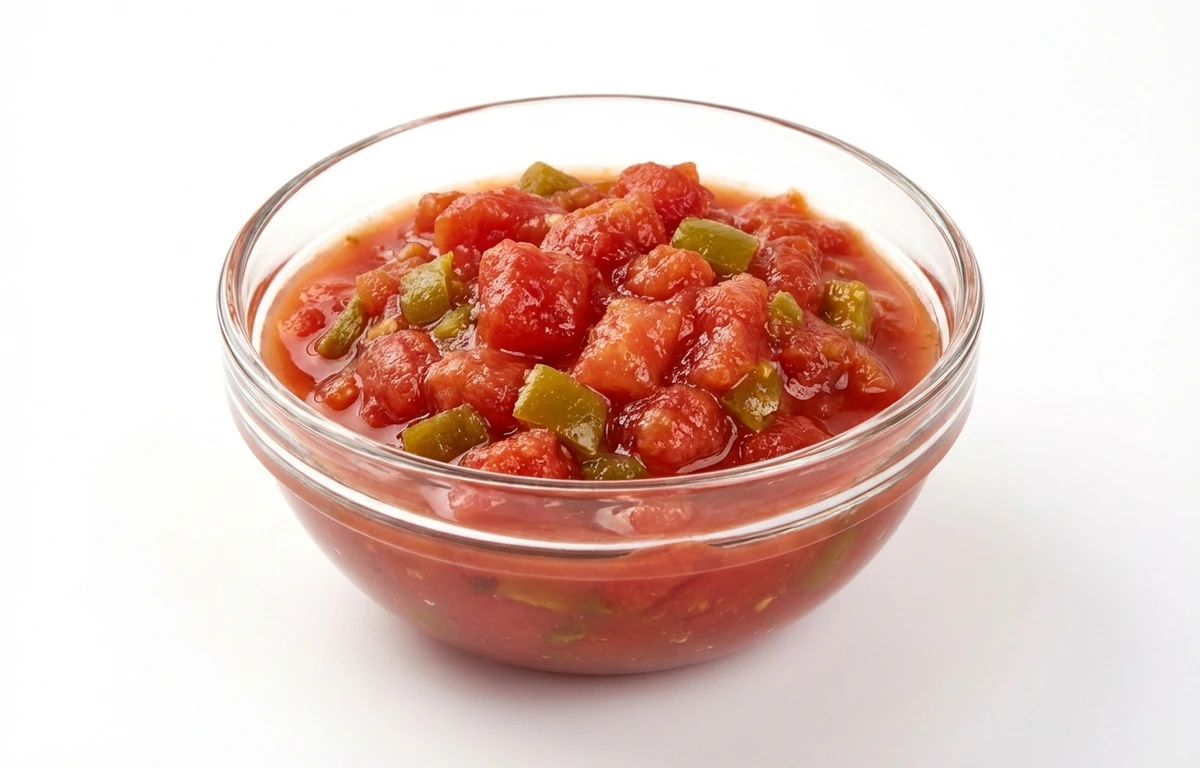
canned red tomato with green chilies.
VegetarianVeganGluten-freeDairy-freeNut-freePeanut-freeSoy-freeEgg-freeShellfish-freeHoney-freeAlcohol-free
SERVING
CALORIES
21
PROTEIN
0.80g
CARBS
4.6g
FAT
0.10g
FIBER
1.2g
NUTRITION PROFILE · per 100 g
Everything in this ingredient.
MACRONUTRIENTS
Calories21kcal—
Protein0.80g2%
Carbohydrates4.6g2%
Fiber1.2g4%
Sugar2.5g5%
Total fat0.10g0%
Saturated fat0.02g0%
Trans fat0g—
Cholesterol0mg0%
Water93.5g—
MINERALS
Sodium280mg12%
Potassium195mg4%
Calcium18mg1%
Iron0.50mg3%
Magnesium11mg3%
Phosphorus18mg1%
Zinc0.15mg1%
Copper0.06mg7%
Manganese0.09mg4%
Selenium0.40µg1%
VITAMINS
Vitamin A25µg3%
Vitamin C12.5mg14%
Vitamin D0µg0%
Vitamin E0.50mg3%
Vitamin K2.8µg2%
Thiamin (B1)0.03mg3%
Riboflavin (B2)0.02mg2%
Niacin (B3)0.50mg3%
Pantothenic acid (B5)0.10mg2%
Vitamin B60.08mg5%
Folate (B9)9.0µg2%
Vitamin B120µg0%
%DV based on a 2,000 cal diet. Source: USDA FoodData Central. A dash in the %DV column means there’s no established Daily Value for that nutrient.
MEASUREMENT CONVERSIONS
How much is what.
1 cup241g
1 tablespoon15.1g
1 teaspoon5g
1 ml1g
1 liter1004.2g
HEALTH BENEFITS
Why eat it.
- ✓Rich in lycopene from tomatoes, a powerful antioxidant linked to reduced risk of heart disease and certain cancers.
- ✓Contains capsaicin from green chilies, which may have metabolism-boosting and anti-inflammatory properties.
- ✓Good source of Vitamin C, which supports immune function and collagen production for healthy skin.
- ✓Provides a low-calorie way to add significant flavor, moisture, and nutrients to a variety of dishes.
COOKING TIPS
In the kitchen.
- 1Use as a quick base for dips like queso by combining with melted cheese.
- 2Add directly to chili, soups, or stews to provide acidity, moisture, and a mild level of heat without extra chopping.
- 3Incorporate into rice, casseroles, or meatloaf for added flavor and to prevent dryness.
- 4Drain slightly and mix into scrambled eggs or breakfast burritos for a zesty start to the day.
STORAGE
Keep it fresh.
- Store unopened cans in a cool, dark, and dry place like a pantry for up to 2 years, checking the expiration date.
- After opening, transfer the contents to a non-metallic, airtight container (e.g., glass jar) and refrigerate for up to 5-7 days.
FAQ
Frequently asked questions.
Is canned red tomato with green chilies healthy?
Yes, it is a nutrient-dense, low-calorie ingredient. It provides significant amounts of lycopene for heart health and Vitamin C for immune support, though it is important to monitor the sodium content on the nutrition label.
What are the primary health benefits of this ingredient?
It is rich in lycopene, a powerful antioxidant linked to reduced risks of heart disease. Additionally, the capsaicin in the green chilies may boost metabolism and provide anti-inflammatory benefits.
Is canned red tomato with green chilies good for weight loss?
Yes, with only 21 calories and 0.1g of fat per 100g, it is an excellent way to add moisture and bold flavor to dishes without adding significant calories or fat.
Is this ingredient keto-friendly?
Yes, it is keto-friendly. It contains approximately 4.6g of carbohydrates per 100g, making it easy to incorporate into a low-carb or ketogenic lifestyle in moderate portions.
Is canned red tomato with green chilies vegan and gluten-free?
Naturally, yes. The standard ingredients are simply tomatoes, chilies, water, and salt, which are both vegan and gluten-free. Always check the label for specific brand additives.
How do I use canned tomatoes with green chilies in cooking?
It is a versatile staple used for making queso dips, chili, soups, and salsas. It also works well as a flavorful base for slow-cooked meats or mixed into Spanish-style rice.
How spicy is this ingredient?
Most standard varieties are considered mild to medium in heat. The green chilies provide a tangy, slightly smoky kick that enhances the flavor of the tomatoes without being overwhelmingly spicy for most people.
Do I need to drain the liquid from the can?
It depends on your recipe. For soups, stews, and slow-cooker meals, the liquid adds great flavor; however, if you are making a thick dip or topping tacos, you should drain it to prevent sogginess.
How long does it last once the can is opened?
Once opened, transfer the contents to an airtight glass or plastic container and refrigerate. It will typically stay fresh for 3 to 5 days. Never store the product in the original open metal can.
Can I freeze canned tomatoes with green chilies?
Yes, you can freeze leftovers in a freezer-safe container for up to 6 months. While the tomatoes may become slightly softer upon thawing, the flavor remains excellent for use in cooked dishes like sauces or stews.



















