
Vegetable
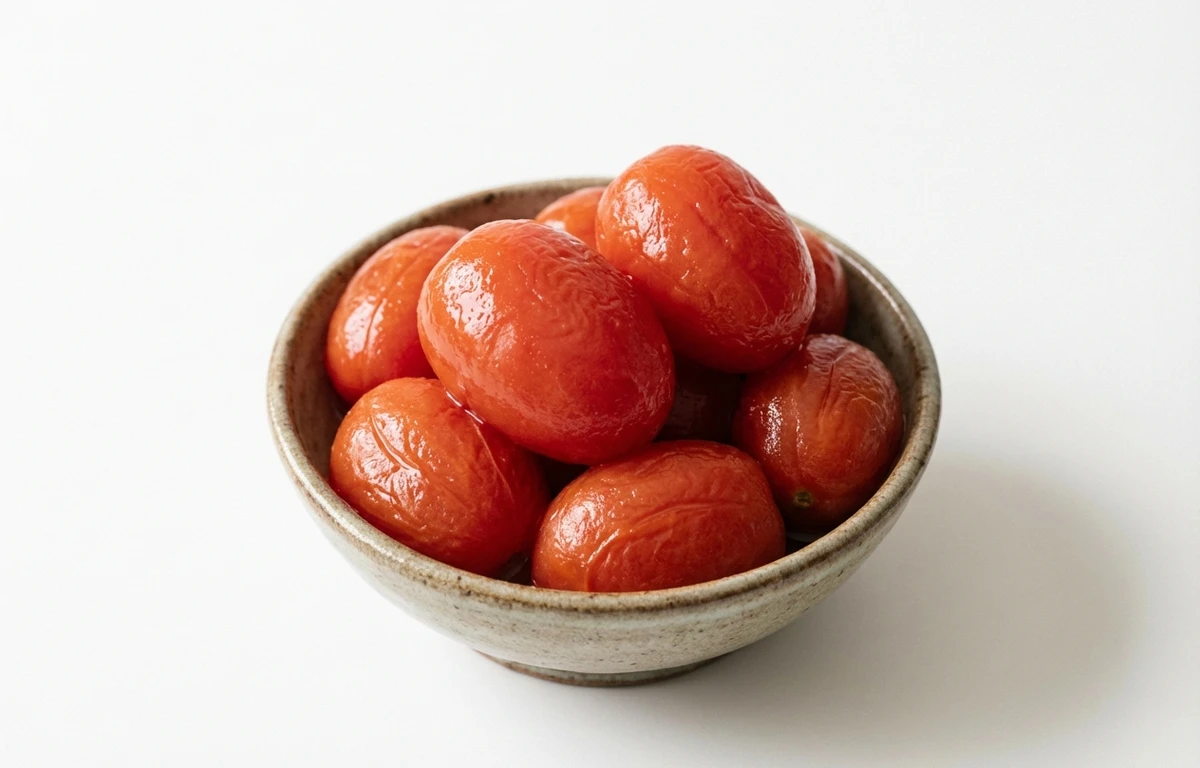
canned salted whole tomatoes.
VegetarianVeganGluten-freeDairy-freeNut-freePeanut-freeSoy-freeEgg-freeShellfish-freeHoney-freeAlcohol-free
SERVING
CALORIES
20
PROTEIN
0.90g
CARBS
4.0g
FAT
0.10g
FIBER
1.1g
NUTRITION PROFILE · per 100 g
Everything in this ingredient.
MACRONUTRIENTS
Calories20kcal—
Protein0.90g2%
Carbohydrates4.0g1%
Fiber1.1g4%
Sugar2.6g5%
Total fat0.10g0%
Saturated fat0.02g0%
Trans fat0g—
Cholesterol0mg0%
Water93.5g—
MINERALS
Sodium200mg9%
Potassium210mg4%
Calcium15mg1%
Iron0.50mg3%
Magnesium10mg2%
Phosphorus18mg1%
Zinc0.10mg1%
Copper0.06mg7%
Manganese0.08mg3%
Selenium0.40µg1%
VITAMINS
Vitamin A25µg3%
Vitamin C12mg13%
Vitamin D0µg0%
Vitamin E0.50mg3%
Vitamin K2.5µg2%
Thiamin (B1)0.03mg3%
Riboflavin (B2)0.02mg2%
Niacin (B3)0.50mg3%
Pantothenic acid (B5)0.10mg2%
Vitamin B60.06mg4%
Folate (B9)10µg3%
Vitamin B120µg0%
%DV based on a 2,000 cal diet. Source: USDA FoodData Central. A dash in the %DV column means there’s no established Daily Value for that nutrient.
MEASUREMENT CONVERSIONS
How much is what.
1 cup243.7g
1 tablespoon15.2g
1 teaspoon5.1g
1 oz28.4g
1 lb453.6g
1 ml1g
1 liter1030g
1 piece120g
HEALTH BENEFITS
Why eat it.
- ✓Excellent source of lycopene, a powerful antioxidant linked to reduced risk of heart disease and certain cancers. The cooking process in canning makes lycopene more bioavailable.
- ✓Good source of Vitamin C, which supports immune function, collagen production, and acts as an antioxidant.
- ✓Provides potassium, an essential mineral for maintaining healthy blood pressure and fluid balance.
- ✓Contains Vitamin A (as beta-carotene), which is important for vision health and immune system support.
COOKING TIPS
In the kitchen.
- 1For a rustic, chunky texture in sauces or stews, crush the whole tomatoes by hand or with a potato masher directly in the pot.
- 2To create a deep flavor base, sauté aromatics like garlic, onions, or herbs in olive oil before adding the tomatoes.
- 3The high salt content means you should taste your dish before adding more salt. You may need less than the recipe calls for.
- 4Balance the natural acidity of the tomatoes by adding a pinch of sugar, a small piece of carrot, or a dash of baking soda to your sauce as it simmers.
STORAGE
Keep it fresh.
- Store unopened cans in a cool, dark, and dry place like a pantry. They are best used within 18-24 months.
- Once opened, transfer the tomatoes and their juice to a non-metallic, airtight container (like glass or plastic) and refrigerate. Use within 5-7 days.
FAQ
Frequently asked questions.
Are canned salted whole tomatoes healthy?
Yes, they are very healthy and low in calories. They are an excellent source of lycopene, a powerful antioxidant that becomes more bioavailable during the canning process, and they provide essential vitamins A and C to support immune health.
How many calories and carbs are in canned whole tomatoes?
Per 100g, canned whole tomatoes contain approximately 20 calories and 4g of carbohydrates. They are also very low in fat (0.1g) and provide about 0.9g of protein, making them a light addition to most meals.
Is the salt content in these tomatoes a concern?
Salt is added to enhance flavor and preserve texture, but it does increase the sodium content. If you are on a low-sodium diet, you can rinse the tomatoes before use or look for 'no salt added' varieties to better control your intake.
Are canned whole tomatoes vegan and gluten-free?
Yes, canned whole tomatoes are naturally vegan and gluten-free. They typically consist only of tomatoes, tomato juice, salt, and sometimes citric acid or calcium chloride for preservation.
Are canned tomatoes keto-friendly?
Yes, with only 4g of carbs per 100g, they are considered keto-friendly. However, always check the label for any added sugars, which are occasionally found in flavored or processed tomato products.
How do you cook with canned whole tomatoes?
They are ideal for sauces, stews, and soups. You can crush them by hand for a rustic, chunky texture or blend them for a smooth consistency; they break down easily when simmered over heat.
Should I drain the liquid from the can before using?
It depends on the recipe, but the liquid is usually tomato juice or puree and is full of flavor and nutrients like potassium. It is generally best to include it in sauces and stews to add depth and moisture.
How should I store leftover canned tomatoes?
Never store opened tomatoes in the original metal can, as this can affect the flavor. Transfer leftovers to an airtight glass or plastic container and refrigerate for up to 5 to 7 days.
Can I freeze canned tomatoes?
Yes, you can freeze leftover canned tomatoes and their juice in a freezer-safe container or heavy-duty freezer bag. They will maintain their quality for about 6 months and are perfect for future cooked dishes.
Why are canned tomatoes often preferred over fresh for sauces?
Canned tomatoes are processed at peak ripeness, ensuring consistent flavor and acidity year-round. Additionally, the heat from canning increases the bioavailability of lycopene, making them more nutritionally dense for cooked applications than many fresh varieties.



















