
Seafood
canned sockeye salmon.
VegetarianVeganGluten-freeDairy-freeNut-freePeanut-freeSoy-freeEgg-freeShellfish-freeHoney-freeAlcohol-free
ALSO KNOWN AS
canned salmon
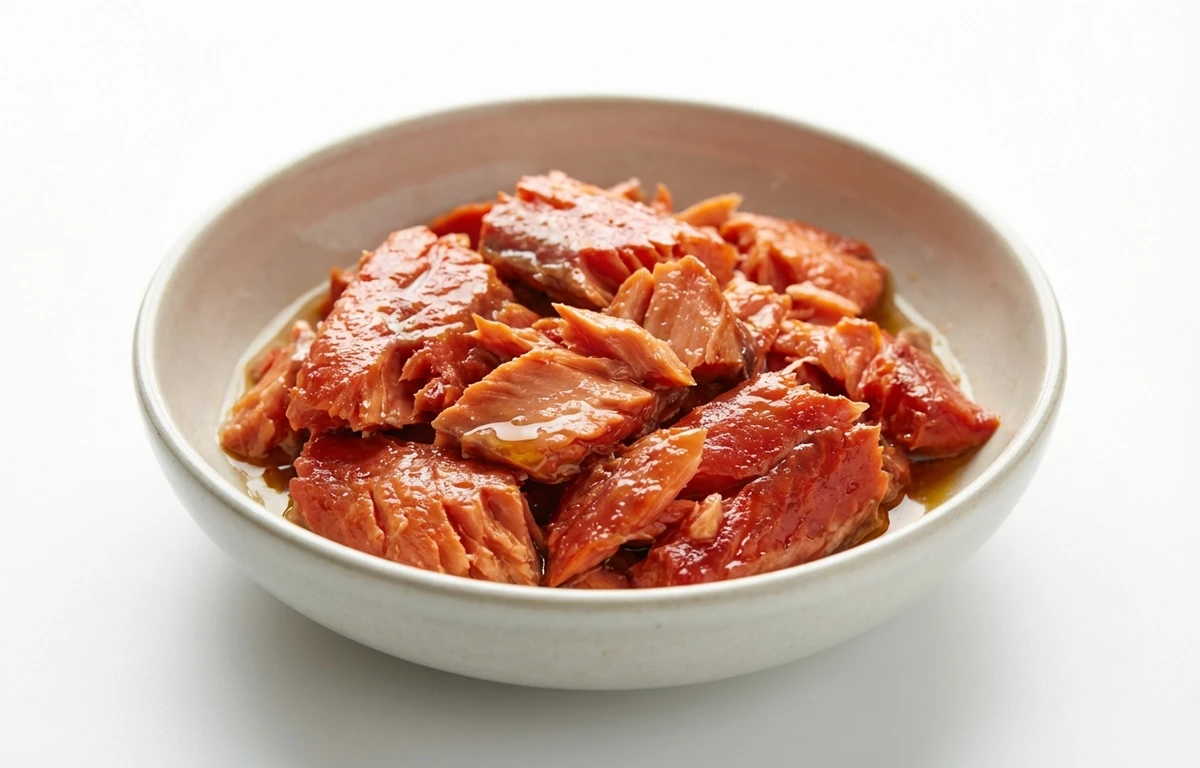
SERVING
CALORIES
161
PROTEIN
27.3g
CARBS
0g
FAT
5.8g
FIBER
0g
NUTRITION PROFILE · per 100 g
Everything in this ingredient.
MACRONUTRIENTS
Calories161kcal—
Protein27.3g55%
Carbohydrates0g0%
Fiber0g0%
Sugar0g0%
Total fat5.8g7%
Saturated fat0.92g5%
Cholesterol69mg23%
Water65.8g—
MINERALS
Sodium390mg17%
Potassium370mg8%
Calcium28mg2%
Iron1.9mg11%
Magnesium32mg8%
Phosphorus260mg21%
Zinc0.66mg6%
Copper0.15mg17%
Manganese0.04mg2%
Selenium40.3µg73%
VITAMINS
Vitamin A65µg7%
Vitamin C0mg0%
Vitamin E0.61mg4%
Vitamin K0µg0%
Thiamin (B1)0.02mg2%
Riboflavin (B2)0.21mg16%
Niacin (B3)10.1mg63%
Pantothenic acid (B5)0.73mg15%
Vitamin B60.10mg6%
Folate (B9)7.0µg2%
Vitamin B124.9µg205%
%DV based on a 2,000 cal diet. Source: USDA FoodData Central. A dash in the %DV column means there’s no established Daily Value for that nutrient.
MEASUREMENT CONVERSIONS
How much is what.
1 cup155g
1 tablespoon9.7g
1 teaspoon3.2g
1 ml0.6g
1 liter645.8g
1 piece85g
HEALTH BENEFITS
Why eat it.
- ✓Excellent source of omega-3 fatty acids (EPA and DHA), which support heart health, reduce inflammation, and promote brain function.
- ✓Rich in high-quality protein, essential for building and repairing tissues, muscle maintenance, and satiety.
- ✓High in Vitamin D and calcium, particularly when the soft, edible bones are consumed, which is crucial for bone density and health.
- ✓Contains astaxanthin, a powerful antioxidant that gives sockeye its red color and helps protect cells from oxidative stress.
COOKING TIPS
In the kitchen.
- 1For a boost of calcium and omega-3s, mash the soft, edible bones and skin into the salmon flesh; they are virtually unnoticeable in dishes like salmon cakes or salads.
- 2The liquid in the can (the aquafaba) is flavorful and nutritious. Use it in place of some broth in soups, chowders, or sauces to add depth.
- 3Canned salmon is fully cooked. Add it at the end of the cooking process for hot dishes like pasta or casseroles to simply heat it through and prevent it from becoming dry and tough.
- 4Gently flake the salmon with a fork before adding to recipes. Avoid overmixing to maintain a pleasant texture, especially for salmon salads or patties.
STORAGE
Keep it fresh.
- Store unopened cans in a cool, dark, and dry place, such as a pantry. It is shelf-stable for up to 5 years.
- Once opened, transfer any unused salmon to an airtight glass or plastic container, refrigerate promptly, and consume within 2-3 days.
FAQ
Frequently asked questions.
Is canned sockeye salmon healthy?
Yes, canned sockeye salmon is highly nutritious. It is an excellent source of heart-healthy omega-3 fatty acids, high-quality protein, and Vitamin D. It also contains astaxanthin, a potent antioxidant that supports cellular health and gives the fish its deep red color.
How much protein is in canned sockeye salmon?
Canned sockeye salmon is very protein-dense, providing approximately 27.31g of protein per 100g serving. This makes it an efficient source for muscle repair, tissue maintenance, and promoting long-lasting satiety.
Is canned sockeye salmon keto-friendly?
Yes, it is ideal for a ketogenic or low-carb diet as it contains 0g of carbohydrates. Its high protein content and 5.76g of healthy fats per 100g help meet macronutrient requirements while keeping the body in ketosis.
Can I eat the bones and skin found in the can?
Yes, the bones and skin are completely edible and highly nutritious. The canning process softens the bones so they can be easily mashed with a fork, providing a significant boost of calcium and Vitamin D which is crucial for bone density.
Do I need to cook canned sockeye salmon before eating?
No, canned sockeye salmon is pre-cooked during the canning process and is ready to eat straight from the tin. It can be used cold in salads and sandwiches or added to warm dishes like pasta or salmon cakes at the end of cooking.
What is the difference between sockeye and pink canned salmon?
Sockeye salmon has a deeper red color, a firmer texture, and a richer, more robust flavor compared to pink salmon. It also generally contains higher levels of omega-3 fatty acids and protein per serving than the milder pink variety.
Is canned sockeye salmon good for weight loss?
Yes, it is an excellent weight-loss food due to its high protein-to-calorie ratio, containing only 161 calories per 100g. The high protein content increases satiety and helps preserve lean muscle mass during a calorie deficit.
How should I store leftover canned salmon?
Once opened, transfer any unused salmon to an airtight glass or plastic container rather than leaving it in the open metal can. It should be refrigerated immediately and consumed within 2 to 3 days for the best quality and safety.
Why is sockeye salmon so much redder than other salmon?
The vibrant red color comes from astaxanthin, a powerful antioxidant found in the plankton and krill that sockeye salmon consume in the wild. This pigment is naturally concentrated in their flesh and offers protective health benefits to consumers.
Is canned sockeye salmon gluten-free?
Pure canned sockeye salmon packed in water or oil with salt is naturally gluten-free. However, always check the label if the salmon is seasoned, flavored, or part of a pre-mixed kit, as those may contain additives or thickeners derived from wheat.



















