
Fruit
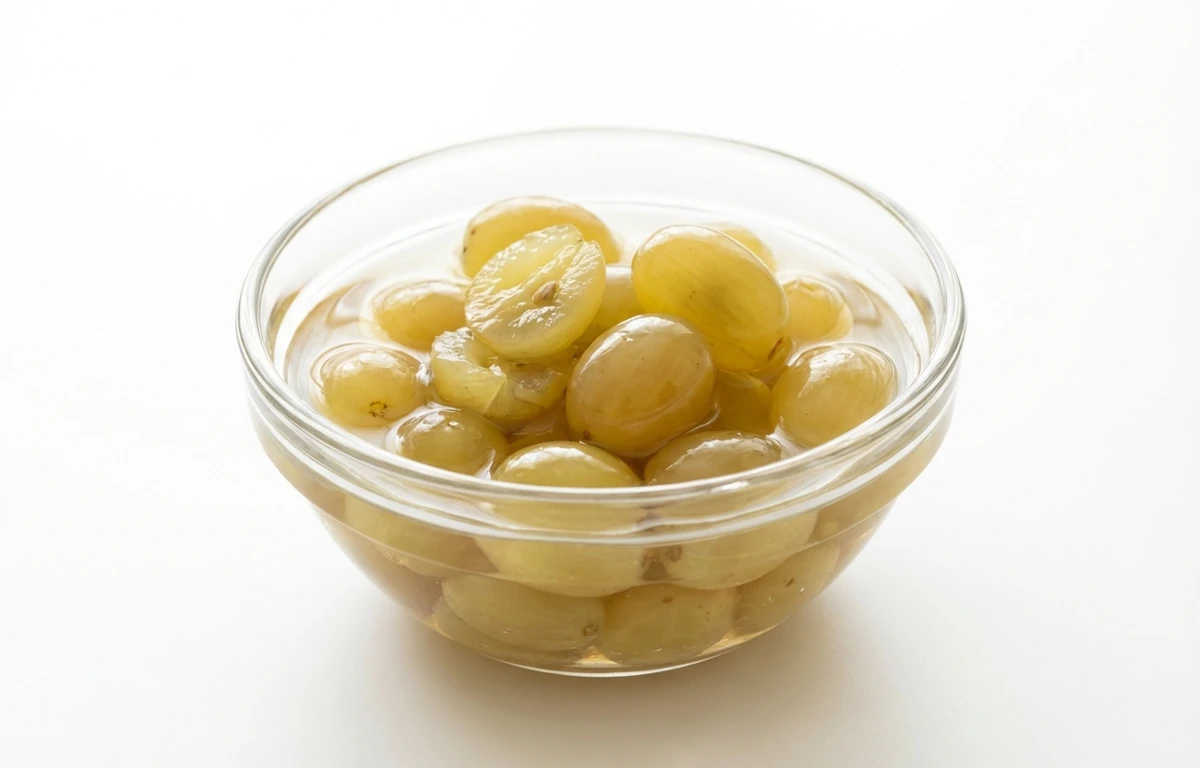
canned thompson seedless grapes.
VegetarianVeganGluten-freeDairy-freeNut-freePeanut-freeSoy-freeEgg-freeShellfish-freeHoney-freeAlcohol-free
SERVING
CALORIES
76
PROTEIN
0.48g
CARBS
19.6g
FAT
0.10g
FIBER
0.60g
NUTRITION PROFILE · per 100 g
Everything in this ingredient.
MACRONUTRIENTS
Calories76kcal—
Protein0.48g1%
Carbohydrates19.6g7%
Fiber0.60g2%
Sugar19.1g38%
Total fat0.10g0%
Saturated fat0.03g0%
Trans fat0g—
Cholesterol0mg0%
Water79.5g—
MINERALS
Sodium5.0mg0%
Potassium103mg2%
Calcium10mg1%
Iron0.94mg5%
Magnesium6.0mg1%
Phosphorus17mg1%
Zinc0.05mg0%
Copper0.05mg6%
Manganese0.04mg2%
Selenium0.10µg0%
VITAMINS
Vitamin A3.0µg0%
Vitamin C1.0mg1%
Vitamin D0µg0%
Vitamin E0.13mg1%
Vitamin K9.8µg8%
Thiamin (B1)0.03mg3%
Riboflavin (B2)0.02mg2%
Niacin (B3)0.13mg1%
Pantothenic acid (B5)0.04mg1%
Vitamin B60.07mg4%
Folate (B9)3.0µg1%
Vitamin B120µg0%
%DV based on a 2,000 cal diet. Source: USDA FoodData Central. A dash in the %DV column means there’s no established Daily Value for that nutrient.
MEASUREMENT CONVERSIONS
How much is what.
1 cup256g
1 tablespoon16g
1 teaspoon5.3g
1 ml1.1g
1 liter1066.7g
HEALTH BENEFITS
Why eat it.
- ✓Provides a quick source of energy due to natural fruit sugars, often supplemented by the canning syrup.
- ✓Retains some dietary fiber, which can aid in digestion and promote regular bowel movements.
- ✓Contains some antioxidants like flavonoids, although levels may be reduced compared to fresh grapes due to the canning process.
- ✓Offers a convenient source of some vitamins and minerals, such as potassium and Vitamin C.
COOKING TIPS
In the kitchen.
- 1Drain well before adding to fruit salads, yogurt, or cottage cheese to prevent excess liquid from making the dish soggy.
- 2The syrup from the can be used as a sweetener in iced tea, cocktails, or reduced on the stovetop to create a glaze for desserts or savory dishes like pork.
- 3Due to their soft texture, canned grapes are excellent for blending into smoothies or pureeing for sauces and sorbets.
- 4Serve chilled directly from the can as a simple and refreshing dessert or snack.
STORAGE
Keep it fresh.
- Store unopened cans in a cool, dark, and dry place like a pantry for up to two years, checking the expiration date.
- After opening, transfer the grapes and their liquid to an airtight glass or plastic container and refrigerate for up to 5-7 days.
FAQ
Frequently asked questions.
Are canned Thompson seedless grapes healthy?
Canned Thompson seedless grapes provide a quick source of energy and contain essential nutrients like potassium, Vitamin C, and dietary fiber. While they offer antioxidants like flavonoids, they are often higher in sugar than fresh grapes due to the canning syrup, so they should be consumed in moderation.
How many calories and carbs are in canned Thompson seedless grapes?
A 100g serving contains approximately 76 calories and 19.65g of carbohydrates. Most of these carbs come from sugars, which include both the natural fruit sugars and those added during the canning process.
Are canned Thompson seedless grapes keto-friendly?
No, canned Thompson seedless grapes are not keto-friendly. With nearly 20g of carbohydrates per 100g serving, they are too high in sugar to fit within the strict carb limits of a ketogenic diet.
Are canned Thompson seedless grapes vegan and gluten-free?
Yes, canned Thompson seedless grapes are naturally vegan and gluten-free. They typically consist of grapes, water, and sugar or fruit juice, making them suitable for both plant-based and gluten-restricted diets.
What do canned Thompson seedless grapes taste like?
They are significantly sweeter and softer than fresh grapes. Because they have been processed in liquid, they lose their crisp 'snap' and take on a tender, syrupy texture that works well in desserts.
How can I use canned Thompson seedless grapes in cooking?
They are commonly used in fruit salads, ambrosia, or as a topping for yogurt and panna cotta. They also pair well with savory dishes, such as chicken salad or curry, where they provide a burst of sweetness.
Should I drain and rinse canned grapes before using them?
Draining and rinsing is recommended if you want to reduce the sugar and calorie content of the dish. However, the syrup can be reserved and used as a sweetener for smoothies, cocktails, or fruit punches.
How should I store canned Thompson seedless grapes after opening?
Once the can is opened, transfer the grapes and their liquid into a clean, airtight glass or plastic container. Never store them in the original metal can, as this can lead to a metallic taste and potential spoilage.
How long do canned Thompson seedless grapes last once opened?
When refrigerated in an airtight container, they will typically last for 5 to 7 days. If you notice an off-smell, visible mold, or if the liquid becomes unusually cloudy, the grapes should be discarded.
Can I freeze canned Thompson seedless grapes?
Yes, you can freeze them for up to 3 months. While the texture will become much softer upon thawing, they are excellent when used frozen as 'ice cubes' in drinks or blended directly into smoothies.



















