
Loading...
Per 100g
Nutrition data source: USDA FoodData Central
Common measurement equivalents in grams
Once opened, canned tuna should be transferred to an airtight container and refrigerated. It will stay fresh for 2 to 3 days.
You can freeze tuna once it is removed from the can. Place it in a freezer-safe bag or container; it will last for up to 3 months.
Tuna in water is lower in calories and fat. It also retains more Omega-3 fatty acids because oil-packed tuna loses some Omega-3s when the oil is drained.
Canned salmon or canned chicken are the best animal-based substitutes. For a vegan alternative, mashed chickpeas (chickpea 'tuna') are commonly used.
Discard the can if it is leaking, bulging, or severely dented. If the tuna has an off-smell, unusual dark spots, or a slimy texture after opening, do not eat it.
Yes, all tuna contains some mercury. 'Light' tuna (usually skipjack) generally has lower mercury levels than 'White' tuna (albacore).
Rinsing is not necessary, but it can help reduce the sodium content by about 75-80% if you are watching your salt intake.
It is most commonly used in tuna salad sandwiches, tuna melts, pasta dishes, casseroles, and as a protein topper for leafy green salads.
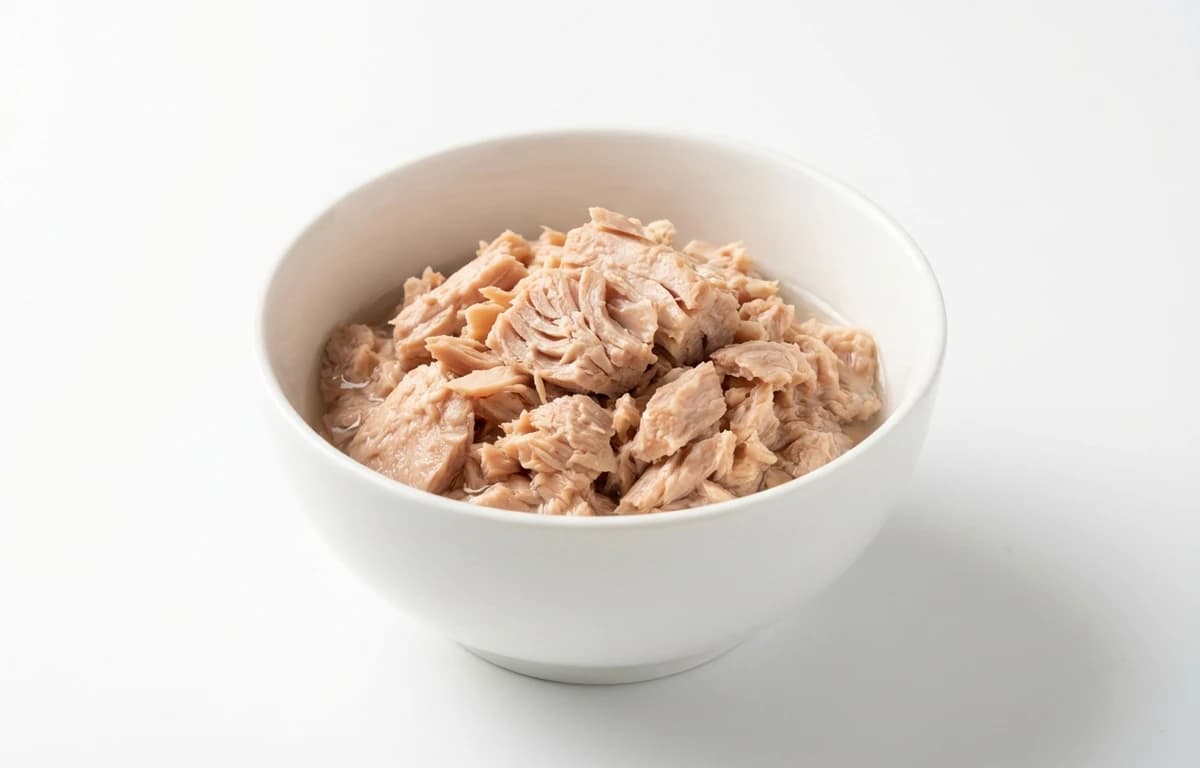
Canned Tuna in Water is a versatile ingredient found in cuisines around the world. With 116 calories per 100g and 25.5 grams of protein, it's a nutritious addition to many dishes.
Explore more ingredients in the seafood category with complete nutrition information.
View all seafood →Discover 1 recipes featuring canned tuna in water with step-by-step instructions.
Browse recipes →