
Vegetable
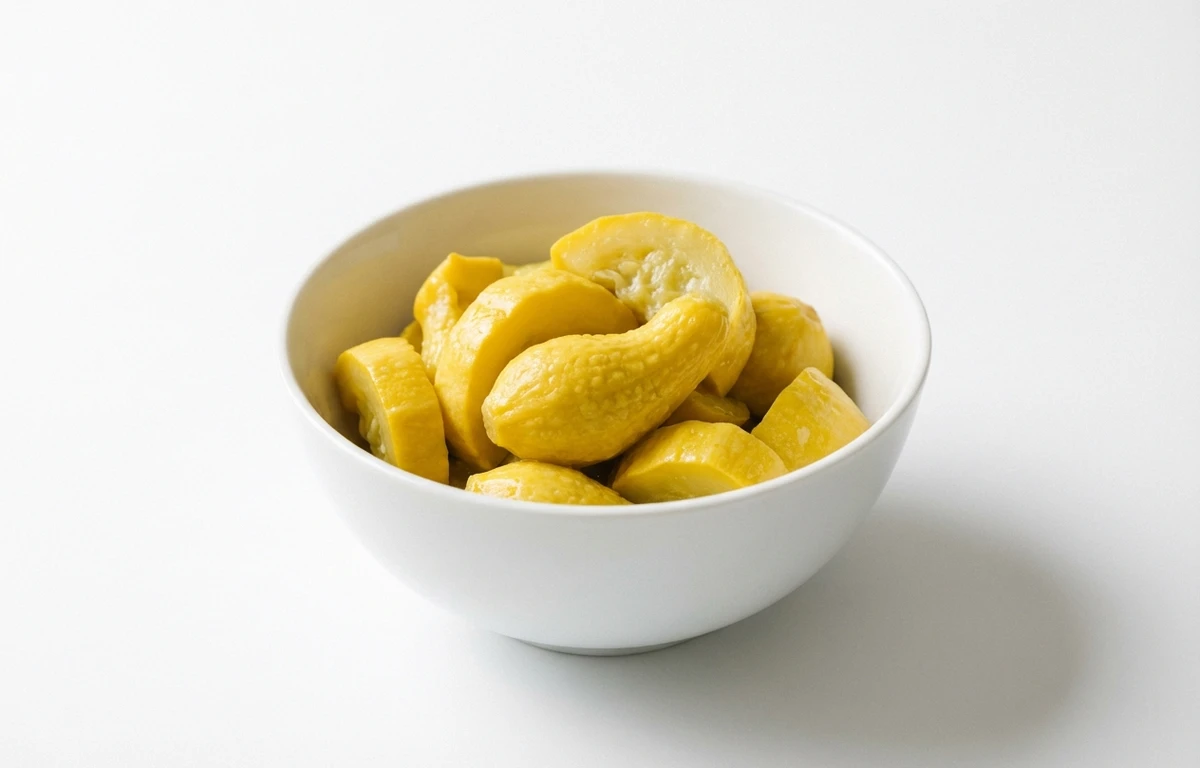
canned unsalted crookneck squash.
VegetarianVeganGluten-freeDairy-freeNut-freePeanut-freeSoy-freeEgg-freeShellfish-freeHoney-freeAlcohol-free
SERVING
CALORIES
13
PROTEIN
0.61g
CARBS
3.0g
FAT
0.07g
FIBER
1.4g
This ingredient is flagged as naturally gluten-free. Per 100 g, it provides 2.8 µg of vitamin K.
NUTRITION PROFILE · per 100 g
Everything in this ingredient.
MACRONUTRIENTS
Calories13kcal—
Protein0.61g1%
Carbohydrates3.0g1%
Fiber1.4g5%
Sugar1.2g2%
Total fat0.07g0%
Saturated fat0.02g0%
Trans fat0g—
Cholesterol0mg0%
Water96g—
MINERALS
Sodium5.0mg0%
Potassium96mg2%
Calcium12mg1%
Iron0.71mg4%
Magnesium13mg3%
Phosphorus21mg2%
Zinc0.29mg3%
Copper0.08mg9%
Manganese0.10mg4%
Selenium0.20µg0%
VITAMINS
Vitamin A5.0µg1%
Vitamin C2.7mg3%
Vitamin D0µg0%
Vitamin E0.12mg1%
Vitamin K2.8µg2%
Thiamin (B1)0.02mg2%
Riboflavin (B2)0.03mg2%
Niacin (B3)0.42mg3%
Pantothenic acid (B5)0.05mg1%
Vitamin B60.04mg2%
Folate (B9)10µg3%
Vitamin B120µg0%
%DV based on a 2,000 cal diet. Source: USDA FoodData Central. A dash in the %DV column means there’s no established Daily Value for that nutrient.
MEASUREMENT CONVERSIONS
How much is what.
1 cup216g
1 tablespoon13.5g
1 teaspoon4.5g
1 ml0.9g
1 liter900g
HEALTH BENEFITS
Why eat it.
- ✓High water content contributes to overall hydration.
COOKING TIPS
In the kitchen.
- 1Drain the liquid from the can before using to avoid adding excess water to your dish, especially for sautés or casseroles.
- 2The soft, cooked texture is perfect for puréeing into creamy soups, sauces, or as a base for baby food.
- 3Mash the drained squash with herbs and a little olive oil for a simple and nutritious side dish.
- 4Incorporate puréed canned squash into baked goods like muffins, breads, or even pancakes for added moisture and nutrients.
STORAGE
Keep it fresh.
- Store unopened cans in a cool, dark, dry place like a pantry for up to 2-3 years, checking the expiration date.
- After opening, transfer any unused squash to an airtight glass or plastic container and refrigerate for up to 3-4 days.
FAQ
Frequently asked questions.
Is canned crookneck squash keto-friendly?
Yes, it is very keto-friendly. With only 2.96g of carbohydrates per 100g, it is a low-carb vegetable that can easily fit into a ketogenic or low-carbohydrate meal plan.
What does canned crookneck squash taste like?
It has a mild, slightly sweet, and buttery flavor similar to yellow summer squash or zucchini. Because it is canned, the texture is much softer than fresh squash, making it very tender.
How do you use canned crookneck squash in recipes?
Since it is already soft and pre-cooked, it is perfect for adding to soups, stews, and casseroles. You can also mash it with herbs as a side dish or blend it into sauces to boost the nutritional profile of a meal.
Do I need to cook canned crookneck squash before eating?
No, canned squash is fully cooked during the canning process and is safe to eat directly from the can. However, most people prefer to heat it on the stovetop or in the microwave to improve the eating experience.
How long does canned crookneck squash last once opened?
Once the can is opened, you should transfer the squash to a sealed airtight container and refrigerate it. It will typically stay fresh for 3 to 4 days.
How should I store unopened cans of crookneck squash?
Unopened cans should be stored in a cool, dry place like a pantry. While they can remain safe to eat for several years, for the best quality and nutrient retention, use them by the 'best by' date printed on the can.



















