
Loading...
Also known as: tomato puree
Per 100g
Nutrition data source: USDA FoodData Central
Common measurement equivalents in grams
Yes, it is highly nutritious and low in calories. It is a concentrated source of vitamins A and C, and because it is unsalted, it is an excellent choice for maintaining heart health and managing sodium intake.
Tomato puree is rich in lycopene, a powerful antioxidant that supports heart health and may reduce the risk of certain cancers. It also contains potassium, which helps regulate blood pressure and fluid balance.
Per 100g, unsalted tomato puree contains approximately 38 calories and 8.98g of carbohydrates. It is also very low in fat, containing only about 0.21g per serving.
It can be included in a keto diet in moderation. While it contains roughly 9g of carbs per 100g, it is usually used as a base for sauces spread across multiple servings, making the net carb count per meal relatively low.
Absolutely. Unsalted tomato puree is ideal for those monitoring their salt intake as it contains only the minimal, naturally occurring sodium found in tomatoes, allowing you to control the seasoning of your dish entirely.
Tomato puree has a thinner consistency and a milder flavor compared to tomato paste. Puree is made by briefly cooking and straining tomatoes, while paste is cooked much longer to create a thick, highly concentrated reduction.
It is a versatile base for making smooth pasta sauces, tomato soups, and pizza sauce. It can also be added to stews and curries to provide a rich tomato flavor and a smooth, consistent texture.
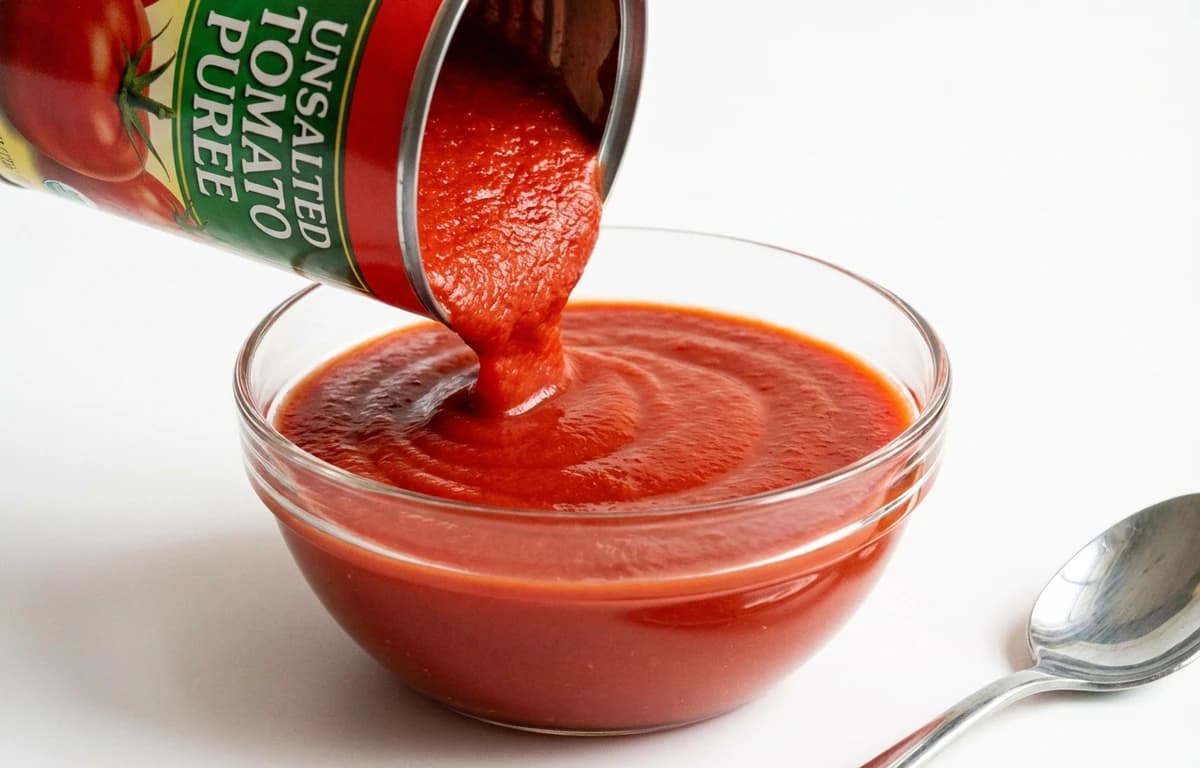
canned unsalted tomato puree is a versatile ingredient found in cuisines around the world. With 38 calories per 100g and 1.65 grams of protein, it's a nutritious addition to many dishes.
Explore more ingredients in the vegetable category with complete nutrition information.
View all vegetable →Discover 0 recipes featuring canned unsalted tomato puree with step-by-step instructions.
Browse recipes →Once opened, transfer the puree from the can to an airtight glass or plastic container. It will remain fresh in the refrigerator for approximately 5 to 7 days.
Yes, tomato puree freezes very well. You can freeze it in airtight containers or portion it into ice cube trays for easy use in future recipes; it will stay good for up to 3 months.
In terms of lycopene absorption, yes. The heating and processing involved in making puree breaks down the tomato's cell walls, making the lycopene more bioavailable and easier for your body to absorb than from raw tomatoes.