
Beverage
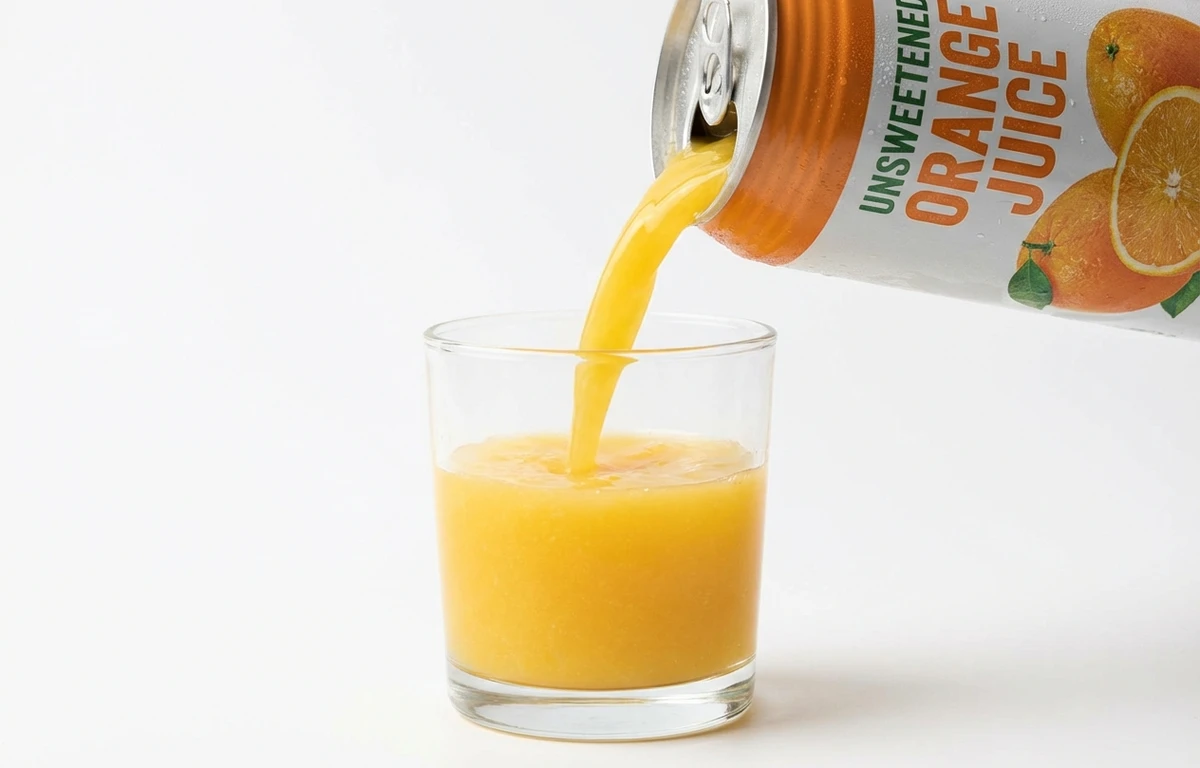
canned unsweetened orange juice.
VegetarianVeganGluten-freeDairy-freeNut-freePeanut-freeSoy-freeEgg-freeShellfish-freeHoney-freeAlcohol-free
SERVING
CALORIES
47
PROTEIN
0.68g
CARBS
11g
FAT
0.15g
FIBER
0.30g
NUTRITION PROFILE · per 100 g
Everything in this ingredient.
MACRONUTRIENTS
Calories47kcal—
Protein0.68g1%
Carbohydrates11g4%
Fiber0.30g1%
Sugar8.8g18%
Total fat0.15g0%
Saturated fat0.02g0%
Trans fat0g—
Cholesterol0mg0%
Water87.7g—
MINERALS
Sodium4.0mg0%
Potassium184mg4%
Calcium10mg1%
Iron0.10mg1%
Magnesium10mg2%
Phosphorus17mg1%
Zinc0.04mg0%
Copper0.02mg2%
Manganese0.02mg1%
Selenium0.10µg0%
VITAMINS
Vitamin A9.0µg1%
Vitamin C30.1mg33%
Vitamin D0µg0%
Vitamin E0.20mg1%
Vitamin K0.10µg0%
Thiamin (B1)0.04mg3%
Riboflavin (B2)0.02mg2%
Niacin (B3)0.20mg1%
Pantothenic acid (B5)0.18mg4%
Vitamin B60.03mg2%
Folate (B9)24µg6%
Vitamin B120µg0%
%DV based on a 2,000 cal diet. Source: USDA FoodData Central. A dash in the %DV column means there’s no established Daily Value for that nutrient.
MEASUREMENT CONVERSIONS
How much is what.
1 cup249g
1 tablespoon15.6g
1 teaspoon5.2g
1 ml1g
1 liter1037.5g
HEALTH BENEFITS
Why eat it.
- ✓Excellent source of Vitamin C, a powerful antioxidant that supports the immune system and collagen production.
- ✓Provides potassium, an essential mineral and electrolyte that helps regulate blood pressure and fluid balance.
- ✓Contains flavonoids like hesperidin, which may have anti-inflammatory properties and support cardiovascular health.
- ✓A good source of folate (Vitamin B9), which is crucial for cell growth and metabolism.
COOKING TIPS
In the kitchen.
- 1Use as a liquid base for smoothies to add natural sweetness and a boost of Vitamin C.
- 2Incorporate into marinades for chicken, pork, or fish; the acidity helps to tenderize the meat and adds a bright flavor.
- 3Reduce the juice in a saucepan to create a concentrated, flavorful glaze for roasted meats or vegetables like carrots and sweet potatoes.
- 4Freeze in ice cube trays to add to water, iced tea, or cocktails without diluting the drink.
STORAGE
Keep it fresh.
- Store unopened cans in a cool, dark, and dry place like a pantry for up to 18 months. Avoid extreme temperatures.
- Once opened, transfer the juice to a glass or plastic airtight container and refrigerate. Consume within 5 to 7 days for optimal freshness and safety.
FAQ
Frequently asked questions.
Is canned unsweetened orange juice healthy?
Yes, it is a nutrient-dense beverage that provides approximately 47 calories per 100g. It is an excellent source of Vitamin C for immune support and potassium for heart health, though it lacks the fiber found in whole oranges.
Does 'unsweetened' mean the juice is sugar-free?
No, 'unsweetened' simply means no table sugar or corn syrup was added during processing. The juice still contains about 11g of carbohydrates per 100g, which come from naturally occurring fruit sugars like fructose.
What are the primary health benefits of this juice?
It is rich in Vitamin C, which aids collagen production, and potassium, which helps regulate blood pressure. It also contains folate for cell growth and flavonoids like hesperidin that provide anti-inflammatory and cardiovascular support.
Is canned unsweetened orange juice keto-friendly?
Generally, no. Because it contains roughly 11g of net carbs per 100g, even a small serving can significantly impact daily carb limits on a strict ketogenic diet. It is better suited for low-fat or general healthy diets.
Is this juice vegan and gluten-free?
Yes, canned unsweetened orange juice is naturally vegan and gluten-free. It consists of fruit juice and occasionally added Vitamin C (ascorbic acid) or citric acid, containing no animal products or grain derivatives.
How can I use canned orange juice in cooking?
It is highly versatile and can be used in marinades for poultry or seafood, whisked into vinaigrettes, or used as a liquid base for smoothies. In baking, it adds moisture and a citrus note to cakes, glazes, and muffins.
How does canned orange juice taste compared to fresh-squeezed?
Canned juice typically has a more consistent, slightly bolder flavor due to the pasteurization process. While it may lack the delicate floral notes of fresh-squeezed juice, it is a convenient and shelf-stable alternative.
How should I store canned orange juice after opening?
Once opened, transfer the juice from the metal can into a sealed glass or plastic container. Store it in the refrigerator and consume it within 5 to 7 days for optimal freshness and flavor.
Can I freeze canned orange juice?
Yes, you can freeze it for up to 12 months. Freezing it in ice cube trays is a great way to portion it for smoothies or to chill beverages without diluting the flavor as the ice melts.
How do I know if the juice has spoiled?
Discard the juice if it develops a sour, fermented smell, an unusually dark color, or if you see any signs of mold. Additionally, if the can is bulging, leaking, or badly dented, the contents may be unsafe to consume.



















