
Other
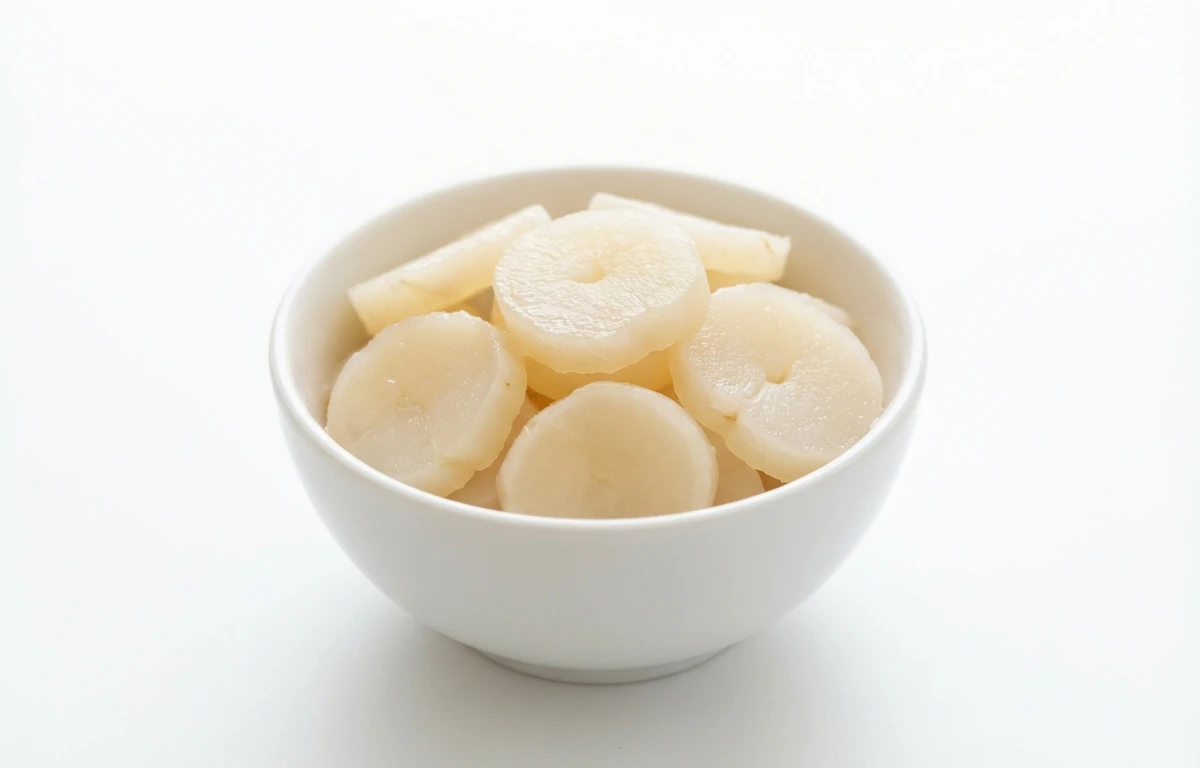
canned water chestnuts.
VegetarianVeganGluten-freeDairy-freeNut-freePeanut-freeSoy-freeEgg-freeShellfish-freeHoney-freeAlcohol-free
ALSO KNOWN AS
canned singharacanned paniphalcanned chinese water chestnutscanned matai
SERVING
CALORIES
50
PROTEIN
0.90g
CARBS
12.8g
FAT
0.10g
FIBER
2.1g
This ingredient is flagged as naturally gluten-free. Per 100 g, it provides 0.20 µg of vitamin K.
NUTRITION PROFILE · per 100 g
Everything in this ingredient.
MACRONUTRIENTS
Calories50kcal—
Protein0.90g2%
Carbohydrates12.8g5%
Fiber2.1g8%
Sugar1.9g4%
Total fat0.10g0%
Saturated fat0.01g0%
Trans fat0g—
Cholesterol0mg0%
Water84g—
MINERALS
Sodium10mg0%
Potassium100mg2%
Calcium5.0mg0%
Iron0.50mg3%
Magnesium10mg2%
Phosphorus30mg2%
Zinc0.30mg3%
Copper0.10mg11%
Manganese0.20mg9%
Selenium0.50µg1%
VITAMINS
Vitamin A0µg0%
Vitamin C1.5mg2%
Vitamin D0µg0%
Vitamin E0.10mg1%
Vitamin K0.20µg0%
Thiamin (B1)0.05mg4%
Riboflavin (B2)0.05mg4%
Niacin (B3)0.50mg3%
Pantothenic acid (B5)0.20mg4%
Vitamin B60.10mg6%
Folate (B9)5.0µg1%
Vitamin B120µg0%
%DV based on a 2,000 cal diet. Source: USDA FoodData Central. A dash in the %DV column means there’s no established Daily Value for that nutrient.
MEASUREMENT CONVERSIONS
How much is what.
1 cup140g
1 tablespoon15g
1 teaspoon5g
1 oz28.4g
1 lb453.6g
1 ml1g
1 liter1000g
1 piece10g
HEALTH BENEFITS
Why eat it.
- ✓Low in calories and fat-free
- ✓Good source of potassium for heart health
- ✓Naturally gluten-free
- ✓High water content helps with hydration
COOKING TIPS
In the kitchen.
- 1Rinse thoroughly under cold water to remove any 'tinny' canned flavor
- 2Add to stir-fries at the very end to preserve their signature crunch
- 3Can be used raw in salads or finely minced for dumpling fillings
STORAGE
Keep it fresh.
- Store unopened cans in a cool, dry pantry for up to 2 years
- Once opened, transfer to a glass container and submerge in fresh water
- Change the water daily and consume within 3 to 4 days
FAQ
Frequently asked questions.
How long do canned water chestnuts last after opening?
Once opened, they should be stored in the refrigerator submerged in fresh water and used within 3-4 days. Change the water daily to keep them fresh.
Can you freeze canned water chestnuts?
Freezing is not recommended as it significantly alters their texture, causing them to lose their characteristic crunch and become mushy.
What is the best substitute for canned water chestnuts?
Fresh jicama is the best substitute for crunch. Sliced celery, bamboo shoots, or Jerusalem artichokes can also work in stir-fries.
Are water chestnuts a type of nut?
No, despite the name, they are not nuts. They are aquatic tuber-like vegetables (corms) that grow in marshes and underwater mud.
How do you remove the metallic taste from canned water chestnuts?
Rinsing them thoroughly under cold running water for 1-2 minutes or soaking them in fresh water with a pinch of salt for 10 minutes helps remove the canned taste.
Are canned water chestnuts keto-friendly?
They are moderately keto-friendly. While they contain more carbs than leafy greens (about 9g net carbs per 100g), they can be used in small amounts for texture.
Do water chestnuts lose their crunch when cooked?
No, water chestnuts are unique because they retain their crisp texture even after being boiled, steamed, or stir-fried due to their cell wall structure.
Are canned water chestnuts already cooked?
Yes, the canning process involves heat which essentially cooks them. They can be eaten straight from the can after rinsing.
Are they high in sodium?
Standard canned water chestnuts contain some sodium from the brine, but rinsing them can reduce the sodium content by nearly half.
What are common dishes that use canned water chestnuts?
They are popular in Chinese stir-fries, spinach artichoke dips, bacon-wrapped appetizers (Rumaki), and minced in poultry stuffings.



















