
Other
cassava.
VegetarianVeganGluten-freeDairy-freeNut-freePeanut-freeSoy-freeEgg-freeShellfish-freeHoney-freeAlcohol-freeHalalKosher
ALSO KNOWN AS
yucamaniocmandiocatapioca rootkappamaravalli kizhangu
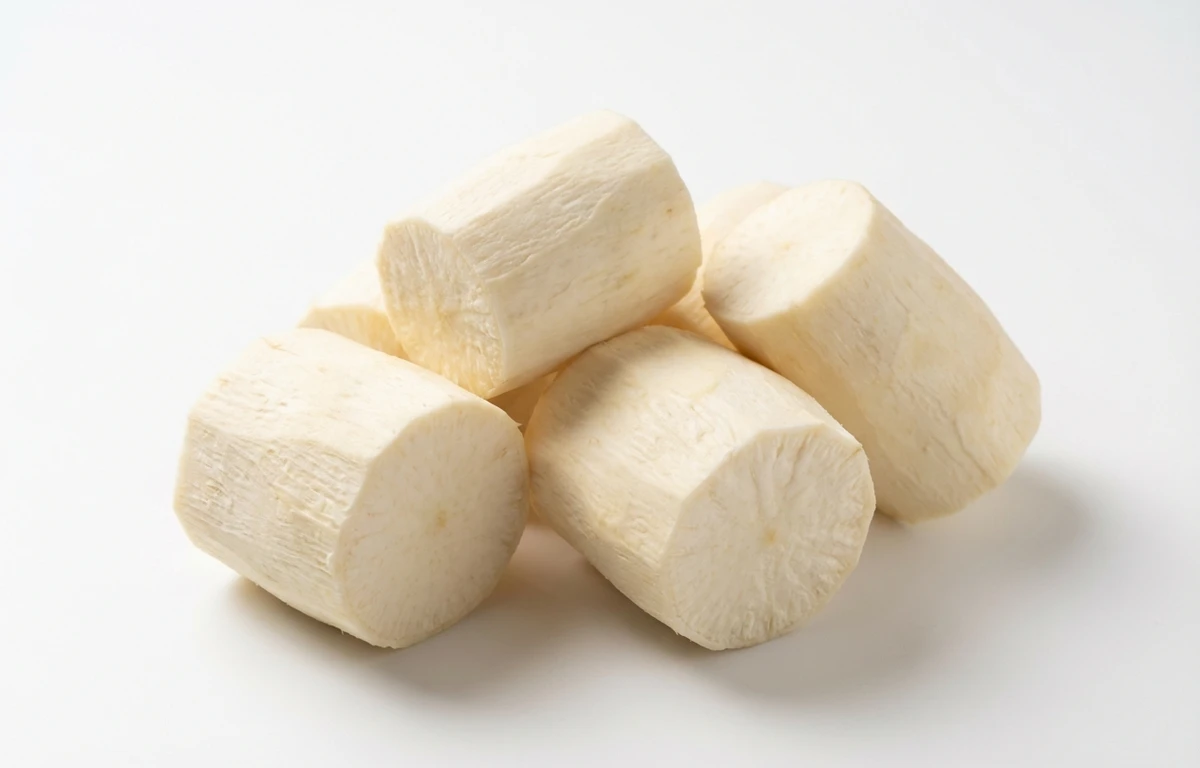
SERVING
CALORIES
86
PROTEIN
1.4g
CARBS
19.5g
FAT
0.30g
FIBER
1.8g
This ingredient is flagged as naturally gluten-free. Per 100 g, it provides 1.9 µg of vitamin K.
NUTRITION PROFILE · per 100 g
Everything in this ingredient.
MACRONUTRIENTS
Calories86kcal—
Protein1.4g3%
Carbohydrates19.5g7%
Fiber1.8g6%
Sugar1.7g3%
Total fat0.30g0%
Saturated fat0.07g0%
Trans fat0g—
Cholesterol0mg0%
Water75g—
MINERALS
Sodium14mg1%
Potassium271mg6%
Calcium16mg1%
Iron0.27mg2%
Magnesium21mg5%
Phosphorus27mg2%
Zinc0.34mg3%
Copper0.10mg11%
Manganese0.38mg17%
Selenium0.70µg1%
VITAMINS
Vitamin A1.0µg0%
Vitamin C20.6mg23%
Vitamin D0µg0%
Vitamin E0.19mg1%
Vitamin K1.9µg2%
Thiamin (B1)0.09mg8%
Riboflavin (B2)0.05mg4%
Niacin (B3)0.85mg5%
Pantothenic acid (B5)0.11mg2%
Vitamin B60.09mg5%
Folate (B9)27µg7%
Vitamin B120µg0%
%DV based on a 2,000 cal diet. Source: USDA FoodData Central. A dash in the %DV column means there’s no established Daily Value for that nutrient.
MEASUREMENT CONVERSIONS
How much is what.
1 cup140g
1 oz28.4g
1 lb453.6g
1 piece400g
HEALTH BENEFITS
Why eat it.
- ✓Contains resistant starch which may improve gut health
- ✓Provides a steady source of energy
- ✓Contains potassium which helps regulate blood pressure
COOKING TIPS
In the kitchen.
- 1Always peel the thick brown skin and the white/pinkish layer beneath it
- 2Remove the woody core running through the center before or after boiling
- 3Never eat raw; boil, bake, or fry thoroughly to neutralize natural toxins
STORAGE
Keep it fresh.
- Store unpeeled roots in a cool, dry, dark place for up to 7 days
- Once peeled, keep submerged in water in the refrigerator for 2-3 days
- Can be peeled, cut into chunks, and frozen for up to 6 months
FAQ
Frequently asked questions.
How long does fresh cassava last?
Fresh, unpeeled cassava lasts about 4 to 7 days if kept in a cool, dry place. Once peeled, it spoils quickly unless kept in water in the fridge.
Can you eat cassava raw?
No, cassava must never be eaten raw. It contains cyanogenic glycosides that can be toxic; cooking thoroughly neutralizes these compounds.
How do I pick a good cassava root?
Look for roots that are firm, heavy for their size, and free of soft spots, mold, or deep cracks. The flesh inside should be pure white.
What is a good substitute for cassava?
Potatoes, sweet potatoes, taro, or yams are the best substitutes depending on the recipe's texture requirements.
Is cassava the same as tapioca?
Tapioca is the starch extracted from the cassava root. While they come from the same plant, cassava is the whole vegetable and tapioca is a processed byproduct.
How do you prepare cassava for cooking?
Cut off the ends, slice the root into segments, score the thick skin vertically, and peel it away. Always remove the fibrous inner core.
Is cassava gluten-free?
Yes, cassava is naturally gluten-free and is a popular base for gluten-free flours and snacks.
Can cassava be frozen?
Yes, peeling and chopping cassava into chunks before freezing is an excellent way to preserve it for several months.
What are common ways to cook cassava?
It is most commonly boiled, mashed, or cut into wedges and fried (yuca fries). It is also used in stews and desserts.
Why is cassava considered a root vegetable?
It is a tuberous root that grows underground, storing energy for the plant in the form of carbohydrates.



















