
Grain1 recipes
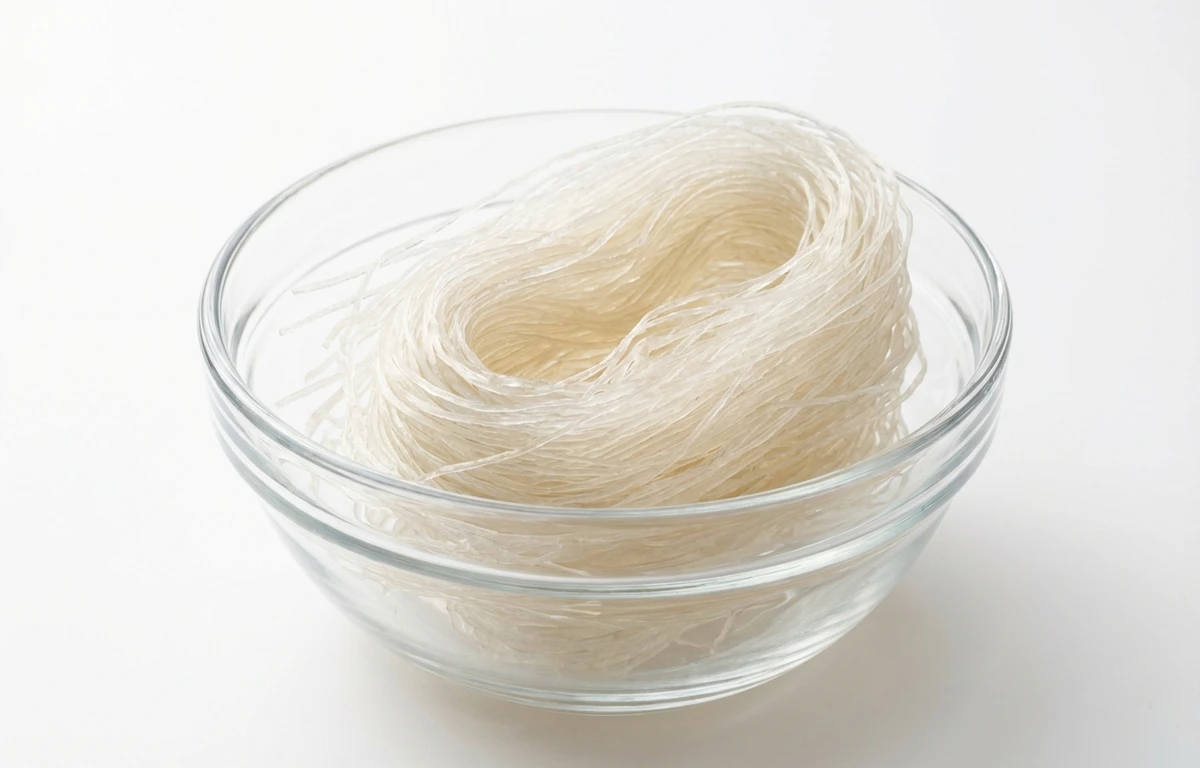
cellophane noodles.
VegetarianVeganGluten-freeDairy-freeNut-freePeanut-freeSoy-freeEgg-freeShellfish-freeHoney-freeAlcohol-free
ALSO KNOWN AS
glass noodlesfensibean thread noodlessaifunसेलोफेन नूडल्सग्लास नूडल्स
SERVING
CALORIES
351
PROTEIN
0.16g
CARBS
86.1g
FAT
0.06g
FIBER
0.50g
NUTRITION PROFILE · per 100 g
Everything in this ingredient.
MACRONUTRIENTS
Calories351kcal—
Protein0.16g0%
Carbohydrates86.1g31%
Fiber0.50g2%
Sugar0g0%
Total fat0.06g0%
Saturated fat0.02g0%
Trans fat0g—
Cholesterol0mg0%
Water13.4g—
MINERALS
Sodium10mg0%
Potassium10mg0%
Calcium25mg2%
Iron2.2mg12%
Magnesium3.0mg1%
Phosphorus32mg3%
Zinc0.41mg4%
Copper0.08mg9%
Manganese0.10mg4%
Selenium7.9µg14%
VITAMINS
Vitamin A0µg0%
Vitamin C0mg0%
Vitamin D0µg0%
Vitamin E0.13mg1%
Vitamin K0µg0%
Thiamin (B1)0.15mg13%
Riboflavin (B2)0mg0%
Niacin (B3)0.20mg1%
Pantothenic acid (B5)0.10mg2%
Vitamin B60.05mg3%
Folate (B9)2.0µg1%
Vitamin B120µg0%
%DV based on a 2,000 cal diet. Source: USDA FoodData Central. A dash in the %DV column means there’s no established Daily Value for that nutrient.
MEASUREMENT CONVERSIONS
How much is what.
1 cup140g
1 tablespoon8.8g
1 teaspoon2.9g
1 oz28.4g
1 lb453.6g
1 ml0.6g
1 liter583.3g
HEALTH BENEFITS
Why eat it.
- ✓Naturally gluten-free, making them suitable for individuals with celiac disease or gluten sensitivity.
- ✓Very low in fat and contain no cholesterol, contributing to a heart-healthy diet when prepared with lean ingredients.
- ✓When cooked and cooled, they can form resistant starch, which may support gut health by acting as a prebiotic.
- ✓A light source of carbohydrates that is easy to digest for many people.
COOKING TIPS
In the kitchen.
- 1Soak in hot (not boiling) water for 5-10 minutes until pliable before using in stir-fries or salads. Do not boil unless a recipe specifically requires it, as they cook very fast.
- 2Rinse the rehydrated noodles under cold water to remove excess starch and stop the cooking process, which prevents them from becoming gummy and sticking together.
- 3Due to their neutral taste, they are excellent at absorbing the flavors of sauces, broths, and dressings. Add them to dishes near the end of cooking.
- 4For crispy 'fried' noodles, deep-fry small bunches of the dry noodles directly in hot oil for a few seconds until they puff up.
STORAGE
Keep it fresh.
- Store dry noodles in a cool, dark, dry place like a pantry. In an airtight container, they can last for several years.
- Keep cooked noodles in an airtight container in the refrigerator for up to 3-4 days. Toss with a little oil to prevent clumping.
FAQ
Frequently asked questions.
Are cellophane noodles healthy?
Cellophane noodles are a low-fat, cholesterol-free source of energy that is easy to digest. While they are high in carbohydrates and low in protein, they can support gut health through the formation of resistant starch when served cold.
Are cellophane noodles gluten-free?
Yes, cellophane noodles are naturally gluten-free because they are made from plant starches like mung bean or sweet potato rather than wheat. This makes them a safe pasta alternative for individuals with celiac disease or gluten sensitivity.
How many calories and carbs are in cellophane noodles?
A 100g serving of dry cellophane noodles contains approximately 351 calories and 86.09g of carbohydrates. They are a dense source of energy with very little protein (0.16g) or fat (0.06g).
What are cellophane noodles made of?
Also known as glass noodles or bean threads, they are typically made from water and starch extracted from mung beans, peas, potatoes, or sweet potatoes. This starch-based composition is what gives them their transparent appearance when cooked.
How do you cook cellophane noodles?
Most varieties do not require boiling on the stove; instead, soak them in a bowl of hot water for 5 to 15 minutes until they become soft and transparent. Once softened, drain them and add them to stir-fries, soups, or salads.
Are cellophane noodles vegan?
Yes, cellophane noodles are 100% vegan. They consist entirely of plant-derived starches and water, making them suitable for any plant-based diet.
What do cellophane noodles taste like?
Cellophane noodles have a very neutral, mild flavor and a slippery, slightly gelatinous texture. They are prized for their ability to absorb the flavors of the broths, sauces, and spices they are paired with.
Can I substitute cellophane noodles with rice vermicelli?
While they look similar, rice vermicelli is made from rice flour and remains white and opaque when cooked, whereas cellophane noodles become clear. You can substitute them in a pinch, but the texture will be softer and less chewy than the original.
How do you store cooked cellophane noodles?
Cooked cellophane noodles should be stored in an airtight container in the refrigerator for up to 3-5 days. To prevent them from clumping together, toss them with a small amount of sesame oil or water before storing.
Are cellophane noodles keto-friendly?
No, cellophane noodles are not keto-friendly. They are almost entirely composed of starch and contain over 86g of carbohydrates per 100g, which is too high for a standard low-carb or ketogenic diet.
RECIPES
Cook with cellophane noodles.
1 recipes · sorted by what’s quick



















