
Protein1 recipes
champagne yeast.
VegetarianVeganGluten-freeDairy-freeNut-freePeanut-freeSoy-freeEgg-freeShellfish-freeHoney-freeAlcohol-freeFermented
ALSO KNOWN AS
wine yeast
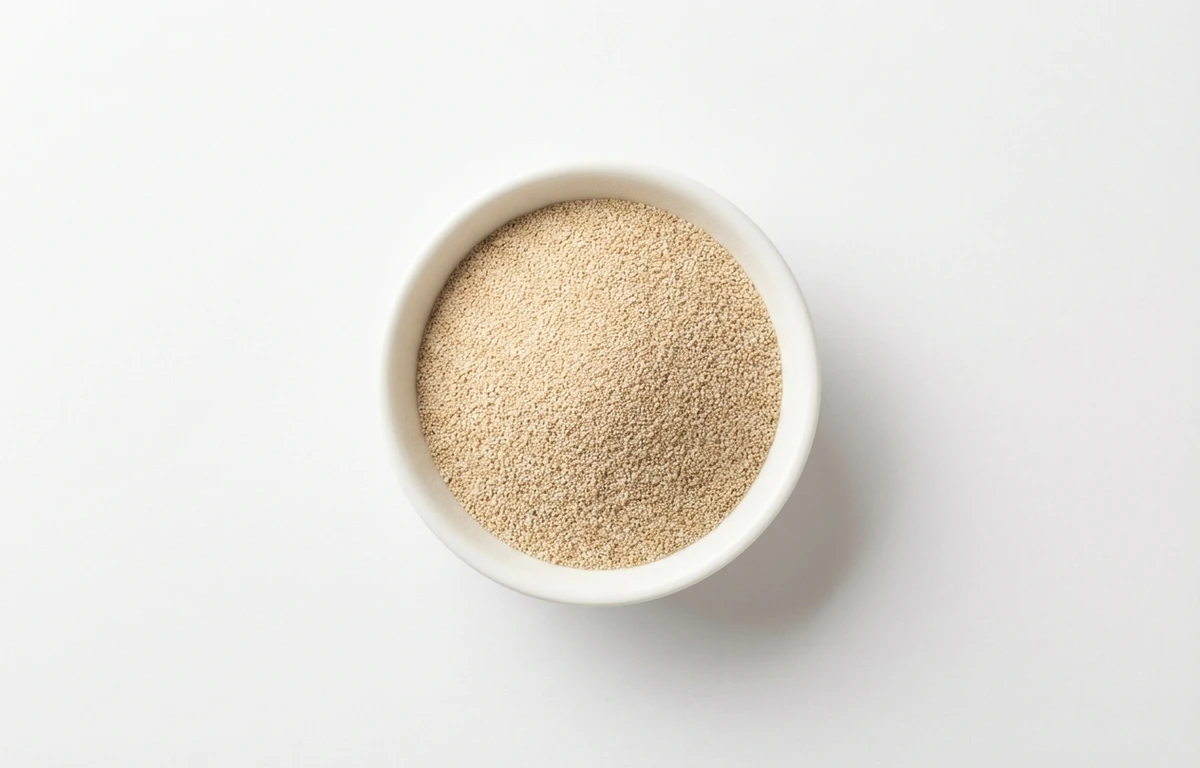
SERVING
CALORIES
325
PROTEIN
40.4g
CARBS
38.2g
FAT
5.6g
FIBER
26.9g
NUTRITION PROFILE · per 100 g
Everything in this ingredient.
MACRONUTRIENTS
Calories325kcal—
Protein40.4g81%
Carbohydrates38.2g14%
Fiber26.9g96%
Sugar0g0%
Total fat5.6g7%
Saturated fat0.70g3%
Trans fat0g—
Cholesterol0mg0%
Water5.1g—
MINERALS
Sodium52mg2%
Potassium1910mg41%
Calcium78mg6%
Iron5.2mg29%
Magnesium128mg30%
Phosphorus922mg74%
Zinc7.9mg72%
Copper0.45mg50%
Manganese0.31mg13%
Selenium21µg38%
VITAMINS
Vitamin A0µg0%
Vitamin C0mg0%
Vitamin D0µg0%
Vitamin E0mg0%
Vitamin K0µg0%
Thiamin (B1)10.5mg875%
Riboflavin (B2)4.1mg315%
Niacin (B3)40.2mg251%
Pantothenic acid (B5)11mg220%
Vitamin B62.9mg171%
Folate (B9)2340µg585%
Vitamin B120µg0%
%DV based on a 2,000 cal diet. Source: USDA FoodData Central. A dash in the %DV column means there’s no established Daily Value for that nutrient.
MEASUREMENT CONVERSIONS
How much is what.
1 cup149g
1 tablespoon9.3g
1 teaspoon3.1g
1 ml0.6g
1 liter620g
HEALTH BENEFITS
Why eat it.
- ✓Acts as a powerful fermenting agent, essential for producing alcoholic beverages like champagne, cider, and mead.
- ✓As a strain of Saccharomyces cerevisiae, it is a rich source of B-vitamins, including thiamin (B1), riboflavin (B2), and niacin (B3), which are vital for energy metabolism.
- ✓Contains essential minerals such as selenium and chromium, which support immune function and help regulate blood sugar levels.
- ✓Contributes to the creation of probiotic-rich fermented beverages, which can support gut health by introducing beneficial microorganisms.
COOKING TIPS
In the kitchen.
- 1Rehydrate dry champagne yeast in lukewarm water (95-105°F or 35-40°C) for about 15 minutes before adding it to your juice or must to ensure a strong and healthy fermentation.
- 2Ideal for fermenting high-sugar liquids due to its high alcohol tolerance (often up to 18% ABV), making it perfect for sparkling wines, dry ciders, and meads.
- 3This yeast strain ferments to a very dry finish and has a neutral flavor profile, which allows the natural flavors of the fruit or honey to be the main focus.
- 4For non-grape fermentations (like cider or mead), consider adding yeast nutrient to provide the necessary nitrogen and minerals for a complete and healthy fermentation.
STORAGE
Keep it fresh.
- Store unopened dry yeast packets in a cool, dark, and dry place like a pantry. It will remain viable until the expiration date.
- Once opened, transfer dry yeast to an airtight container and store in the refrigerator for up to 4 months or the freezer for up to 6 months to preserve its potency.
- Liquid yeast cultures must be kept refrigerated (34-40°F or 1-4°C) and used promptly, as their viability decreases significantly over time.
FAQ
Frequently asked questions.
Is champagne yeast healthy?
Yes, champagne yeast is a nutrient-dense fungus that is a rich source of B-vitamins, including thiamin, riboflavin, and niacin. These vitamins are essential for energy metabolism and nervous system health. It also contains trace minerals like selenium and chromium, which support immune function.
How much protein and calories are in champagne yeast?
Champagne yeast contains approximately 325 calories and 40.4g of protein per 100g. While it is high in protein and carbohydrates (38.2g), it is typically used in very small amounts for fermentation, meaning its caloric contribution to a final beverage is minimal.
Is champagne yeast vegan and gluten-free?
Yes, champagne yeast is naturally vegan as it is a single-celled organism (fungus) and contains no animal products. It is also generally gluten-free, though individuals with celiac disease should check for 'certified gluten-free' labels to ensure no cross-contamination occurred during processing.
Is champagne yeast keto-friendly?
Yes, it is keto-friendly. Although it contains carbohydrates, the yeast consumes the sugars in the liquid during the fermentation process to produce alcohol and carbon dioxide, resulting in a final product that is very low in residual sugar.
Can I use champagne yeast to bake bread?
You can use it, but the results will differ from standard bread yeast. Champagne yeast is bred for high alcohol tolerance and a clean finish; it may produce a smaller rise and a different flavor profile, often resulting in a denser loaf with a slightly 'yeasty' or alcoholic aroma.
What is champagne yeast primarily used for?
It is a specialized strain of Saccharomyces cerevisiae used for fermenting champagne, dry wines, hard ciders, and mead. It is preferred for its ability to ferment quickly, handle high alcohol concentrations, and produce a very dry, crisp finish.
How do I activate champagne yeast?
To activate (rehydrate) the yeast, stir it into a small amount of warm water (100°F to 105°F) and let it sit for about 10 to 15 minutes. Once it becomes foamy or creamy, it is active and ready to be pitched into your juice or must.
How should I store champagne yeast and how long does it last?
Unopened packets should be stored in a cool, dry place, but the refrigerator is best for longevity. If kept in the fridge, unopened yeast can last up to two years; once opened, it should be sealed airtight and used within 3 to 6 months.
What makes champagne yeast different from regular wine yeast?
Champagne yeast is specifically selected for its high alcohol tolerance (often up to 15-18% ABV) and its ability to ferment at cooler temperatures. It also tends to settle very firmly at the bottom of the bottle (flocculation), which helps in creating the clear appearance characteristic of sparkling wines.
Can I eat champagne yeast raw?
It is not advisable to consume active dry champagne yeast raw. Because it is a live organism, it can continue to ferment inside the digestive tract, potentially leading to significant bloating, gas, and stomach discomfort.
RECIPES
Cook with champagne yeast.
1 recipes · sorted by what’s quick



















