
Spice
cheese salt.
VegetarianVeganGluten-freeDairy-freeNut-freePeanut-freeSoy-freeEgg-freeShellfish-freeHoney-freeAlcohol-free
ALSO KNOWN AS
non-iodized saltcanning saltpickling saltpreserving salt
SERVING
CALORIES
0
PROTEIN
0g
CARBS
0g
FAT
0g
FIBER
0g
NUTRITION PROFILE · per 100 g
Everything in this ingredient.
MACRONUTRIENTS
Calories0kcal—
Protein0g0%
Carbohydrates0g0%
Fiber0g0%
Sugar0g0%
Total fat0g0%
Saturated fat0g0%
Trans fat0g—
Cholesterol0mg0%
Water0.20g—
MINERALS
Sodium38758mg1685%
Potassium8.0mg0%
Calcium24mg2%
Iron0.30mg2%
Magnesium1.0mg0%
Zinc0.10mg1%
Copper0.03mg3%
Manganese0.10mg4%
Selenium0.10µg0%
VITAMINS
Vitamin A0µg0%
Vitamin C0mg0%
Vitamin D0µg0%
Vitamin E0mg0%
Vitamin K0µg0%
Thiamin (B1)0mg0%
Riboflavin (B2)0mg0%
Niacin (B3)0mg0%
Pantothenic acid (B5)0mg0%
Vitamin B60mg0%
Folate (B9)0µg0%
Vitamin B120µg0%
%DV based on a 2,000 cal diet. Source: USDA FoodData Central. A dash in the %DV column means there’s no established Daily Value for that nutrient.
MEASUREMENT CONVERSIONS
How much is what.
1 cup250g
1 tablespoon18g
1 teaspoon6g
1 oz28.4g
1 lb453.6g
1 ml1.2g
1 liter1200g
HEALTH BENEFITS
Why eat it.
- ✓Essential for electrolyte balance
- ✓Supports nerve impulse transmission
- ✓Aids in muscle contraction and relaxation
- ✓Helps maintain proper blood pressure levels
- ✓Facilitates nutrient absorption in the gut
COOKING TIPS
In the kitchen.
- 1Use specifically for cheesemaking as it lacks iodine which can inhibit cultures
- 2Ideal for brining due to its high purity and quick-dissolving grains
- 3Can be used as a substitute for pickling or canning salt
STORAGE
Keep it fresh.
- Store in a cool, dry place to prevent clumping
- Keep in an airtight container to block moisture
- Store away from strong-smelling spices as salt can absorb odors
FAQ
Frequently asked questions.
What is cheese salt?
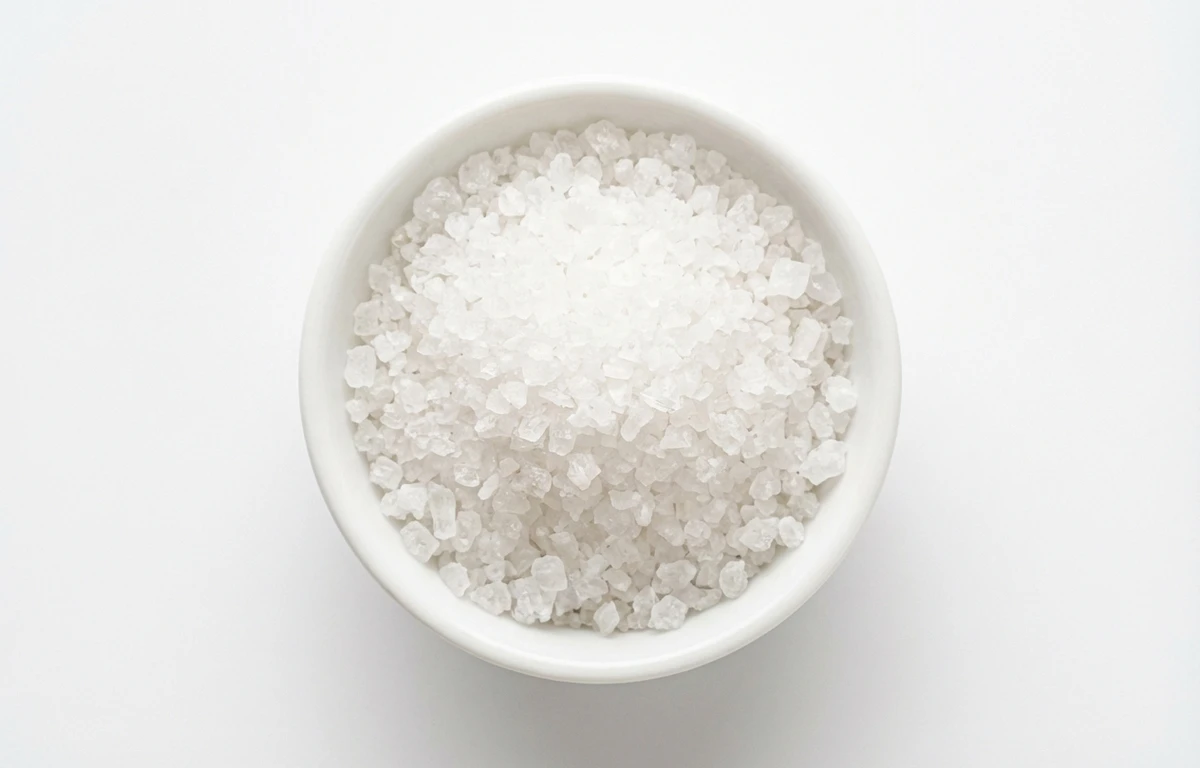
Cheese salt is a non-iodized, coarse or fine-grained flake salt used in cheesemaking to flavor the cheese and control the fermentation process.
How long does cheese salt last?
Salt has an indefinite shelf life if kept dry, as it does not support bacterial growth.
Can I use regular table salt instead of cheese salt?
It is not recommended because table salt usually contains iodine and anti-caking agents which can interfere with the cheese cultures and affect the final flavor.
What is the best substitute for cheese salt?
Kosher salt or pickling salt are the best substitutes as they are also non-iodized.
Why is cheese salt non-iodized?
Iodine is an antimicrobial agent that can kill the beneficial bacteria and starters needed to make cheese.
How should I store cheese salt?
Keep it in a sealed, airtight container in a dry pantry to prevent it from absorbing moisture from the air.
Is cheese salt vegan?
Yes, cheese salt is a mineral and contains no animal products.
Does cheese salt contain dairy?
No, despite the name, cheese salt is pure salt and contains no dairy components.
How do I pick a high-quality cheese salt?
Look for salt labeled as 'cheese salt', 'canning salt', or 'pickling salt' that lists only sodium chloride as the ingredient.
Can cheese salt be frozen?
There is no need to freeze salt; it is stable at room temperature indefinitely.



















