
Other5 recipes
chembali.
VegetarianVeganGluten-freeDairy-freeNut-freePeanut-freeSoy-freeEgg-freeShellfish-freeHoney-freeAlcohol-free
ALSO KNOWN AS
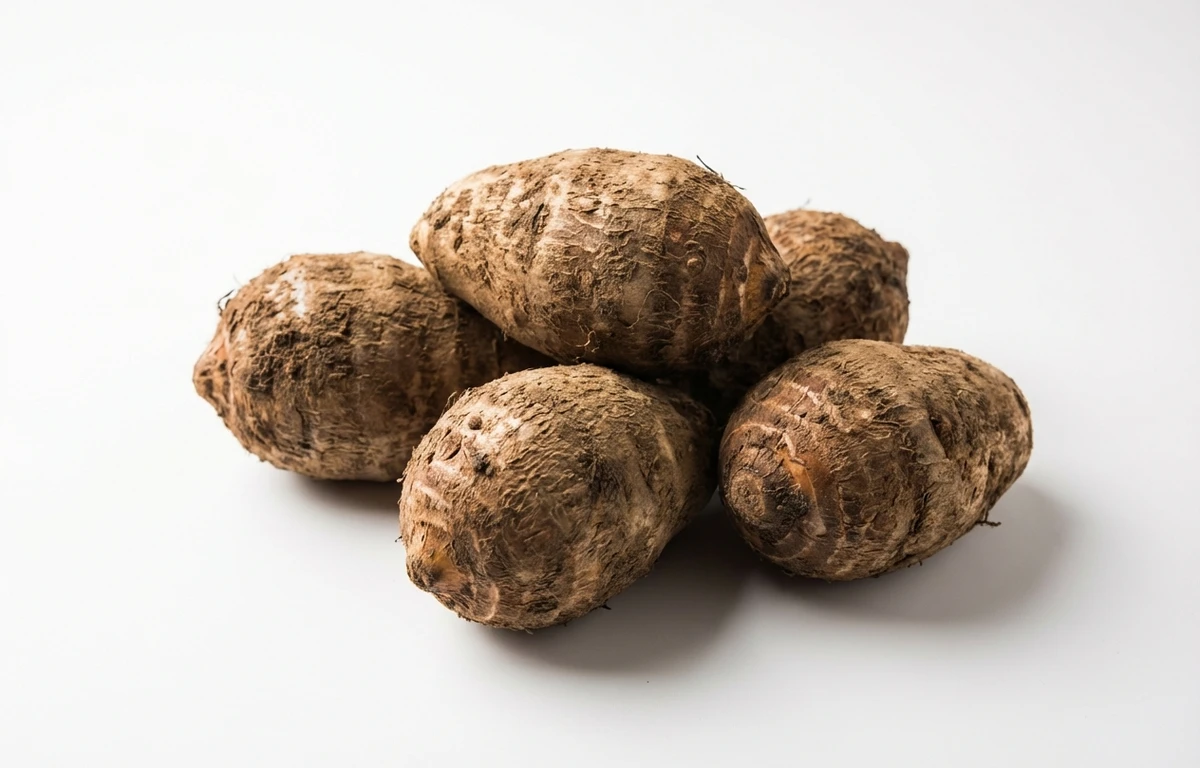
taro rootchembuarbicolocasiaeddoedasheenkachuseppankizhangu
SERVING
CALORIES
112
PROTEIN
1.5g
CARBS
26.5g
FAT
0.20g
FIBER
4.1g
NUTRITION PROFILE · per 100 g
Everything in this ingredient.
MACRONUTRIENTS
Calories112kcal—
Protein1.5g3%
Carbohydrates26.5g10%
Fiber4.1g15%
Sugar0.40g1%
Total fat0.20g0%
Saturated fat0.04g0%
Trans fat0g—
Cholesterol0mg0%
Water70.6g—
MINERALS
Sodium11mg0%
Potassium591mg13%
Calcium43mg3%
Iron0.60mg3%
Magnesium33mg8%
Phosphorus84mg7%
Zinc0.23mg2%
Copper0.17mg19%
Manganese0.38mg17%
Selenium0.70µg1%
VITAMINS
Vitamin A0µg0%
Vitamin C4.5mg5%
Vitamin D0µg0%
Vitamin E2.4mg16%
Vitamin K1.0µg1%
Thiamin (B1)0.10mg8%
Riboflavin (B2)0.03mg2%
Niacin (B3)0.60mg4%
Pantothenic acid (B5)0.30mg6%
Vitamin B60.28mg16%
Biotin (B7)1221µg4070%
Folate (B9)22µg6%
Vitamin B120µg0%
%DV based on a 2,000 cal diet. Source: USDA FoodData Central. A dash in the %DV column means there’s no established Daily Value for that nutrient.
MEASUREMENT CONVERSIONS
How much is what.
1 cup145g
1 oz28.4g
1 lb453.6g
1 piece80g
HEALTH BENEFITS
Why eat it.
- ✓High dietary fiber supports digestive health and regular bowel movements
- ✓Low glycemic index helps in managing blood sugar levels
- ✓Rich in potassium which helps regulate blood pressure and heart health
- ✓Contains significant Vitamin E and magnesium for skin and bone health
- ✓Provides resistant starch which acts as a prebiotic for gut bacteria
COOKING TIPS
In the kitchen.
- 1Always cook thoroughly to neutralize calcium oxalate crystals which cause throat irritation
- 2Apply oil to your hands before peeling to prevent the skin from itching
- 3Boil with a bit of tamarind or lemon juice to further reduce any acridity
STORAGE
Keep it fresh.
- Store in a cool, dark, and well-ventilated place like a pantry
- Do not refrigerate raw chembali as it can change the texture and flavor
- Keep away from moisture to prevent mold growth and sprouting
FAQ
Frequently asked questions.
Why does chembali cause itching on the skin or throat?
It contains calcium oxalate crystals. These are neutralized by thorough cooking and can be managed during prep by oiling hands or using gloves.
Can chembali be eaten raw?
No, it must be cooked. Raw taro contains toxins that cause severe irritation to the mouth and digestive tract.
How do I select the best chembali?
Look for roots that are firm, heavy for their size, and free of soft spots, mold, or deep cracks.
What is a good substitute for chembali?
Potatoes, sweet potatoes, or yuca (cassava) are the best substitutes due to their similar starchy texture.
How long does it stay fresh?
When stored in a cool, dry place, it can last for 1 to 2 weeks. Once cooked, it lasts 3-4 days in the fridge.
Is chembali good for weight loss?
Yes, its high fiber content promotes satiety, helping you feel full for longer periods.
Can I freeze chembali?
Yes, but it should be peeled and blanched or fully cooked before freezing for up to 3 months.
Is it safe for diabetics?
Yes, it has a lower glycemic index than potatoes, but portion control is still important due to its carb content.
What are common dishes made with chembali?
Common dishes include Chembu Puzhukku (mashed taro), Arbi Masala, taro chips, and various coconut-based curries.
RECIPES
Cook with chembali.
5 recipes · sorted by what’s quick



















