
Other
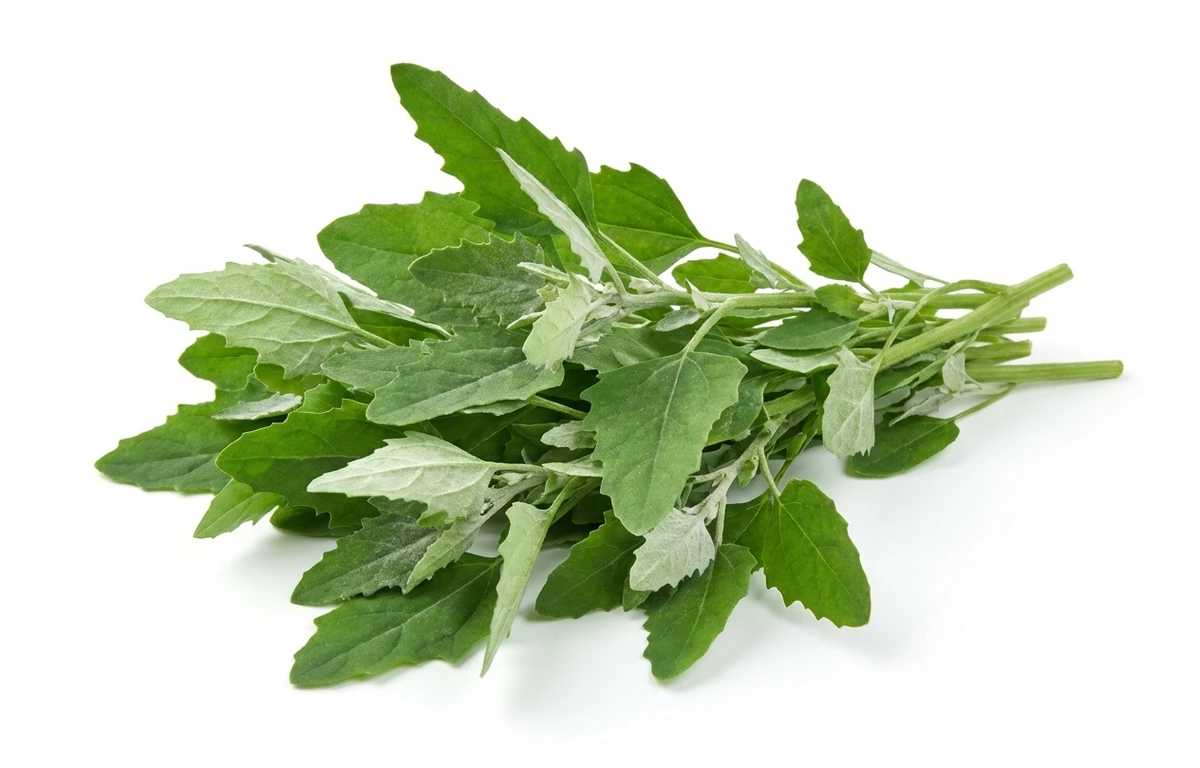
chenopodium.
VegetarianVeganGluten-freeDairy-freeNut-freePeanut-freeSoy-freeEgg-freeShellfish-freeHoney-freeAlcohol-free
ALSO KNOWN AS
BathuaLamb's QuartersWhite GoosefootChenopodium albumWild SpinachPappasakuChakvitParuppu Keerai
SERVING
CALORIES
43
PROTEIN
4.2g
CARBS
7.3g
FAT
0.80g
FIBER
4.0g
NUTRITION PROFILE · per 100 g
Everything in this ingredient.
MACRONUTRIENTS
Calories43kcal—
Protein4.2g8%
Carbohydrates7.3g3%
Fiber4.0g14%
Sugar0.50g1%
Total fat0.80g1%
Saturated fat0.10g1%
Trans fat0g—
Cholesterol0mg0%
Water84g—
MINERALS
Sodium43mg2%
Potassium452mg10%
Calcium309mg24%
Iron1.2mg7%
Magnesium34mg8%
Phosphorus72mg6%
Zinc0.40mg4%
Copper0.20mg22%
Manganese0.80mg35%
Selenium0.90µg2%
VITAMINS
Vitamin A580µg64%
Vitamin C80mg89%
Vitamin D0µg0%
Vitamin E1.5mg10%
Vitamin K440µg367%
Thiamin (B1)0.16mg13%
Riboflavin (B2)0.44mg34%
Niacin (B3)1.2mg8%
Pantothenic acid (B5)0.20mg4%
Vitamin B60.27mg16%
Folate (B9)30µg8%
Vitamin B120µg0%
%DV based on a 2,000 cal diet. Source: USDA FoodData Central. A dash in the %DV column means there’s no established Daily Value for that nutrient.
MEASUREMENT CONVERSIONS
How much is what.
1 cup240g
1 tablespoon15g
1 teaspoon5g
1 oz28.4g
1 lb453.6g
1 ml1g
1 liter1000g
1 piece10g
HEALTH BENEFITS
Why eat it.
- ✓Extremely high in Vitamin A for eye health
- ✓Rich in Calcium for bone strength
- ✓High fiber content aids in digestion and prevents constipation
- ✓Contains potent antioxidants that boost immunity
- ✓Good source of plant-based protein for a leafy green
COOKING TIPS
In the kitchen.
- 1Wash thoroughly in multiple changes of water as the leaves often hold sand and grit
- 2Do not overcook; a quick blanch or sauté preserves the nutrient profile
- 3Pairs excellently with yogurt (Raita) or stuffed into whole wheat flatbreads (Parathas)
STORAGE
Keep it fresh.
- Wrap unwashed leaves in a damp paper towel and place in a perforated plastic bag
- Store in the refrigerator crisper drawer for 2-3 days
- Blanch and freeze if you need to store for longer than a week
FAQ
Frequently asked questions.
How long does Chenopodium (Bathua) last in the fridge?
It is highly perishable and typically lasts 2 to 3 days when stored in a damp paper towel in the refrigerator.
Can I freeze Chenopodium leaves?
Yes, blanch the leaves in boiling water for 2 minutes, shock in ice water, squeeze out excess moisture, and freeze in airtight bags for up to 6 months.
How do I pick the best quality Chenopodium?
Look for bright green, crisp leaves without any yellowing, wilting, or dark slimy spots. Smaller leaves are usually more tender.
What is a good substitute for Chenopodium?
Spinach, amaranth leaves, or kale are the best substitutes due to their similar texture and nutritional profile.
How should I clean Chenopodium before cooking?
Submerge the leaves in a large bowl of cold water, swish them around to let the grit settle at the bottom, and lift the leaves out. Repeat 2-3 times.
Is Chenopodium edible raw?
While it can be eaten raw in small amounts in salads, it contains oxalic acid; cooking or blanching is recommended to reduce oxalates and improve digestibility.
What are the most common dishes made with this vegetable?
In Indian cuisine, it is commonly used in Bathua Raita, Bathua Saag, and Bathua Paratha. In other regions, it is used in soups and stews.
Is Chenopodium high in iron?
Yes, it contains about 1.2mg of iron per 100g, making it a good plant-based source of iron, especially when consumed with Vitamin C.
When is Chenopodium in season?
It is primarily a winter green in many regions, peaking from late autumn through early spring.



















