
Loading...
Also known as:
Per 100g
Nutrition data source: USDA FoodData Central
Common measurement equivalents in grams
Yes, they are a nutrient-dense source of high-quality protein, iron, and zinc. While slightly higher in fat than breasts, they provide essential B vitamins and selenium which are vital for energy metabolism and immune support.
A 100g serving of boneless skinless chicken thighs contains approximately 28.9g of protein. This high protein density makes them an excellent choice for muscle growth, repair, and maintaining satiety.
Yes, they can be an effective part of a weight loss diet because they are high in protein and contain zero carbohydrates. The 5.7g of fat per 100g can also help you feel full longer, potentially reducing overall calorie intake throughout the day.
Absolutely. With 0g of carbohydrates and a moderate fat content, boneless skinless chicken thighs are an ideal protein source for ketogenic and other low-carb dietary patterns.
Plain, raw chicken thighs are naturally gluten-free. However, if you are buying pre-marinated or breaded thighs, you must check the label as those additives often contain wheat-based thickeners or flavorings.
Chicken thighs are safely cooked when they reach an internal temperature of 165°F (74°C). Unlike breasts, thighs contain more connective tissue and often taste best when cooked to 170°F-175°F, as they remain juicy at higher temperatures.
They are highly versatile and can be grilled, pan-seared, roasted, or air-fried. Because they are more moisture-retentive than breasts, they are also the preferred choice for slow-cooking, braising, and stews.
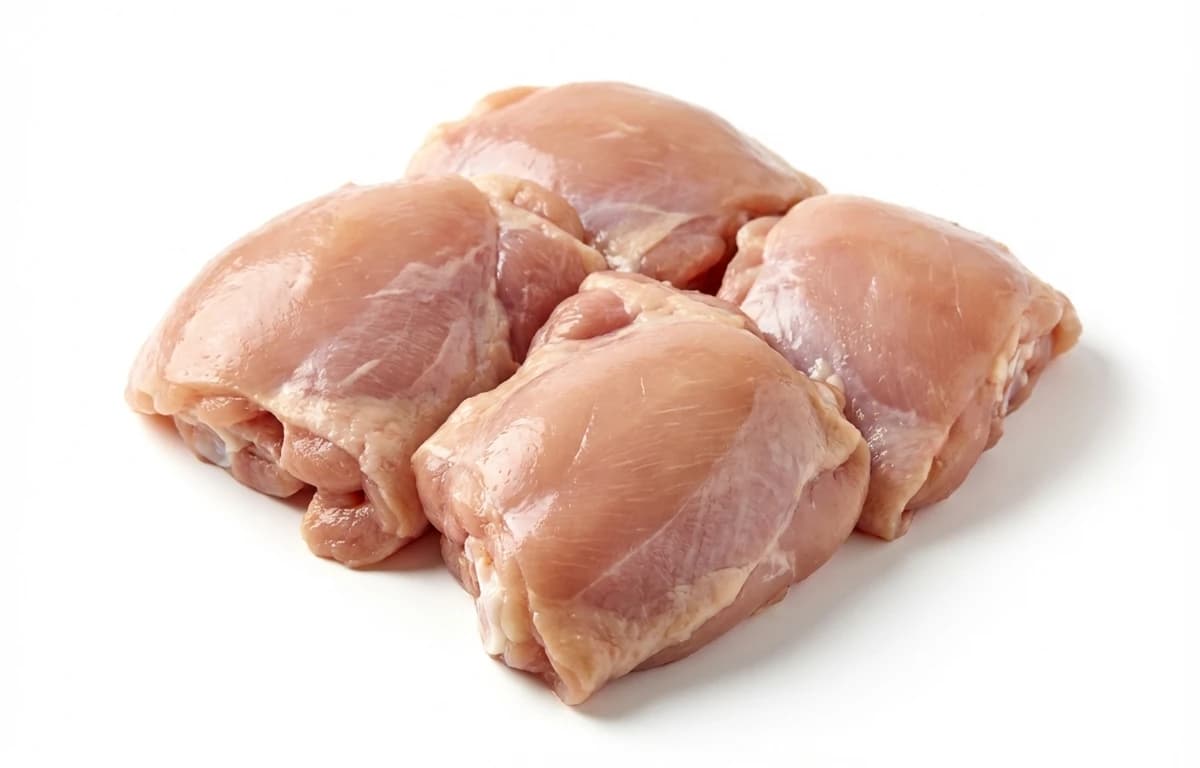
Chicken Thighs, Boneless Skinless is a versatile ingredient found in cuisines around the world. With 165 calories per 100g and 28.9 grams of protein, it's a nutritious addition to many dishes.
Explore more ingredients in the meat category with complete nutrition information.
View all meat →Discover 0 recipes featuring chicken thighs, boneless skinless with step-by-step instructions.
Browse recipes →Yes, they can usually be swapped in a 1:1 ratio. Thighs are more flavorful and less likely to dry out, making them a more forgiving option for beginners or for recipes involving high heat.
Raw chicken thighs should be stored in the coldest part of the refrigerator and used within 1 to 2 days of purchase. For longer storage, wrap them tightly and freeze them for up to 9 months.
Spoiled chicken will typically have a sour or ammonia-like odor, a slimy or tacky texture, and may develop a grayish or greenish tint. If any of these signs are present, the meat should be discarded immediately.