Other3 recipes
chile de árbol.
VegetarianVeganGluten-freeDairy-freeNut-freePeanut-freeSoy-freeEgg-freeShellfish-freeHoney-freeAlcohol-free
ALSO KNOWN AS
arbol chiliarbol pepperchile de arbol
SERVING
CALORIES
430
PROTEIN
12g
CARBS
56.6g
FAT
17.3g
FIBER
27.2g
NUTRITION PROFILE · per 100 g
Everything in this ingredient.
MACRONUTRIENTS
Calories430kcal—
Protein12g24%
Carbohydrates56.6g21%
Fiber27.2g97%
Sugar10.3g21%
Total fat17.3g22%
Saturated fat3.3g16%
Cholesterol0mg0%
Water8.1g—
MINERALS
Sodium30mg1%
Potassium2014mg43%
Calcium148mg11%
Iron7.8mg43%
Magnesium145mg35%
Phosphorus293mg23%
Zinc2.5mg23%
Copper0.37mg41%
Manganese2.5mg108%
Selenium4.6µg8%
VITAMINS
Vitamin A2185µg243%
Vitamin C76.4mg85%
Vitamin D0µg0%
Vitamin E29.8mg199%
Vitamin K80.3µg67%
Thiamin (B1)0.33mg28%
Riboflavin (B2)0.92mg71%
Niacin (B3)8.7mg54%
Pantothenic acid (B5)2.5mg50%
Vitamin B62.5mg144%
Folate (B9)106µg27%
Vitamin B120µg0%
%DV based on a 2,000 cal diet. Source: USDA FoodData Central. A dash in the %DV column means there’s no established Daily Value for that nutrient.
MEASUREMENT CONVERSIONS
How much is what.
1 cup120g
1 tablespoon7.5g
1 teaspoon2.5g
1 ml0.5g
1 liter500g
1 piece0.8g
HEALTH BENEFITS
Why eat it.
- ✓Rich in capsaicin, which may boost metabolism, reduce inflammation, and provide pain relief.
- ✓Good source of Vitamin A and Vitamin C, which support immune function, skin health, and vision.
- ✓Contains antioxidants like carotenoids that help protect the body against cellular damage from free radicals.
COOKING TIPS
In the kitchen.
- 1Toast dried chiles on a dry skillet over medium heat for 30-60 seconds per side until fragrant to enhance their nutty, smoky flavor. Be careful not to burn them, as they will become bitter.
- 2To rehydrate, remove stems and seeds from toasted chiles and soak them in hot water for 20-30 minutes until they are soft and pliable, perfect for blending into salsas and sauces.
- 3Control the heat level by removing the seeds and veins, which contain the highest concentration of capsaicin.
- 4Infuse oil by gently heating whole or crushed chiles in it, creating a flavorful and spicy oil for drizzling or cooking.
STORAGE
Keep it fresh.
- Store dried chiles de árbol in an airtight container in a cool, dark, and dry place like a pantry for up to a year. Their flavor will diminish over time.
- Fresh chiles can be stored in a paper bag in the refrigerator's crisper drawer for up to two weeks.
FAQ
Frequently asked questions.
Is chile de árbol healthy?
Yes, chile de árbol is highly nutritious. It is rich in capsaicin, which can boost metabolism and reduce inflammation, and it provides significant amounts of Vitamin A and C to support immune function and skin health.
How many calories and carbs are in chile de árbol?
Per 100g, chile de árbol contains 318 calories and 56.63g of carbohydrates. However, because it is a potent spice used in very small quantities, the actual caloric and carb intake per serving is minimal.
Is chile de árbol good for weight loss?
It can be a helpful addition to a weight loss diet due to its capsaicin content, which may temporarily increase metabolic rate and promote fat oxidation. Additionally, the heat from the peppers can help increase satiety and reduce overeating.
Is chile de árbol keto-friendly?
Yes, it is keto-friendly. While it contains 56.63g of carbs per 100g, a typical serving size is only 1-2 grams, resulting in negligible net carbs that will not disrupt ketosis.
Is chile de árbol vegan and gluten-free?
Yes, chile de árbol is a natural, plant-based spice that is both vegan and gluten-free. It is safe for individuals with celiac disease or those following a strict plant-based lifestyle.
How spicy is chile de árbol?
Chile de árbol is considered a medium-hot pepper, typically ranging from 15,000 to 30,000 on the Scoville scale. It is significantly hotter than a jalapeño but much milder than a habanero.
How do you cook with chile de árbol?
You can toast them in a dry skillet to enhance their nutty flavor before grinding them into powder or rehydrating them in hot water for salsas. They are also commonly added whole to hot oil to infuse heat into stir-fries and stews.
What can I substitute for chile de árbol?
Cayenne pepper is the most common substitute due to its similar heat level. Pequin chiles or Japones chiles also work well if you are looking for a similar thin-walled, spicy dried pepper.
How do you store dried chile de árbol?
Store them in an airtight container in a cool, dark, and dry place like a pantry. When stored properly away from direct sunlight and moisture, they can maintain their flavor and heat for up to one year.
How do I know if my dried chiles are still good?
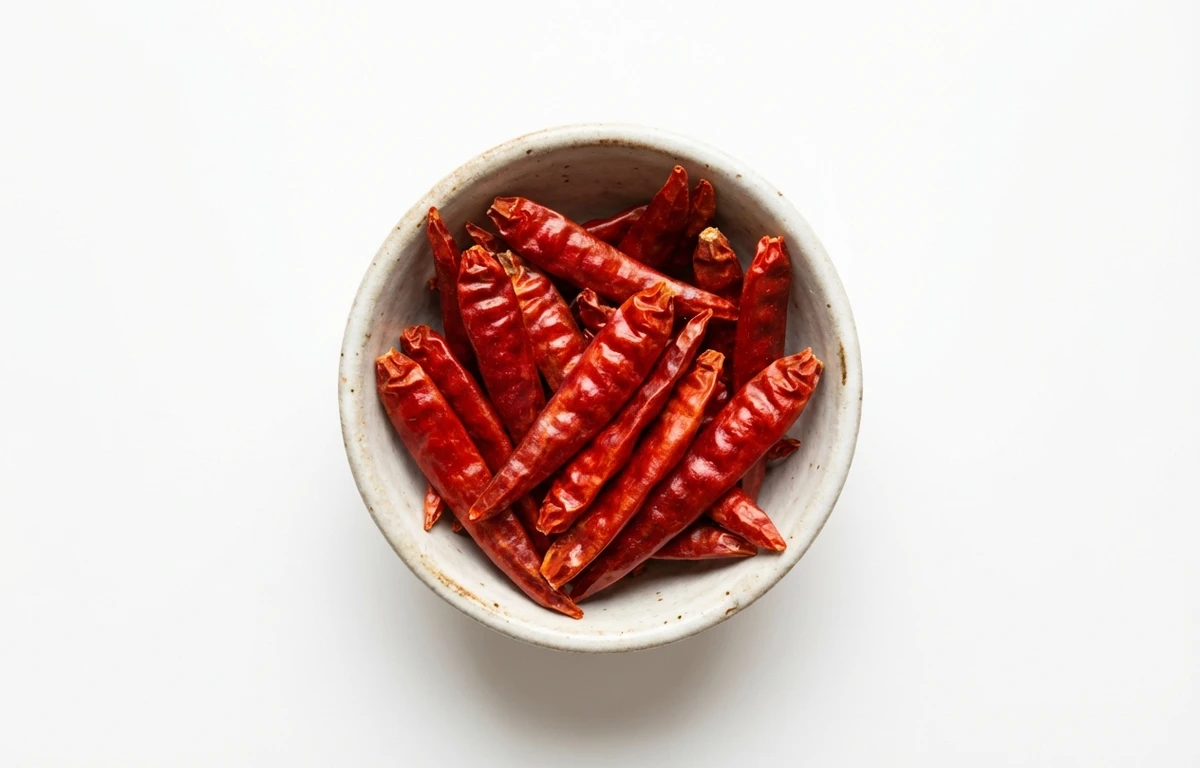
Freshly dried chiles should be bright red, slightly pliable, and have a shiny skin. If they are very brittle, have turned a dull brown color, or have no aroma when broken open, they have likely lost their potency and should be replaced.
RECIPES
Cook with chile de árbol.
3 recipes · sorted by what’s quick