
Other1 recipes
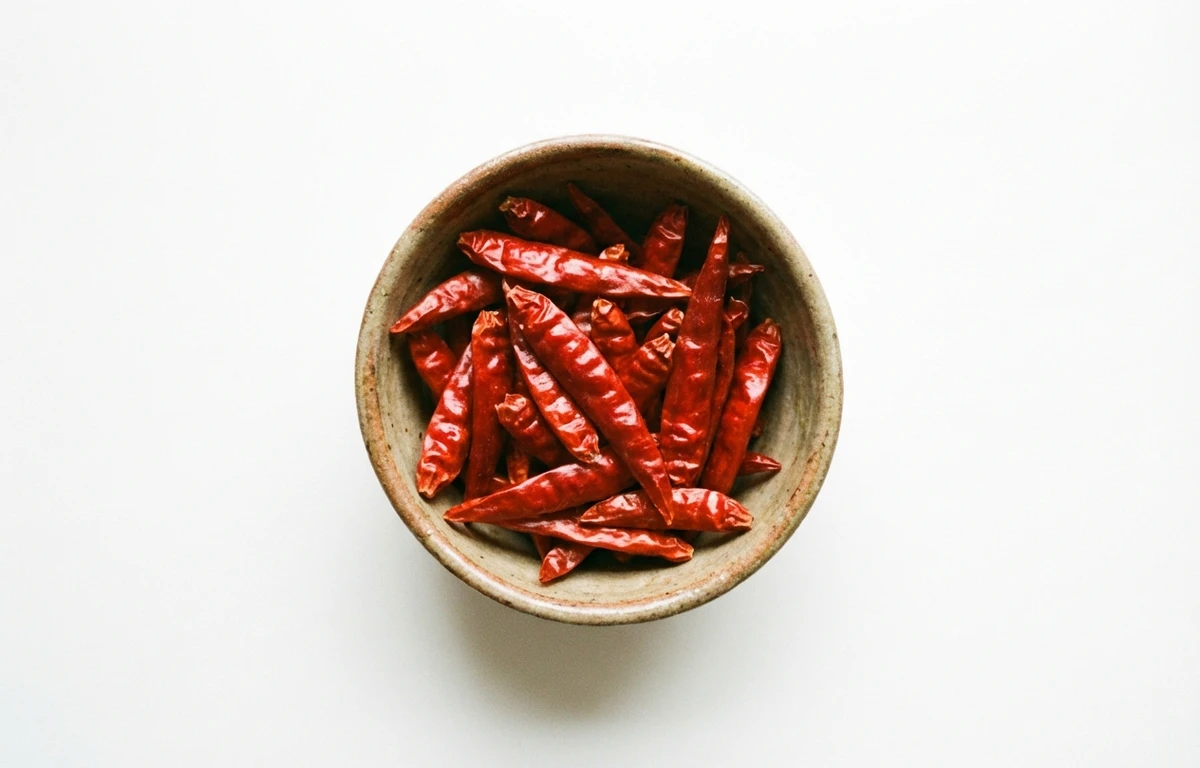
chiles de árbol.
VegetarianVeganGluten-freeDairy-freeNut-freePeanut-freeSoy-freeEgg-freeShellfish-freeHoney-freeAlcohol-free
ALSO KNOWN AS
arbol chiliarbol pepperchile de arbol
SERVING
CALORIES
430
PROTEIN
12g
CARBS
56.6g
FAT
17.3g
FIBER
27.2g
NUTRITION PROFILE · per 100 g
Everything in this ingredient.
MACRONUTRIENTS
Calories430kcal—
Protein12g24%
Carbohydrates56.6g21%
Fiber27.2g97%
Sugar10.3g21%
Total fat17.3g22%
Saturated fat3.3g16%
Cholesterol0mg0%
Water8.1g—
MINERALS
Sodium30mg1%
Potassium2014mg43%
Calcium143mg11%
Iron7.8mg43%
Magnesium152mg36%
Phosphorus293mg23%
Zinc2.5mg23%
Copper0.37mg41%
Manganese1.9mg83%
Selenium10.5µg19%
VITAMINS
Vitamin A2185µg243%
Vitamin C76.4mg85%
Vitamin D0µg0%
Vitamin E3.2mg21%
Vitamin K106µg88%
Thiamin (B1)0.33mg28%
Riboflavin (B2)0.92mg71%
Niacin (B3)9.1mg57%
Pantothenic acid (B5)2.5mg50%
Vitamin B62.5mg144%
Folate (B9)106µg27%
Vitamin B120µg0%
%DV based on a 2,000 cal diet. Source: USDA FoodData Central. A dash in the %DV column means there’s no established Daily Value for that nutrient.
MEASUREMENT CONVERSIONS
How much is what.
1 cup80g
1 tablespoon5.1g
1 teaspoon1.8g
1 ml0.4g
1 liter340g
1 piece1.5g
HEALTH BENEFITS
Why eat it.
- ✓Rich in capsaicin, which may boost metabolism, reduce inflammation, and act as a pain reliever.
- ✓Good source of Vitamin A, essential for vision health and immune function, and Vitamin C, a powerful antioxidant.
- ✓Contains antioxidants like carotenoids and flavonoids that help protect cells from damage caused by free radicals.
- ✓May support cardiovascular health by potentially helping to reduce blood pressure and cholesterol levels.
COOKING TIPS
In the kitchen.
- 1Toast dried chiles in a dry skillet over medium heat for 30-60 seconds until fragrant to deepen their flavor. Be careful not to burn them, as this will make them bitter.
- 2Rehydrate toasted chiles by soaking them in hot water for 20-30 minutes until pliable. Use the softened chiles for salsas, marinades, and sauces.
- 3To control the heat level, remove the stems, seeds, and veins before using, as these parts contain the most capsaicin.
- 4Infuse oil with their flavor and heat by gently simmering whole or crushed chiles in a neutral oil, then straining. This creates a versatile chili oil.
STORAGE
Keep it fresh.
- Store dried chiles in an airtight container in a cool, dark place like a pantry. They will keep for at least 6 months to a year, though their potency may fade over time.
- For longer-term storage, place the airtight container or a sealed bag of chiles in the freezer to preserve their color and heat.
FAQ
Frequently asked questions.
Are chiles de árbol healthy?
Yes, chiles de árbol are very healthy as they are rich in capsaicin, which can boost metabolism and reduce inflammation. They are also excellent sources of vitamins A and C, which support immune function and vision health.
What are the main health benefits of chiles de árbol?
Beyond boosting metabolism, these chiles contain antioxidants like carotenoids and flavonoids that protect cells from damage. They may also support cardiovascular health by helping to manage blood pressure and cholesterol levels.
How many calories and carbs are in chiles de árbol?
Per 100g, chiles de árbol contain 318 calories and 56.63g of carbohydrates. However, because they are used sparingly as a spice, the actual amount of calories and carbs added to a single serving of food is very low.
Are chiles de árbol keto-friendly?
Yes, they are keto-friendly. Although they have a high carb count per 100g, a typical recipe uses only a few grams, resulting in negligible net carbs that won't interfere with ketosis.
Are chiles de árbol vegan and gluten-free?
Yes, chiles de árbol are a natural, plant-based spice. They are inherently vegan and gluten-free, making them safe for individuals with celiac disease or those following a vegan lifestyle.
How spicy are chiles de árbol?
They are considered quite hot, measuring between 15,000 and 30,000 Scoville Heat Units (SHU). They are significantly spicier than a jalapeño but milder than a habanero, offering a sharp, searing heat.
How do you use chiles de árbol in cooking?
They are often toasted in a dry skillet to release their oils before being ground into powder or blended into salsas. You can also add them whole to oils, soups, or stews to infuse heat, though they are usually removed before eating.
What can I substitute for chiles de árbol?
Cayenne pepper is the best substitute for heat and flavor profile. If you need a whole dried chili, Japones chiles or Thai bird's eye chilies are excellent alternatives that provide a similar level of spiciness.
How should I store dried chiles de árbol?
Store them in an airtight container in a cool, dark, and dry place like a pantry. To extend their shelf life and maintain their bright red color, you can also store them in the freezer.
Do I need to remove the seeds from chiles de árbol?
Removing the seeds is optional and depends on your heat preference. The seeds and the inner membranes contain the highest concentration of capsaicin, so removing them will significantly reduce the spiciness of your dish.
RECIPES
Cook with chiles de árbol.
1 recipes · sorted by what’s quick



















