
Loading...
Per 100g
Nutrition data source: USDA FoodData Central
Common measurement equivalents in grams
Once opened and transferred to an airtight glass container, it lasts in the refrigerator for about 1 to 2 months.
Yes, it freezes very well. A common method is to freeze individual peppers with a bit of sauce in ice cube trays, then transfer to a freezer bag.
A mix of smoked paprika, cayenne pepper, and a splash of vinegar or liquid smoke can mimic the flavor profile.
Yes, it has a medium to high heat level, as it is made from smoked jalapeños. The sauce is slightly milder than the peppers themselves.
Generally no. Many commercial brands use wheat flour as a thickening agent for the adobo sauce. Always check the label for certified gluten-free options.
To reduce heat, remove the seeds from the peppers before mincing, or use only the liquid adobo sauce from the can.
It is commonly used in marinades, salsas, soups, stews, and mixed into mayonnaise or sour cream for dipping sauces.
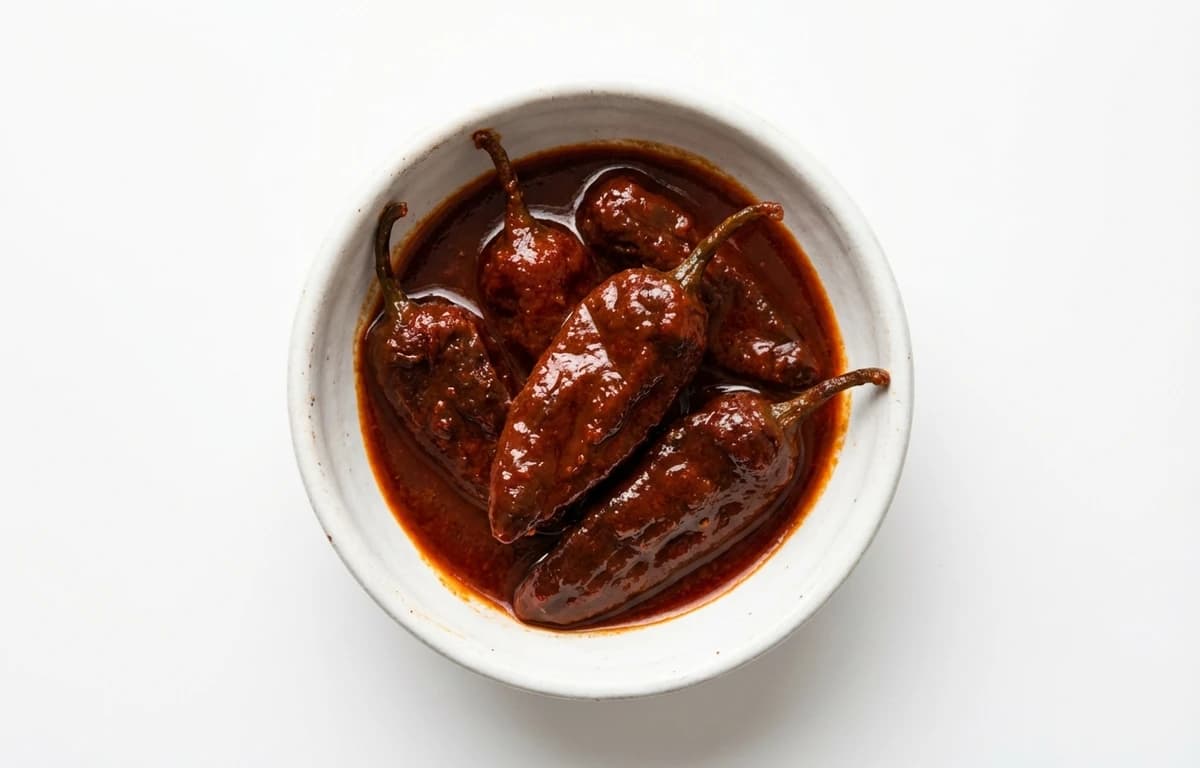
A chipotle is simply a jalapeño pepper that has been ripened to red, then dried and smoked.
Look for cans where the peppers are whole and firm, and the sauce is thick and dark reddish-brown rather than watery.
Chipotle in Adobo Sauce is a versatile ingredient found in cuisines around the world. With 94 calories per 100g and 2 grams of protein, it's a nutritious addition to many dishes.
Explore more ingredients in the condiment category with complete nutrition information.
View all condiment →Discover 0 recipes featuring chipotle in adobo sauce with step-by-step instructions.
Browse recipes →