
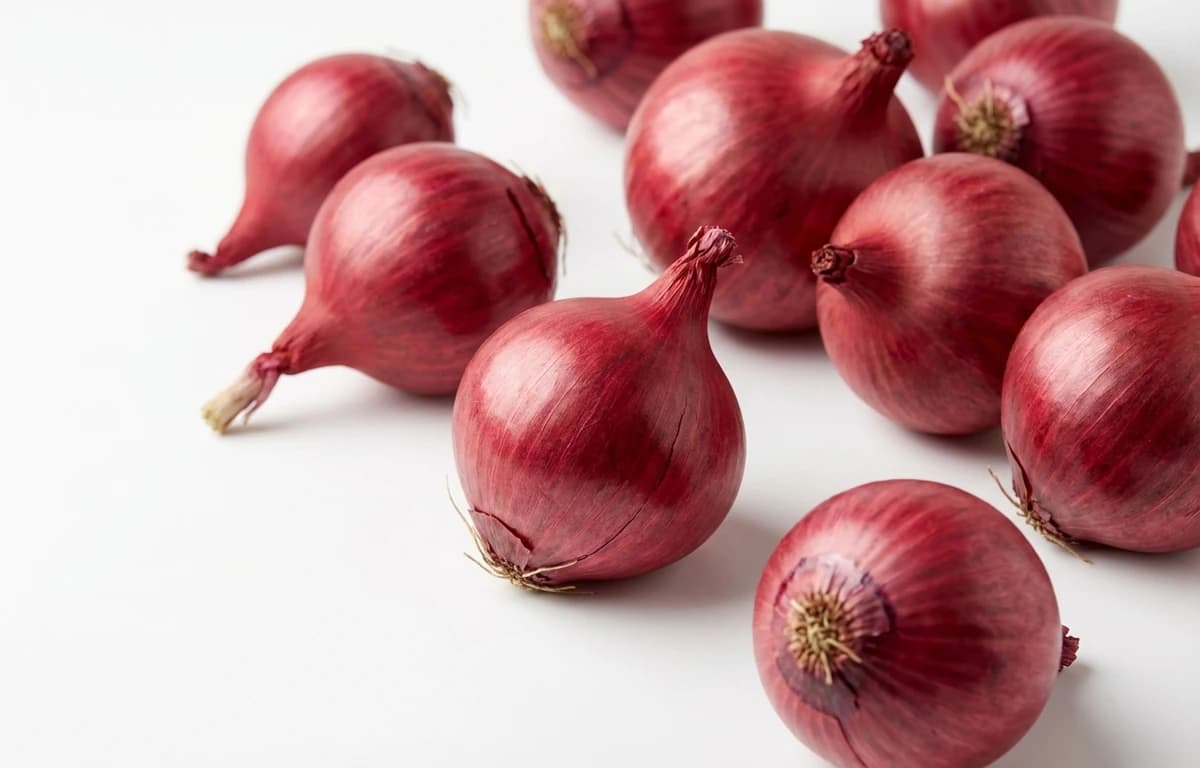
chuvannulli
Also known as:
Loading...
Also known as:
Per 100g
Nutrition data source: USDA FoodData Central
Yes, chuvannulli (shallots) is highly nutritious and rich in antioxidants like quercetin and kaempferol. These compounds help fight free radicals and reduce oxidative stress, while its sulfur content supports heart health and reduces inflammation.
A 100g serving of chuvannulli contains approximately 72 calories and 16.8g of carbohydrates. It also provides about 2.5g of protein and is virtually fat-free, making it a nutrient-dense flavoring agent.
Chuvannulli can be keto-friendly if used in moderation. While it has 16.8g of carbs per 100g, which is higher than regular onions, it is typically consumed in small quantities as a garnish or seasoning, fitting within most low-carb limits.
Chuvannulli contains sulfur compounds like allicin, which may help lower cholesterol and blood pressure. These properties, combined with its potassium content, support overall cardiovascular function and help protect against heart disease.
Yes, chuvannulli is a natural vegetable and is both 100% vegan and gluten-free. It is an excellent way to add deep flavor to plant-based and gluten-restricted diets without adding processed additives.
Chuvannulli has a more delicate, sweet, and sophisticated flavor than regular onions. It lacks the sharp, pungent 'bite' of large onions, offering a subtle garlic-like undertone that works well in refined sauces and dressings.
To prepare, trim the root and stem ends, then peel off the thin, papery skin. You can use them whole in curries and stews, or slice them thinly to fry into crispy garnishes or sauté for base flavors.
chuvannulli is a versatile ingredient found in cuisines around the world. With 72 calories per 100g and 2.5 grams of protein, it's a nutritious addition to many dishes.
Explore more ingredients in the vegetable category with complete nutrition information.
View all vegetable →Discover 0 recipes featuring chuvannulli with step-by-step instructions.
Browse recipes →Yes, you can substitute regular onions, but the flavor will be sharper and less sweet. If using regular onions as a replacement, use a smaller quantity and consider adding a tiny bit of garlic to better mimic the shallot's complex profile.
Store chuvannulli in a cool, dry, and dark place with plenty of air circulation, such as a mesh bag or open basket. Avoid the refrigerator, as the moisture can cause them to soften and sprout prematurely.
Fresh chuvannulli should be firm to the touch with dry, intact skins. If they feel soft or mushy, show signs of black mold, or have a strong unpleasant odor, they have spoiled and should be discarded.