
Grain4 recipes
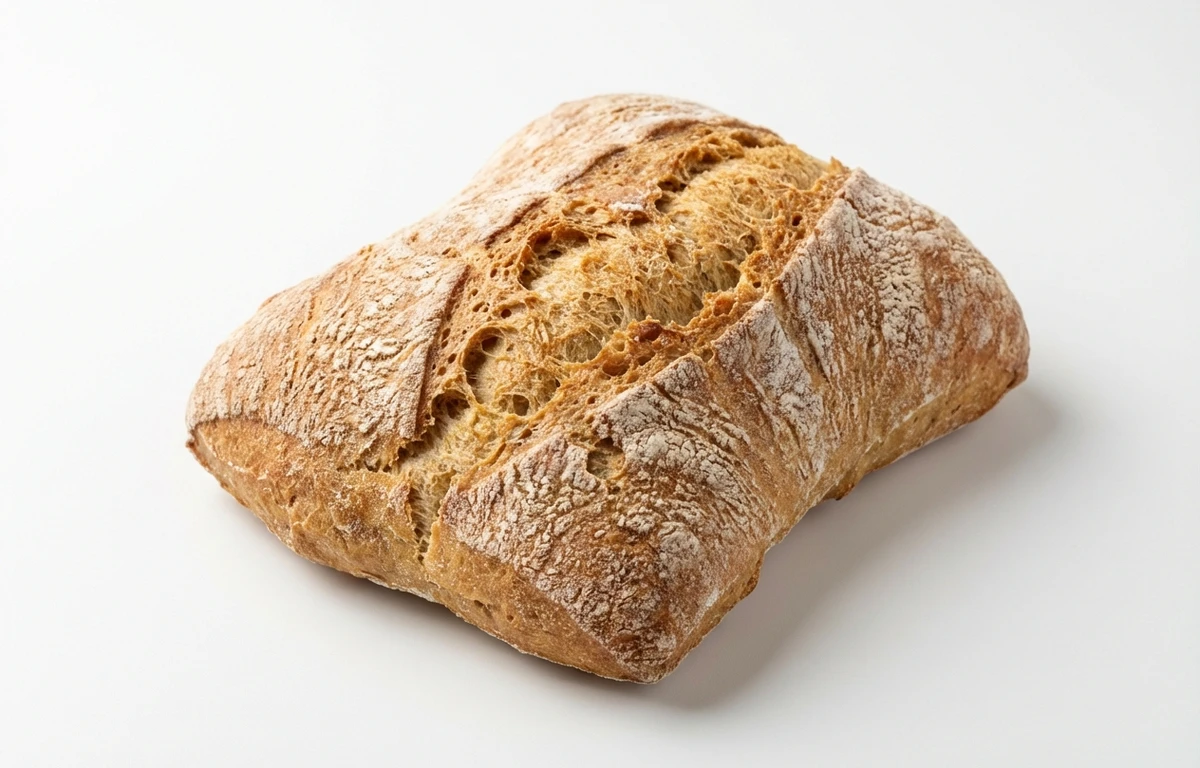
ciabatta bread.
VegetarianVeganGluten-freeDairy-freeNut-freePeanut-freeSoy-freeEgg-freeShellfish-freeHoney-freeAlcohol-freeFermented
ALSO KNOWN AS
ciabattaItalian slipper breadciabatta breadciabatta bunCiabatta Rollitalian ciabattaCiabatta Loaf
SERVING
CALORIES
268
PROTEIN
9.5g
CARBS
52.5g
FAT
2.5g
FIBER
2.2g
NUTRITION PROFILE · per 100 g
Everything in this ingredient.
MACRONUTRIENTS
Calories268kcal—
Protein9.5g19%
Carbohydrates52.5g19%
Fiber2.2g8%
Sugar2.8g6%
Total fat2.5g3%
Saturated fat0.40g2%
Trans fat0g—
Cholesterol0mg0%
Water33.5g—
MINERALS
Sodium500mg22%
Potassium110mg2%
Calcium30mg2%
Iron2.5mg14%
Magnesium25mg6%
Phosphorus105mg8%
Zinc0.90mg8%
VITAMINS
Vitamin A0µg0%
Vitamin C0mg0%
Vitamin D0µg0%
Vitamin K1.0µg1%
Thiamin (B1)2.0mg167%
Riboflavin (B2)0.25mg19%
Niacin (B3)3.5mg22%
Vitamin B60.08mg5%
%DV based on a 2,000 cal diet. Source: USDA FoodData Central. A dash in the %DV column means there’s no established Daily Value for that nutrient.
MEASUREMENT CONVERSIONS
How much is what.
1 piece200g
HEALTH BENEFITS
Why eat it.
- ✓Provides carbohydrates, which are the body's primary source of energy.
- ✓Often made with enriched flour, supplying B vitamins like niacin, thiamin, and folate essential for metabolism.
- ✓Contains selenium, a mineral that acts as an antioxidant and supports immune and thyroid function.
COOKING TIPS
In the kitchen.
- 1Slice horizontally for sandwiches and paninis; its sturdy structure holds up well to fillings and pressing.
- 2Cut into thick slices, toast or grill, and rub with a garlic clove and olive oil for classic bruschetta.
- 3The open, airy crumb is excellent for dipping into olive oil, balsamic vinegar, or for soaking up soups and stews.
- 4Tear into chunks, toss with olive oil and herbs, and bake to create rustic, flavorful croutons for salads and soups.
STORAGE
Keep it fresh.
- Store at room temperature in a paper bag or bread box for 2-3 days to maintain its crisp crust; avoid plastic bags which can make it soggy.
- For longer storage, slice and freeze in an airtight freezer bag for up to 3 months. Toast slices directly from frozen.
FAQ
Frequently asked questions.
Is ciabatta bread healthy?
Ciabatta is a good source of energy-providing carbohydrates and contains essential B vitamins and selenium. However, because it is typically made with refined white flour, it is high in calories and has a high glycemic index, so it should be consumed in moderation.
How many calories and carbs are in ciabatta bread?
A 100g serving of ciabatta bread contains approximately 268 calories and 52.5g of carbohydrates. It also provides about 9.5g of protein and is relatively low in fat, containing only 2.5g per serving.
Is ciabatta bread vegan?
Traditional ciabatta is vegan, as the authentic recipe consists only of wheat flour, water, yeast, salt, and olive oil. However, some mass-produced versions may contain milk, honey, or dough conditioners, so it is best to check the label.
Is ciabatta bread gluten-free?
No, ciabatta is not gluten-free. It is made from wheat flour and is specifically known for its high gluten content, which creates the bread's signature chewy texture and large internal air pockets.
What does ciabatta bread taste like?
Ciabatta has a mild, slightly nutty flavor with a hint of olive oil. Its texture is its most defining feature, offering a crisp, floury outer crust and a very airy, chewy interior.
Is ciabatta bread keto-friendly?
No, ciabatta is not keto-friendly. With over 50g of carbohydrates per 100g, it exceeds the daily carb limit for most ketogenic diets and will likely cause a spike in blood sugar levels.
How should I store ciabatta bread?
Store ciabatta in a paper bag at room temperature for 1-2 days to preserve the crust. Avoid plastic bags or refrigeration, as these can make the crust soft and the interior stale more quickly.
Can I freeze ciabatta bread?
Yes, ciabatta freezes exceptionally well. Wrap it tightly in plastic wrap or a freezer bag for up to 3 months; to serve, bake it directly from the freezer at 350°F (175°C) for 10 minutes to restore the crispy crust.
What are the health benefits of the selenium in ciabatta?
The selenium found in ciabatta acts as a powerful antioxidant that helps protect cells from damage. It also plays a critical role in supporting a healthy immune system and proper thyroid function.
What is the best way to use ciabatta bread in cooking?
Ciabatta is the preferred bread for panini and sandwiches because its sturdy crust holds up well to heat and heavy fillings. It is also excellent for making bruschetta, croutons, or simply dipping into olive oil and balsamic vinegar.
RECIPES
Cook with ciabatta bread.
4 recipes · sorted by what’s quick



















