
Other1 recipes
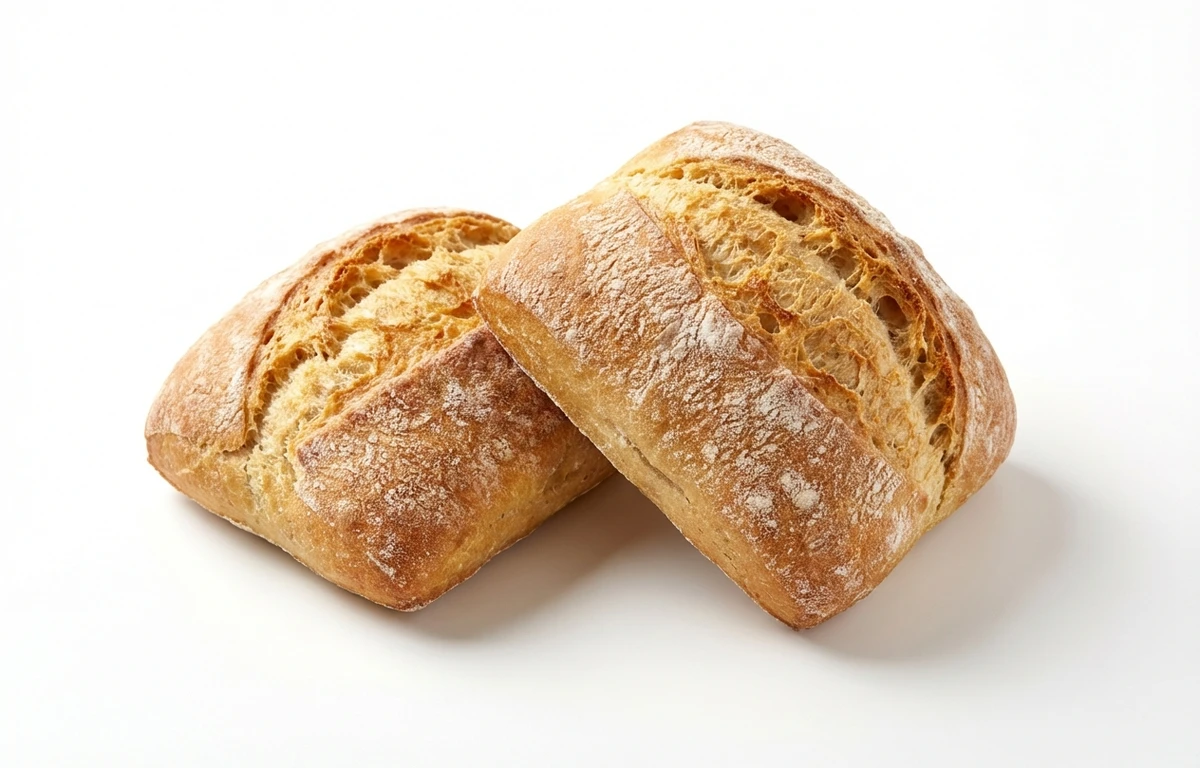
ciabatta rolls.
VegetarianVeganGluten-freeDairy-freeNut-freePeanut-freeSoy-freeEgg-freeShellfish-freeHoney-freeAlcohol-freeFermented
ALSO KNOWN AS
ciabatta bread rollsciabatta buns
SERVING
CALORIES
270
PROTEIN
9.5g
CARBS
53g
FAT
3.0g
FIBER
2.5g
NUTRITION PROFILE · per 100 g
Everything in this ingredient.
MACRONUTRIENTS
Calories270kcal—
Protein9.5g19%
Carbohydrates53g19%
Fiber2.5g9%
Sugar3.0g6%
Total fat3.0g4%
Saturated fat0.50g3%
Cholesterol0mg0%
Water38g—
MINERALS
Sodium450mg20%
Potassium120mg3%
Calcium30mg2%
Iron2.5mg14%
Magnesium22mg5%
Phosphorus105mg8%
Zinc0.80mg7%
VITAMINS
Vitamin A0µg0%
Vitamin C0mg0%
Vitamin D0µg0%
Vitamin K1.0µg1%
Thiamin (B1)2.0mg167%
Riboflavin (B2)0.25mg19%
Niacin (B3)3.5mg22%
Vitamin B60.08mg5%
%DV based on a 2,000 cal diet. Source: USDA FoodData Central. A dash in the %DV column means there’s no established Daily Value for that nutrient.
MEASUREMENT CONVERSIONS
How much is what.
1 cup35g
1 tablespoon2.2g
1 teaspoon0.7g
1 ml0.1g
1 liter145.8g
1 piece110g
HEALTH BENEFITS
Why eat it.
- ✓Provides carbohydrates, which are the body's primary source of energy.
- ✓If made with fortified flour, it can be a source of B vitamins (thiamin, niacin, riboflavin) and iron.
- ✓The chewy texture can encourage more thorough chewing, which is the first step in digestion.
- ✓Typically low in fat and cholesterol, making it a suitable component of a balanced diet.
COOKING TIPS
In the kitchen.
- 1Slice horizontally, drizzle with olive oil, and toast or grill for excellent panini, bruschetta, or garlic bread.
- 2The porous, open crumb structure is ideal for soaking up sauces, soups, and vinaigrettes without falling apart.
- 3Use stale ciabatta to make flavorful croutons or as the base for an Italian bread salad (panzanella).
- 4Hollow out the center to create a 'bread bowl' for serving dips, stews, or thick soups.
STORAGE
Keep it fresh.
- Store at room temperature in a paper bag or bread box for up to 2 days to maintain a crisp crust. Avoid plastic bags which trap moisture and soften the crust.
- For longer storage, wrap rolls tightly in plastic wrap and then aluminum foil and freeze for up to 3 months. Thaw at room temperature or reheat in an oven.
FAQ
Frequently asked questions.
Is ciabatta healthy?
Ciabatta is a good source of energy-providing carbohydrates and is typically low in fat and cholesterol. While it provides some protein and B vitamins, it is often made from refined flour, so it should be consumed in moderation as part of a balanced diet.
How many calories and carbs are in ciabatta rolls?
A 100g serving of ciabatta contains approximately 270 calories and 53g of carbohydrates. It also provides about 9.5g of protein and is relatively low in fat at 3g per serving.
Is ciabatta vegan?
Traditional ciabatta is vegan as it is made from flour, water, yeast, salt, and olive oil. However, some commercial varieties may add milk, honey, or butter, so it is always best to check the ingredient label.
Is ciabatta gluten-free?
No, traditional ciabatta is made from wheat flour and contains gluten. It is not suitable for individuals with celiac disease or gluten sensitivity unless specifically labeled as a gluten-free alternative.
What does ciabatta taste like?
Ciabatta has a mild, slightly nutty flavor with a hint of olive oil. Its most distinctive feature is its texture: a crisp, thin crust and a very airy, chewy interior with large holes.
How should I store ciabatta rolls?
Store ciabatta rolls in a paper bag at room temperature for up to two days to maintain the crust's texture. Avoid refrigerating them, as this can cause the bread to go stale faster; for longer storage, freezing is the best option.
Can you freeze ciabatta rolls?
Yes, ciabatta rolls freeze very well. Wrap them tightly in plastic wrap or place them in a freezer bag for up to three months; reheat them in the oven directly from frozen to restore their crisp crust.
Is ciabatta keto-friendly?
No, ciabatta is not keto-friendly because it is very high in carbohydrates, with about 53g per 100g. Those on a ketogenic or strict low-carb diet should avoid traditional ciabatta rolls.
What are the best ways to use ciabatta rolls?
Ciabatta rolls are ideal for sandwiches and paninis because their sturdy crust holds up well to wet ingredients and pressing. They are also excellent for dipping in olive oil and balsamic vinegar or serving alongside soups and stews.
Is ciabatta better for digestion than other breads?
The chewy texture of ciabatta encourages more thorough chewing, which is the first step in the digestive process. Additionally, if the bread is made using a long fermentation process, it may be slightly easier for some people to digest than quick-rise breads.
RECIPES
Cook with ciabatta rolls.
1 recipes · sorted by what’s quick



















