Spice10 recipes
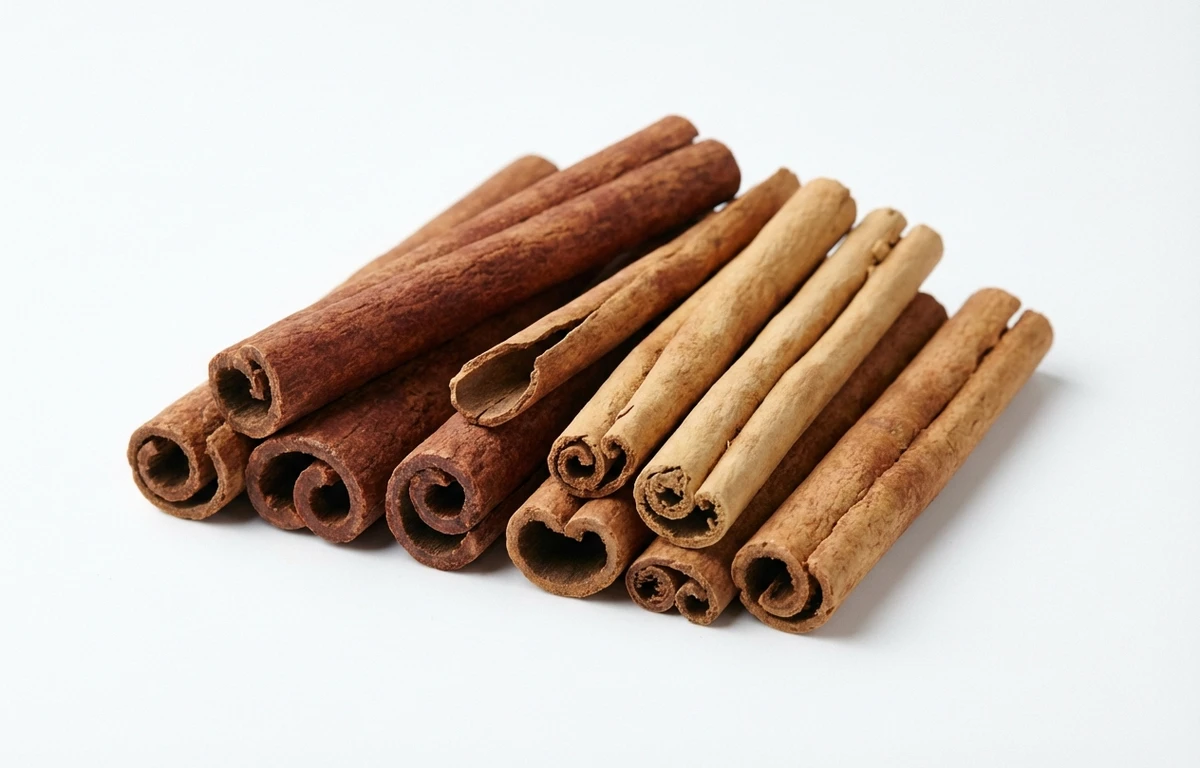
cinnamon stick.
VegetarianVeganGluten-freeDairy-freeNut-freePeanut-freeSoy-freeEgg-freeShellfish-freeHoney-freeAlcohol-free
ALSO KNOWN AS
cinnamon sticksdalchinicinnamon quills
SERVING
CALORIES
349
PROTEIN
4.0g
CARBS
80.6g
FAT
1.2g
FIBER
53.1g
NUTRITION PROFILE · per 100 g
Everything in this ingredient.
MACRONUTRIENTS
Calories349kcal—
Protein4.0g8%
Carbohydrates80.6g29%
Fiber53.1g190%
Sugar2.2g4%
Total fat1.2g2%
Saturated fat0.30g2%
Trans fat0g—
Cholesterol0mg0%
Water10.6g—
MINERALS
Sodium10mg0%
Potassium431mg9%
Calcium1002mg77%
Iron8.3mg46%
Magnesium60mg14%
Phosphorus64mg5%
Zinc1.8mg16%
Copper0.34mg38%
Manganese17.5mg761%
Selenium3.1µg6%
VITAMINS
Vitamin A15µg2%
Vitamin C3.8mg4%
Vitamin D0µg0%
Vitamin E2.3mg15%
Vitamin K31.2µg26%
Thiamin (B1)0.02mg2%
Riboflavin (B2)0.04mg3%
Niacin (B3)1.3mg8%
Pantothenic acid (B5)0.36mg7%
Vitamin B60.16mg9%
Folate (B9)6.0µg2%
Vitamin B120µg0%
%DV based on a 2,000 cal diet. Source: USDA FoodData Central. A dash in the %DV column means there’s no established Daily Value for that nutrient.
MEASUREMENT CONVERSIONS
How much is what.
1 cup125g
1 tablespoon7.8g
1 teaspoon2.6g
1 oz28.4g
1 lb453.6g
1 piece3g
HEALTH BENEFITS
Why eat it.
- ✓Rich in powerful antioxidants like polyphenols
- ✓Contains anti-inflammatory properties that may lower disease risk
- ✓May improve sensitivity to the hormone insulin
- ✓Helps lower blood sugar levels and has a powerful anti-diabetic effect
- ✓May reduce risk factors for heart disease, including cholesterol and blood pressure
COOKING TIPS
In the kitchen.
- 1Toast the sticks lightly in a dry pan before adding liquids to release more flavor
- 2Add whole sticks to rice, stews, or braises and remove before serving
- 3Snap the sticks in half to expose more surface area for a stronger infusion
STORAGE
Keep it fresh.
- Store in an airtight container in a cool, dark, and dry place
- Keep away from direct sunlight to preserve the essential oils and aroma
- Whole sticks last significantly longer than ground cinnamon, up to 2-3 years
FAQ
Frequently asked questions.
How long do cinnamon sticks last?
When stored in an airtight container in a cool, dark place, whole cinnamon sticks can maintain their quality for 2 to 3 years.
Can I substitute ground cinnamon for cinnamon sticks?
Yes, use 1/2 to 1 teaspoon of ground cinnamon for every one 3-inch cinnamon stick, but note that ground cinnamon will cloud liquids.
How do I know if a cinnamon stick is still good?
Rub a small piece or scratch the bark; if the characteristic sweet, woody aroma is faint or absent, the spice has lost its potency.
Should I wash cinnamon sticks before use?
Generally, no. If they appear dusty, a quick rinse and pat dry is fine, but they are usually ready to use from the package.
What is the difference between Ceylon and Cassia cinnamon sticks?
Ceylon (True) cinnamon is thinner, multi-layered, and fragile with a mild flavor. Cassia is a single thick layer, very hard, and has a stronger, spicier punch.
Can cinnamon sticks be reused?
If used for a short infusion in a light liquid, they can be rinsed, dried, and reused once, though the flavor will be significantly weaker.
Are cinnamon sticks edible?
While non-toxic, they are very fibrous and hard. They are intended for infusion and should be removed before eating the dish.
Can I freeze cinnamon sticks?
Freezing is not recommended as it can introduce moisture which degrades the essential oils; a cool pantry is the best environment.
What are common pairings for cinnamon sticks?
They pair excellently with apples, pears, chocolate, coffee, lamb, beef, and warm spices like cloves and star anise.
RECIPES
Cook with cinnamon stick.
10 recipes · sorted by what’s quick