
Grain
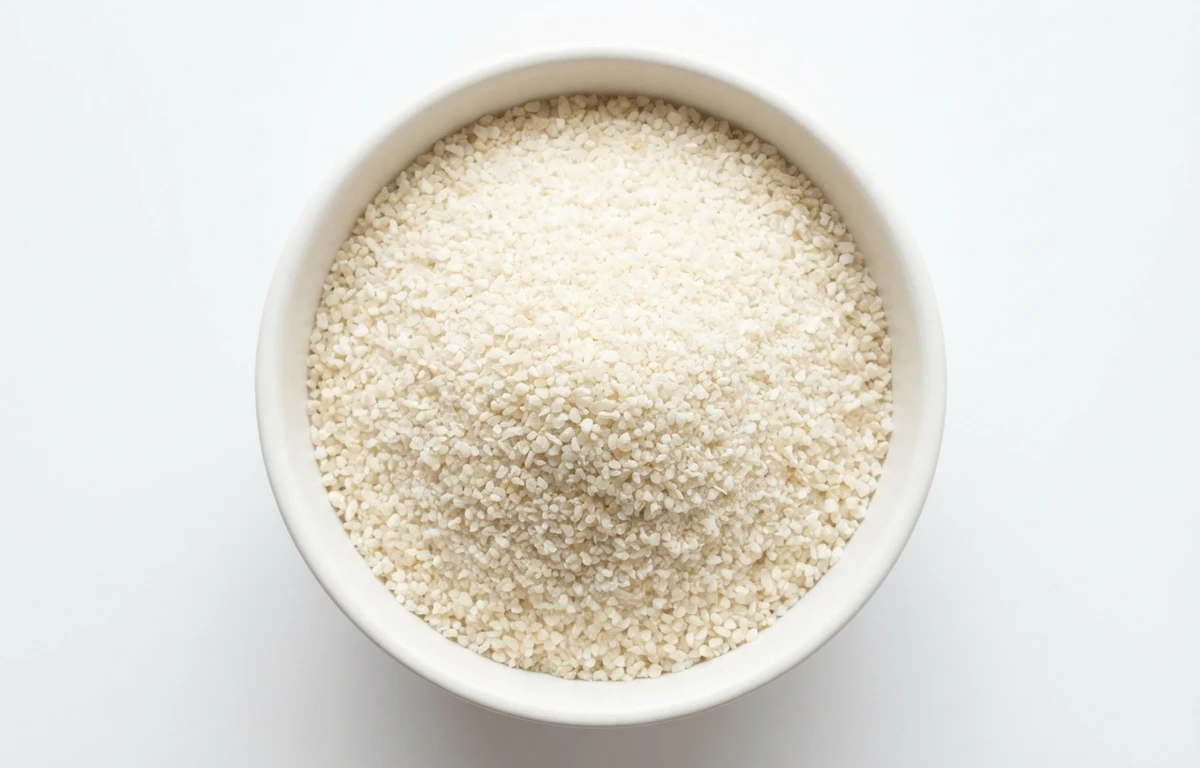
coarse rice semolina.
VegetarianVeganGluten-freeDairy-freeNut-freePeanut-freeSoy-freeEgg-freeShellfish-freeHoney-freeAlcohol-free
ALSO KNOWN AS
idli ravaakki tharirice ravarice gritscoarse rice flourarisi upma rava
SERVING
CALORIES
360
PROTEIN
7.0g
CARBS
80g
FAT
0.60g
FIBER
1.3g
NUTRITION PROFILE · per 100 g
Everything in this ingredient.
MACRONUTRIENTS
Calories360kcal—
Protein7.0g14%
Carbohydrates80g29%
Fiber1.3g5%
Sugar0.10g0%
Total fat0.60g1%
Saturated fat0.20g1%
Trans fat0g—
Cholesterol0mg0%
Water11g—
MINERALS
Sodium5.0mg0%
Potassium75mg2%
Calcium10mg1%
Iron1.2mg7%
Magnesium25mg6%
Phosphorus95mg8%
Zinc1.1mg10%
Copper0.10mg11%
Manganese1.0mg43%
Selenium15µg27%
VITAMINS
Vitamin A0µg0%
Vitamin C0mg0%
Vitamin D0µg0%
Vitamin E0.10mg1%
Vitamin K0µg0%
Thiamin (B1)0.07mg6%
Riboflavin (B2)0.02mg2%
Niacin (B3)1.5mg9%
Pantothenic acid (B5)0.20mg4%
Vitamin B60.15mg9%
Folate (B9)8.0µg2%
Vitamin B120µg0%
%DV based on a 2,000 cal diet. Source: USDA FoodData Central. A dash in the %DV column means there’s no established Daily Value for that nutrient.
MEASUREMENT CONVERSIONS
How much is what.
1 cup180g
1 tablespoon12g
1 teaspoon4g
1 oz28.4g
1 lb453.6g
1 ml0.8g
1 liter750g
HEALTH BENEFITS
Why eat it.
- ✓Naturally gluten-free and safe for celiac diets
- ✓Easily digestible carbohydrate source
- ✓Provides quick energy for physical activity
- ✓Low in fat and sodium
- ✓Hypoallergenic food source
COOKING TIPS
In the kitchen.
- 1For idlis, soak the rice semolina separately before mixing with urad dal batter
- 2Use a 1:2.5 ratio of semolina to water for making upma or porridge
- 3Always add semolina to boiling water gradually while stirring to prevent lumps
STORAGE
Keep it fresh.
- Store in an airtight container in a cool, dry place
- Dry roast the semolina before storing to prevent insect infestation
- Can be refrigerated or frozen to extend shelf life up to a year
FAQ
Frequently asked questions.
Is coarse rice semolina the same as cream of rice?
No, coarse rice semolina (idli rava) has a much larger, sand-like grain size compared to the fine, powdery texture of cream of rice.
Does rice semolina contain gluten?
No, rice semolina is naturally gluten-free as it is made entirely from rice, making it a great alternative to wheat semolina (suji).
How long does rice semolina last?
When stored in an airtight container in a cool, dry place, it lasts for 6 to 12 months. Roasting it can further extend its shelf life.
What is the best substitute for rice semolina?
Wheat semolina (suji/rava) is the closest substitute if gluten is not a concern. For a gluten-free alternative, coarse corn grits or broken rice can be used.
Do I need to wash rice semolina before cooking?
Yes, it is generally recommended to rinse it once or twice to remove any excess starch or dust before soaking or cooking.
Can I use rice semolina to make idlis?
Yes, it is the primary ingredient for 'Rava Idli' or as a shortcut for traditional idlis where it replaces the soaked and ground rice.
Is rice semolina healthy for weight loss?
It is high in carbohydrates and low in fiber compared to whole grains. While it is low in fat, it should be consumed in moderation as part of a balanced diet.
How do I pick the best quality rice semolina?
Look for a uniform white color, consistent granule size, and ensure there are no signs of moisture, clumping, or insects in the packaging.
Can rice semolina be used for baking?
It can be used to add texture to gluten-free breads or as a dusting for pizza dough to prevent sticking, but it does not provide structure like wheat flour.



















