
Grain
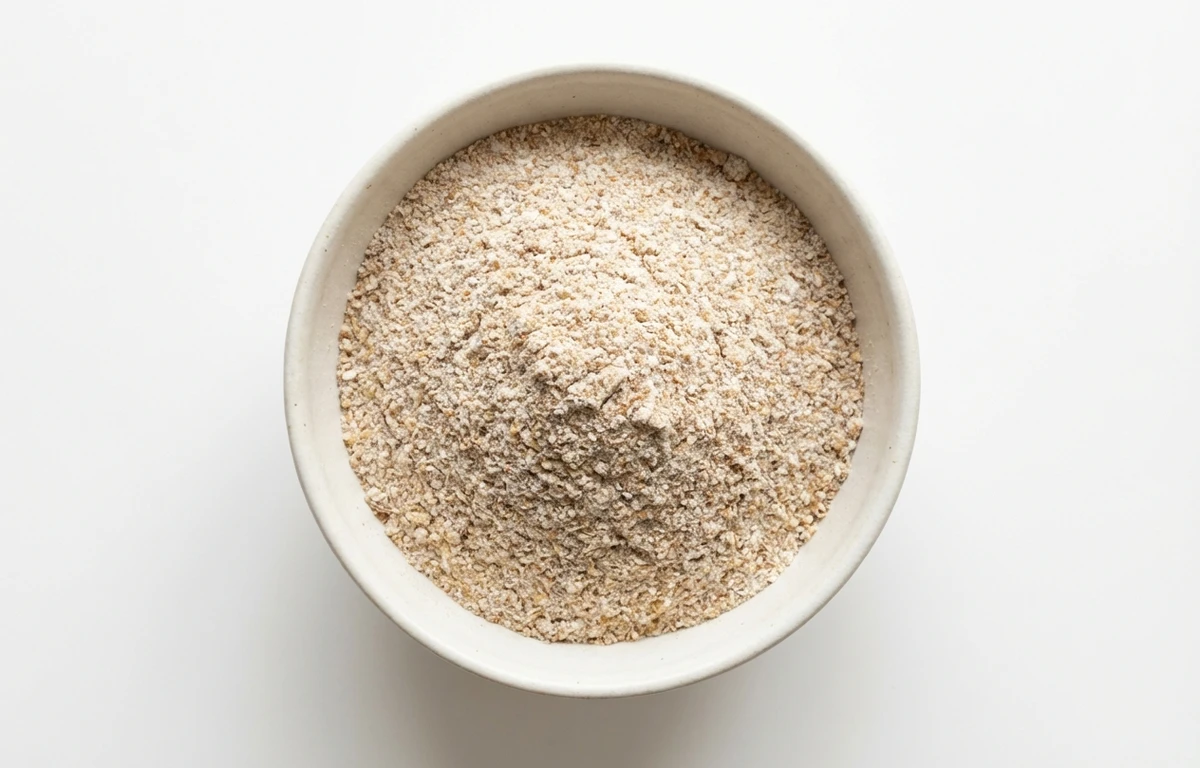
coarse whole wheat flour.
VegetarianVeganGluten-freeDairy-freeNut-freePeanut-freeSoy-freeEgg-freeShellfish-freeHoney-freeAlcohol-freeWhole grain
ALSO KNOWN AS
whole wheat flour, coarseatta, coarse
SERVING
CALORIES
340
PROTEIN
13.7g
CARBS
72.6g
FAT
2.5g
FIBER
10.7g
NUTRITION PROFILE · per 100 g
Everything in this ingredient.
MACRONUTRIENTS
Calories340kcal—
Protein13.7g27%
Carbohydrates72.6g26%
Fiber10.7g38%
Sugar0.40g1%
Total fat2.5g3%
Saturated fat0.40g2%
Trans fat0g—
Cholesterol0mg0%
Water11.9g—
MINERALS
Sodium2.0mg0%
Potassium363mg8%
Calcium34mg3%
Iron3.6mg20%
Magnesium138mg33%
Phosphorus363mg29%
Zinc2.6mg24%
Copper0.41mg46%
Manganese3.8mg165%
Selenium70.7µg129%
VITAMINS
Vitamin A0µg0%
Vitamin C0mg0%
Vitamin D0µg0%
Vitamin E0.63mg4%
Vitamin K3.3µg3%
Thiamin (B1)0.41mg34%
Riboflavin (B2)0.15mg12%
Niacin (B3)5.3mg33%
Pantothenic acid (B5)0.70mg14%
Vitamin B60.41mg24%
Folate (B9)44µg11%
Vitamin B120µg0%
%DV based on a 2,000 cal diet. Source: USDA FoodData Central. A dash in the %DV column means there’s no established Daily Value for that nutrient.
MEASUREMENT CONVERSIONS
How much is what.
1 cup120g
1 tablespoon8g
1 teaspoon3g
1 ml0.5g
1 liter533.3g
HEALTH BENEFITS
Why eat it.
- ✓High in dietary fiber, which aids digestion, promotes satiety, and helps maintain bowel health.
- ✓Rich source of essential nutrients including manganese, selenium, phosphorus, and B vitamins (niacin, thiamin).
- ✓May help regulate blood sugar levels due to its lower glycemic index compared to refined flours.
- ✓Supports heart health by contributing to lower cholesterol levels and reduced risk of cardiovascular disease.
COOKING TIPS
In the kitchen.
- 1Due to its coarse texture and high fiber content, it absorbs more liquid; you may need to increase hydration in recipes by 10-15%.
- 2For a lighter texture in baked goods like bread or muffins, substitute up to 50% of the all-purpose flour with coarse whole wheat flour.
- 3Allow doughs or batters to rest for 20-30 minutes before baking. This 'autolyse' period allows the coarse particles to fully hydrate, improving texture.
- 4Its nutty flavor and hearty texture make it ideal for rustic breads, scones, digestive biscuits, and savory pancakes.
STORAGE
Keep it fresh.
- Store in an airtight container in a cool, dark, and dry place for up to 3 months.
- For longer-term storage (6-12 months), refrigerate or freeze to prevent the natural oils in the wheat germ from becoming rancid.
FAQ
Frequently asked questions.
Is coarse whole wheat flour healthy?
Yes, coarse whole wheat flour is highly nutritious because it retains the entire grain kernel, including the bran and germ. It is an excellent source of dietary fiber for digestion, as well as essential minerals like manganese, selenium, and B vitamins.
How many calories and how much protein are in coarse whole wheat flour?
A 100g serving contains approximately 340 calories and 13.7g of protein. This high protein content, combined with 72.6g of carbohydrates, makes it a substantial and energy-dense ingredient for baking.
Is coarse whole wheat flour good for weight loss?
Yes, it can support weight loss goals due to its high fiber content, which promotes satiety and helps you feel full for longer. Its lower glycemic index compared to refined flour also helps prevent sharp spikes in blood sugar.
Is coarse whole wheat flour gluten-free?
No, coarse whole wheat flour is made from wheat and contains gluten. It is not suitable for individuals with celiac disease or those following a gluten-free diet.
Is coarse whole wheat flour keto-friendly?
No, it is not keto-friendly. With 72.6g of carbohydrates per 100g, it is a high-carb food that would likely exceed the daily carbohydrate limits of a ketogenic diet.
What is the difference between coarse and fine whole wheat flour?
Coarse whole wheat flour is ground less finely, leaving larger particles of the bran and germ intact. This results in a heartier, grittier texture and a more rustic appearance in baked goods compared to the smoother texture of fine whole wheat flour.
Can I substitute all-purpose flour with coarse whole wheat flour?
You can substitute it, but it is best to replace only 25-50% of the all-purpose flour to maintain a good rise. Because coarse flour absorbs more liquid, you may need to add 1-2 tablespoons of extra liquid per cup of flour used.
How should I store coarse whole wheat flour?
Because it contains the natural oils from the wheat germ, it can spoil faster than refined flour. Store it in an airtight container in a cool, dark pantry for up to 3 months, or in the freezer for up to 6-12 months to prevent rancidity.
Do I need to let dough made with coarse whole wheat flour rest?
Yes, it is highly recommended to let the dough rest for at least 20-30 minutes before shaping or cooking. This allows the coarse bran particles to fully hydrate, resulting in a softer texture and better handling.
What are the best culinary uses for coarse whole wheat flour?
It is ideal for making rustic artisan breads, traditional flatbreads like rotis, and dense baked goods like muffins or crackers. Its robust, nutty flavor pairs exceptionally well with seeds, nuts, and honey.



















