Dairy2 recipes
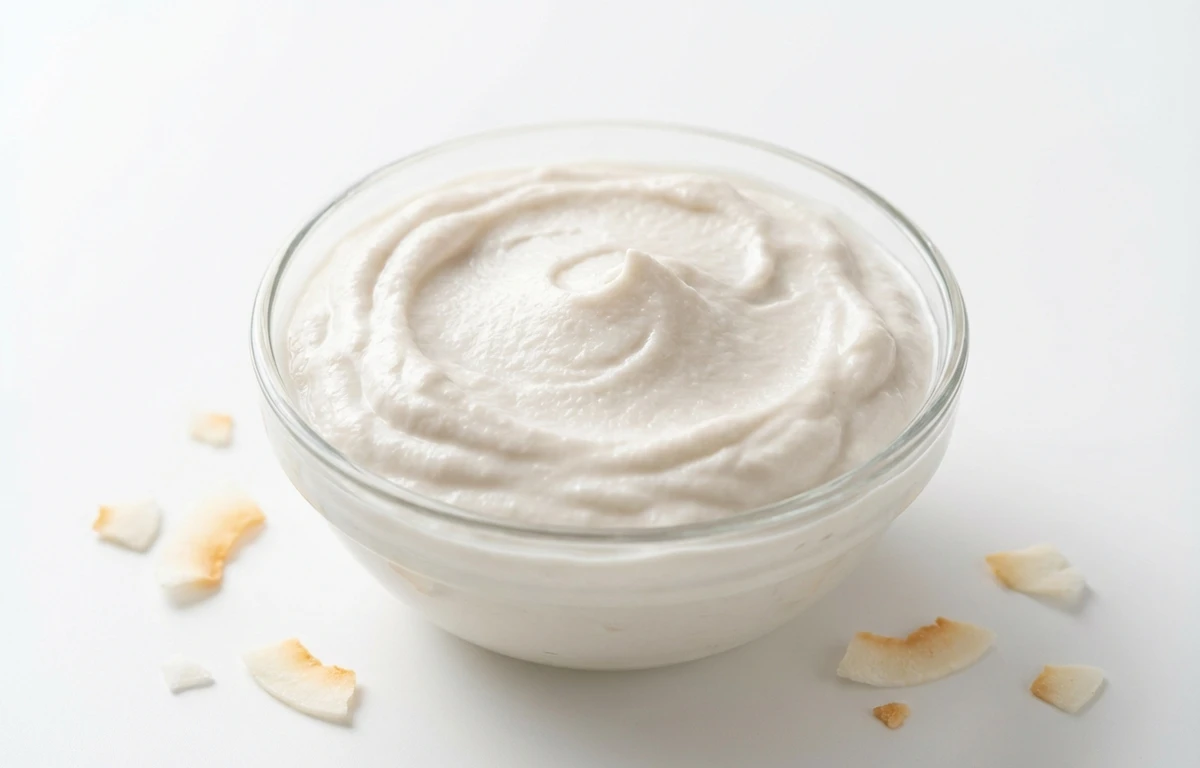
coconut cream.
VegetarianVeganGluten-freeDairy-freeNut-freePeanut-freeSoy-freeEgg-freeShellfish-freeHoney-freeAlcohol-free
ALSO KNOWN AS
Nariyal MalaiCoconut Milk Cream
SERVING
CALORIES
330
PROTEIN
3.5g
CARBS
6.4g
FAT
33.4g
FIBER
2.2g
NUTRITION PROFILE · per 100 g
Everything in this ingredient.
MACRONUTRIENTS
Calories330kcal—
Protein3.5g7%
Carbohydrates6.4g2%
Fiber2.2g8%
Sugar2.8g6%
Total fat33.4g43%
Saturated fat30.8g154%
Trans fat0g—
Cholesterol0mg0%
Water55.8g—
MINERALS
Sodium15mg1%
Potassium263mg6%
Calcium16mg1%
Iron2.3mg13%
Magnesium17mg4%
Phosphorus22mg2%
Zinc0.60mg5%
Copper0.24mg27%
Manganese0.81mg35%
Selenium5.5µg10%
VITAMINS
Vitamin A0µg0%
Vitamin C1.6mg2%
Vitamin D0µg0%
Vitamin E0.13mg1%
Vitamin K0.10µg0%
Thiamin (B1)0.02mg2%
Riboflavin (B2)0.04mg3%
Niacin (B3)0.04mg0%
Pantothenic acid (B5)0.16mg3%
Vitamin B60.03mg2%
Folate (B9)14µg4%
Vitamin B120µg0%
%DV based on a 2,000 cal diet. Source: USDA FoodData Central. A dash in the %DV column means there’s no established Daily Value for that nutrient.
MEASUREMENT CONVERSIONS
How much is what.
1 cup296g
1 tablespoon19g
1 teaspoon6.3g
1 ml1.3g
1 liter1266.7g
HEALTH BENEFITS
Why eat it.
- ✓Excellent source of medium-chain triglycerides (MCTs), which provide a quick source of energy.
- ✓Provides key minerals such as manganese, copper, iron, and magnesium.
- ✓Contains lauric acid, a fatty acid studied for its potential antimicrobial and antiviral properties.
- ✓A versatile dairy-free alternative for individuals with lactose intolerance or milk allergies.
COOKING TIPS
In the kitchen.
- 1To make dairy-free whipped cream, chill a can of full-fat coconut cream overnight, then scoop out the solidified cream and whip until fluffy.
- 2Add coconut cream towards the end of cooking in soups and curries to prevent it from curdling or separating.
- 3Use as a 1:1 substitute for heavy cream in many baking recipes, smoothies, and desserts to add richness and a subtle coconut flavor.
- 4The high-fat content makes it an excellent base for rich, creamy sauces and vegan ice cream.
STORAGE
Keep it fresh.
- Store unopened cans in a cool, dark pantry for up to 18 months. Check the expiration date.
- Once opened, transfer the cream to an airtight, non-metallic container and refrigerate for up to 7 days.
- For longer storage, freeze coconut cream in an ice cube tray and then transfer the cubes to a freezer bag for up to 3 months.
FAQ
Frequently asked questions.
Is coconut cream healthy?
Coconut cream is nutrient-dense, providing essential minerals like manganese, copper, and iron. It contains lauric acid, which has antimicrobial properties, and medium-chain triglycerides (MCTs) for quick energy. However, due to its high calorie and saturated fat content, it should be consumed in moderation.
How many calories and fat are in coconut cream?
Coconut cream is quite rich, containing approximately 330 calories and 33.4 grams of fat per 100g. While high in fat, much of it consists of MCTs, which are processed differently by the body than long-chain fats, often being used immediately for energy.
Is coconut cream vegan and dairy-free?
Yes, coconut cream is 100% plant-based, making it both vegan and naturally dairy-free. It is an excellent alternative for individuals with lactose intolerance, milk allergies, or those following a vegan lifestyle.
Is coconut cream keto-friendly?
Yes, coconut cream is highly keto-friendly because it is high in healthy fats (33.4g) and relatively low in carbohydrates (6.4g per 100g). It is a popular ingredient in ketogenic diets for adding richness to coffee, smoothies, and fat bombs.
What is the difference between coconut cream and coconut milk?
The primary difference is the water content; coconut cream is made with less water and has a much higher fat content, resulting in a thick, paste-like consistency. Coconut milk is more diluted and liquid, making it better for drinking or light soups, while cream is better for thickening.
Can I substitute coconut cream for heavy dairy cream?
Yes, coconut cream can generally be used as a 1:1 substitute for heavy dairy cream in most baking and cooking recipes. It provides a similar richness and mouthfeel, though it will add a noticeable coconut flavor to the finished dish.
How do you use coconut cream in cooking?
It is widely used to add creaminess to savory dishes like Thai curries and laksa, or as a base for dairy-free desserts. You can also chill a can of coconut cream and whip the solids to create a vegan whipped cream topping.
How should I store opened coconut cream?
Once a can is opened, transfer the remaining coconut cream to an airtight container and refrigerate it immediately. It will typically stay fresh for 5 to 7 days; if it develops a sour smell or visible mold, it should be discarded.
Can you freeze coconut cream?
Yes, coconut cream can be frozen for up to 2 months. While it may separate or become slightly grainy after thawing, you can easily restore its smooth texture by whisking it vigorously or giving it a quick pulse in a blender.
Is coconut cream good for weight loss?
While the MCTs in coconut cream can help with satiety and provide a quick energy boost, the high calorie density (330 calories per 100g) means it can hinder weight loss if not portion-controlled. It is best used as a flavorful addition rather than a primary ingredient in large quantities.
RECIPES
Cook with coconut cream.
2 recipes · sorted by what’s quick