
Dairy2 recipes
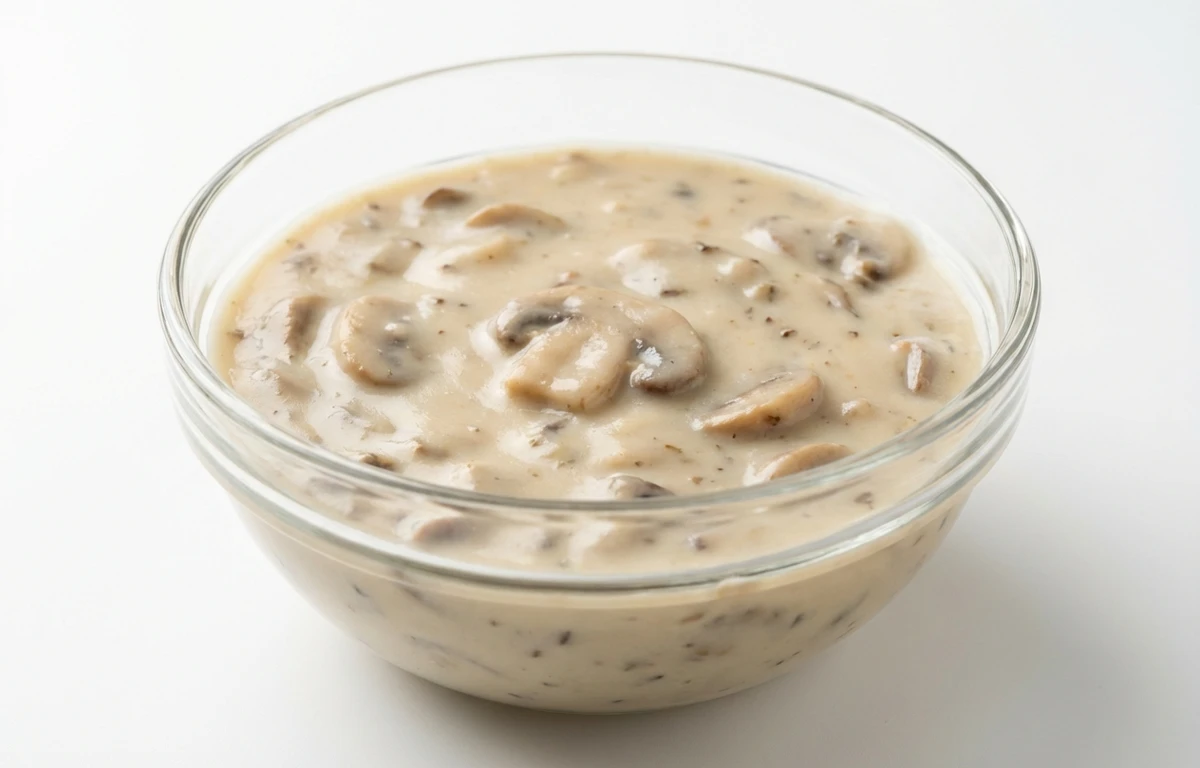
condensed cream of mushroom soup.
VegetarianVeganGluten-freeDairy-freeNut-freePeanut-freeSoy-freeEgg-freeShellfish-freeHoney-freeAlcohol-free
ALSO KNOWN AS
canned cream of mushroom soupmushroom soup concentratecondensed mushroom soupcondensed cream of mushroom soupcream of mushroom soup
SERVING
CALORIES
85
PROTEIN
1.5g
CARBS
8.2g
FAT
5.5g
FIBER
0.50g
NUTRITION PROFILE · per 100 g
Everything in this ingredient.
MACRONUTRIENTS
Calories85kcal—
Protein1.5g3%
Carbohydrates8.2g3%
Fiber0.50g2%
Sugar1.2g2%
Total fat5.5g7%
Saturated fat1.2g6%
Trans fat0g—
Cholesterol2.0mg1%
Water82g—
MINERALS
Sodium780mg34%
Potassium110mg2%
Calcium20mg2%
Iron0.30mg2%
Magnesium8.0mg2%
Phosphorus45mg4%
Zinc0.20mg2%
Copper0.08mg9%
Manganese0.05mg2%
Selenium1.5µg3%
VITAMINS
Vitamin A0µg0%
Vitamin C0mg0%
Vitamin D0.10µg1%
Vitamin E0.20mg1%
Vitamin K0.50µg0%
Thiamin (B1)0.02mg2%
Riboflavin (B2)0.05mg4%
Niacin (B3)0.80mg5%
Pantothenic acid (B5)0.20mg4%
Vitamin B60.02mg1%
Folate (B9)5.0µg1%
Vitamin B120.05µg2%
%DV based on a 2,000 cal diet. Source: USDA FoodData Central. A dash in the %DV column means there’s no established Daily Value for that nutrient.
MEASUREMENT CONVERSIONS
How much is what.
1 cup252g
1 tablespoon15.8g
1 teaspoon5.3g
1 oz31.5g
1 lb453.6g
1 ml1.1g
1 liter1050g
HEALTH BENEFITS
Why eat it.
- ✓Contains small amounts of Vitamin D from mushrooms
- ✓Provides a quick source of carbohydrates for energy
- ✓Contains potassium which supports heart health
- ✓Low in cholesterol
- ✓Provides dietary phosphorus for bone health
COOKING TIPS
In the kitchen.
- 1Whisk thoroughly while heating to ensure a smooth, creamy consistency
- 2Use as a base for casseroles or gravies to add instant depth and creaminess
- 3Dilute with one full can of milk instead of water for a richer flavor
STORAGE
Keep it fresh.
- Store unopened cans in a cool, dry place for up to 2-3 years
- Once opened, transfer to an airtight glass or plastic container
- Refrigerate opened soup and consume within 3-4 days
FAQ
Frequently asked questions.
How long does condensed cream of mushroom soup last once opened?
Once opened, it should be transferred to a non-metallic airtight container and refrigerated. It will stay fresh for 3 to 4 days.
Can I freeze condensed cream of mushroom soup?
Yes, you can freeze it for up to 3 months. However, the texture may become slightly grainy or separate upon thawing due to the dairy content; whisking well during reheating helps.
Is cream of mushroom soup vegetarian?
Most standard commercial brands are vegetarian, but always check the label for 'beef stock' or 'chicken fat' which are sometimes added for flavor.
What is a good substitute for cream of mushroom soup in recipes?
A mixture of heavy cream, mushroom broth, and a roux (butter and flour) is the best homemade substitute. Alternatively, cream of celery or cream of chicken can work depending on the dish.
Does this soup contain gluten?
Yes, most condensed cream soups use wheat flour as a thickening agent and are not gluten-free unless specifically labeled otherwise.
How do I prepare it as a standalone soup?
Empty the contents into a pot and slowly stir in one full can (approx. 10-11 oz) of water or milk. Heat over medium until simmering, stirring frequently.
Why is it called 'condensed'?
It is 'condensed' because a significant portion of the water has been removed during processing to save space and weight in packaging; it is intended to be diluted before consumption.
What are the most common uses for this soup besides eating it plain?
It is a staple 'binder' for American casseroles, most notably Green Bean Casserole, and is frequently used as a shortcut sauce for smothered pork chops or chicken.
Is it high in sodium?
Yes, condensed soups are typically very high in sodium. Look for 'Low Sodium' or 'Healthy Request' versions if you are monitoring your salt intake.
Can I use it straight from the can without adding water?
Yes, many casserole and slow-cooker recipes call for using the soup undiluted to act as a thick, concentrated sauce.
RECIPES
Cook with condensed cream of mushroom soup.
2 recipes · sorted by what’s quick



















