
Meat
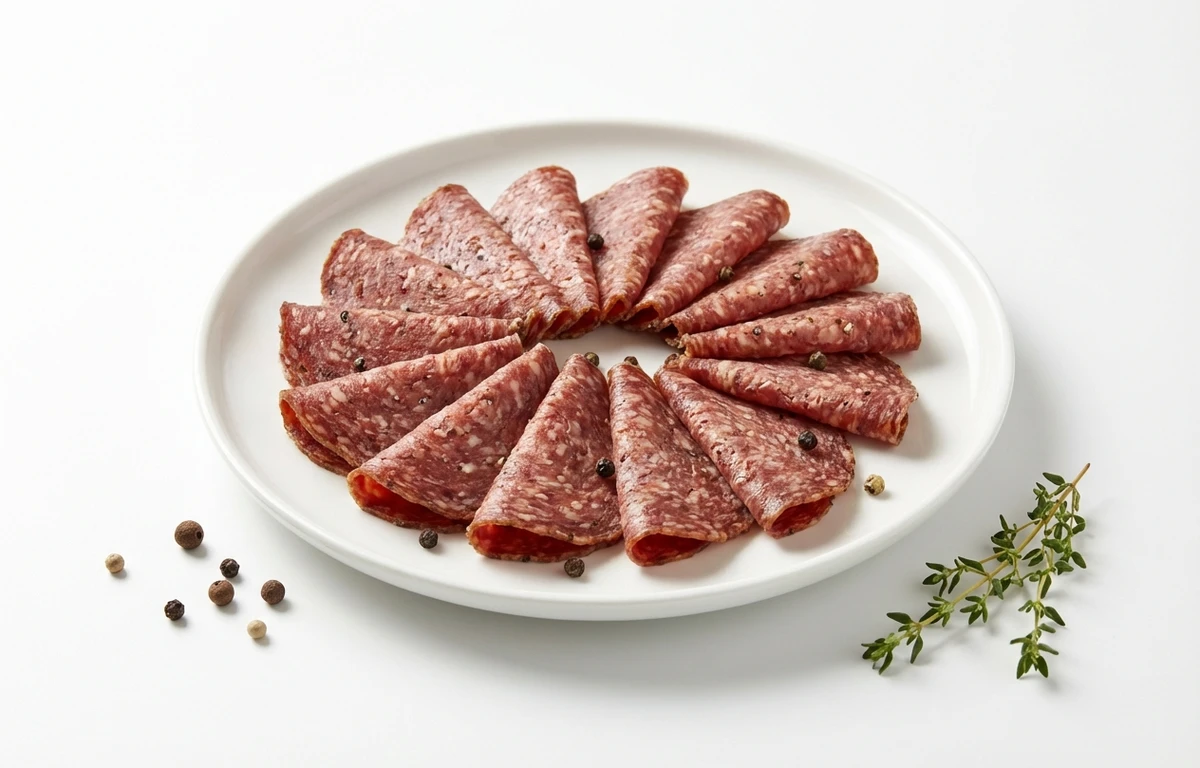
cooked beef salami.
VegetarianVeganGluten-freeDairy-freeNut-freePeanut-freeSoy-freeEgg-freeShellfish-freeHoney-freeAlcohol-freeFermented
ALSO KNOWN AS
beef salami
SERVING
CALORIES
261
PROTEIN
12.6g
CARBS
1.9g
FAT
22.2g
FIBER
0g
NUTRITION PROFILE · per 100 g
Everything in this ingredient.
MACRONUTRIENTS
Calories261kcal—
Protein12.6g25%
Carbohydrates1.9g1%
Fiber0g0%
Sugar1.5g3%
Total fat22.2g28%
Saturated fat9.9g49%
Cholesterol71mg24%
Water60g—
MINERALS
Sodium1140mg50%
Potassium188mg4%
Calcium6.0mg0%
Iron2.2mg12%
Magnesium13mg3%
Phosphorus205mg16%
Zinc1.8mg16%
Copper0.19mg21%
Manganese0.05mg2%
Selenium14.6µg27%
VITAMINS
Vitamin A0µg0%
Vitamin C0mg0%
Vitamin D1.2µg6%
Vitamin E0.19mg1%
Vitamin K1.3µg1%
Thiamin (B1)0.10mg8%
Riboflavin (B2)0.19mg15%
Niacin (B3)3.2mg20%
Pantothenic acid (B5)0.95mg19%
Vitamin B60.18mg11%
Folate (B9)2.0µg1%
Vitamin B123.1µg128%
%DV based on a 2,000 cal diet. Source: USDA FoodData Central. A dash in the %DV column means there’s no established Daily Value for that nutrient.
HEALTH BENEFITS
Why eat it.
- ✓Rich source of complete protein, essential for muscle repair and growth.
- ✓Provides significant amounts of B vitamins, particularly B12 and niacin, which support energy metabolism and nervous system function.
- ✓Contains essential minerals like zinc and iron, crucial for immune function and oxygen transport in the blood.
COOKING TIPS
In the kitchen.
- 1For a crispy texture, pan-fry thin slices over medium heat until the edges curl and brown. This is ideal for sandwiches, salads, or as a pizza topping.
- 2Dice beef salami and add it to pasta sauces, frittatas, or scrambled eggs for a boost of savory, salty flavor.
- 3Serve thinly sliced at room temperature on a charcuterie board with cheese, olives, and crackers to best appreciate its complex, cured flavor.
- 4When adding to pizza, place salami slices on top of the cheese to allow the fat to render and crisp up during baking.
STORAGE
Keep it fresh.
- Store unopened packages in the refrigerator (below 40°F or 4°C). Once opened, wrap tightly in plastic wrap or butcher paper and consume within 5-7 days.
- For longer storage, sliced salami can be frozen for up to 2 months. Layer slices with parchment paper to prevent sticking and store in an airtight container.
FAQ
Frequently asked questions.
Is cooked beef salami healthy?
Cooked beef salami is a good source of complete protein, B vitamins, and essential minerals like iron and zinc. However, it is relatively high in fat (22.2g per 100g) and sodium, so it is best enjoyed in moderation as part of a balanced diet.
How much protein is in cooked beef salami?
There are approximately 12.6 grams of protein per 100 grams of cooked beef salami. This protein is 'complete,' meaning it contains all the essential amino acids necessary for muscle repair and growth.
Is cooked beef salami keto-friendly?
Yes, cooked beef salami is very keto-friendly. With only 1.9g of carbohydrates and 22.2g of fat per 100g, it fits well into high-fat, low-carb dietary profiles.
Is cooked beef salami gluten-free?
While beef itself is gluten-free, some processed salamis use fillers, binders, or flavorings that contain gluten. Always check the ingredient label for wheat-based additives or a certified gluten-free seal.
How do you store cooked beef salami and how long does it last?
Store cooked beef salami in the refrigerator in an airtight container or tightly wrapped in plastic. Once opened, it typically stays fresh for 3 to 5 days, while unopened vacuum-sealed packages can last until their expiration date.
Can you freeze cooked beef salami?
Yes, you can freeze cooked beef salami for up to 2 months. For best results, wrap it tightly to prevent freezer burn; note that the texture may become slightly softer or more moist once thawed.
What is the difference between cooked beef salami and dry salami?
Cooked beef salami is heat-treated and has a softer, more moist texture similar to deli meat. Dry salami is cured and fermented over a long period, resulting in a much harder texture and a more tangy, concentrated flavor.
How do you use cooked beef salami in cooking?
It is most commonly used cold in sandwiches, salads, or on snack platters. However, it can also be pan-fried to add a crispy texture to breakfast hashes, omelets, or as a savory topping for homemade pizzas.
Is cooked beef salami halal?
Beef salami can be halal if the meat is sourced from animals slaughtered according to Islamic law and no pork fats or alcohol-based flavorings are added. Look for a specific Halal certification on the product packaging.
What does cooked beef salami taste like?
It has a rich, savory, and mildly spiced flavor profile, often featuring notes of garlic, black pepper, and smoke. Because it is made from beef, it has a deeper, more robust meat flavor compared to pork-based deli meats.



















