
Seafood
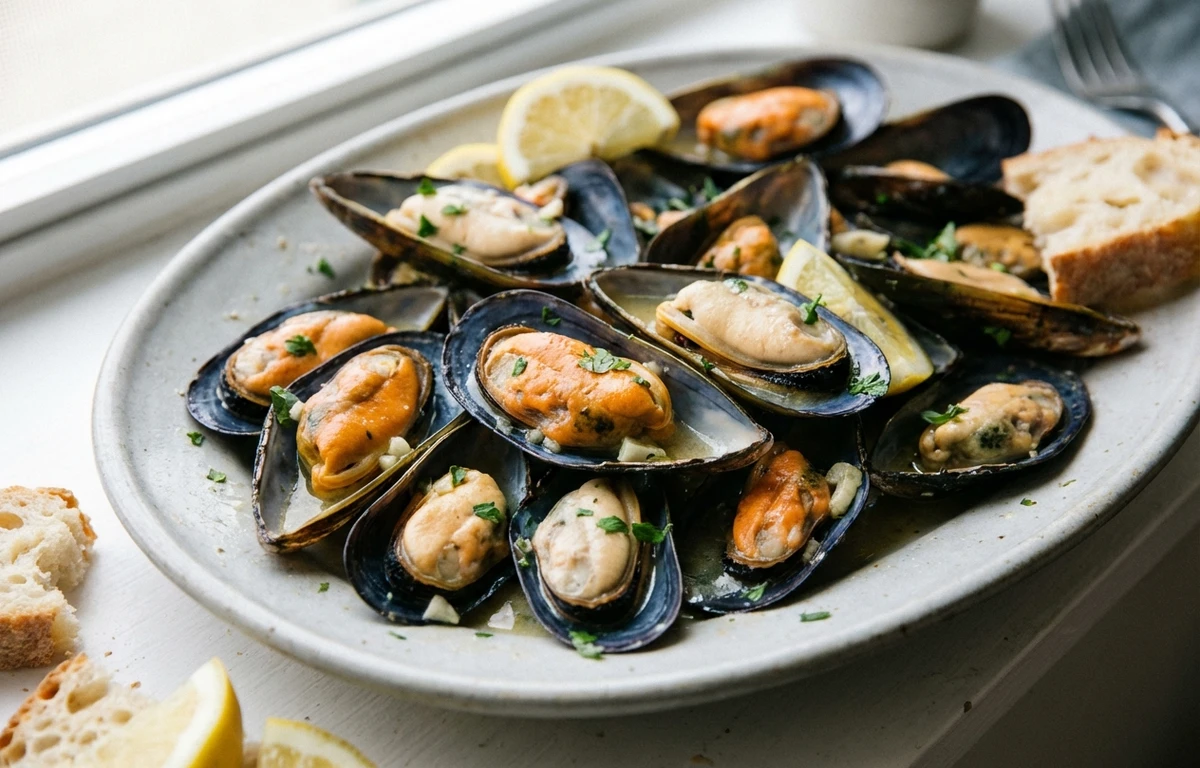
cooked blue mussel.
VegetarianVeganGluten-freeDairy-freeNut-freePeanut-freeSoy-freeEgg-freeShellfish-freeHoney-freeAlcohol-freeKosher
ALSO KNOWN AS
steamed blue musselsboiled blue musselscooked Mytilus edulismejillones cocidoscooked mussels
SERVING
CALORIES
172
PROTEIN
23.8g
CARBS
7.4g
FAT
4.5g
FIBER
0g
NUTRITION PROFILE · per 100 g
Everything in this ingredient.
MACRONUTRIENTS
Calories172kcal—
Protein23.8g48%
Carbohydrates7.4g3%
Fiber0g0%
Sugar0g0%
Total fat4.5g6%
Saturated fat0.90g5%
Trans fat0g—
Cholesterol56mg19%
Water60.6g—
MINERALS
Sodium369mg16%
Potassium268mg6%
Calcium33mg3%
Iron6.7mg37%
Magnesium37mg9%
Phosphorus285mg23%
Zinc2.7mg25%
Copper0.15mg17%
Manganese6.8mg296%
Selenium89.6µg163%
VITAMINS
Vitamin A91µg10%
Vitamin C13.6mg15%
Vitamin D0µg0%
Vitamin E1.1mg7%
Vitamin K0.10µg0%
Thiamin (B1)0.30mg25%
Riboflavin (B2)0.42mg32%
Niacin (B3)3.7mg23%
Pantothenic acid (B5)0.95mg19%
Vitamin B60.11mg6%
Folate (B9)76µg19%
Vitamin B1224µg1000%
%DV based on a 2,000 cal diet. Source: USDA FoodData Central. A dash in the %DV column means there’s no established Daily Value for that nutrient.
MEASUREMENT CONVERSIONS
How much is what.
1 cup150g
1 tablespoon16.2g
1 teaspoon5.4g
1 oz28.4g
1 lb453.6g
1 liter1080g
1 piece12g
HEALTH BENEFITS
Why eat it.
- ✓Extremely high in Vitamin B12 for nerve health
- ✓Excellent source of highly bioavailable iron
- ✓Rich in Omega-3 fatty acids for heart health
- ✓High protein content with low saturated fat
- ✓Contains manganese which is vital for bone health
COOKING TIPS
In the kitchen.
- 1Avoid overcooking as the meat will become tough and rubbery
- 2Use the leftover cooking liquid (mussel liquor) as a base for seafood stocks or sauces
- 3Reheat gently by steaming for 1-2 minutes to maintain texture
STORAGE
Keep it fresh.
- Store cooked mussels in an airtight container in the refrigerator for up to 2 days
- Can be frozen in their cooking liquid for up to 3 months
- Keep refrigerated at or below 40°F (4°C) until ready to serve
FAQ
Frequently asked questions.
How long do cooked mussels last in the fridge?
Cooked mussels should be consumed within 1 to 2 days when stored in an airtight container in the refrigerator.
Can you freeze cooked mussels?
Yes, you can freeze cooked mussel meat. For best results, freeze them in their own cooking liquid to prevent them from drying out.
What is a good substitute for blue mussels?
Clams, cockles, or oysters are the best substitutes in terms of texture and flavor profile.
Are cooked mussels high in cholesterol?
They contain a moderate amount of cholesterol (about 56mg per 100g), which is lower than many other animal proteins like eggs or shrimp.
How can I tell if a cooked mussel is bad?
If the mussel has a strong 'fishy' or ammonia-like smell, or if the meat feels excessively slimy or mushy, it should be discarded.
Why are some mussel meats orange and others white?
The color difference is usually due to the sex of the mussel; orange meats are typically female, while creamy white meats are male. Both are equally safe and delicious to eat.
Are mussels a sustainable seafood choice?
Yes, blue mussels are considered one of the most sustainable seafood options because they are filter feeders and require no external feed.
Do I need to remove the 'beard' before eating?
The 'beard' (byssus threads) is usually removed during cleaning before cooking, but if any remains on the cooked mussel, it should be pulled off as it is tough and inedible.
Are mussels high in mercury?
No, mussels are very low on the food chain and generally have very low levels of mercury compared to larger fish.



















