
Meat
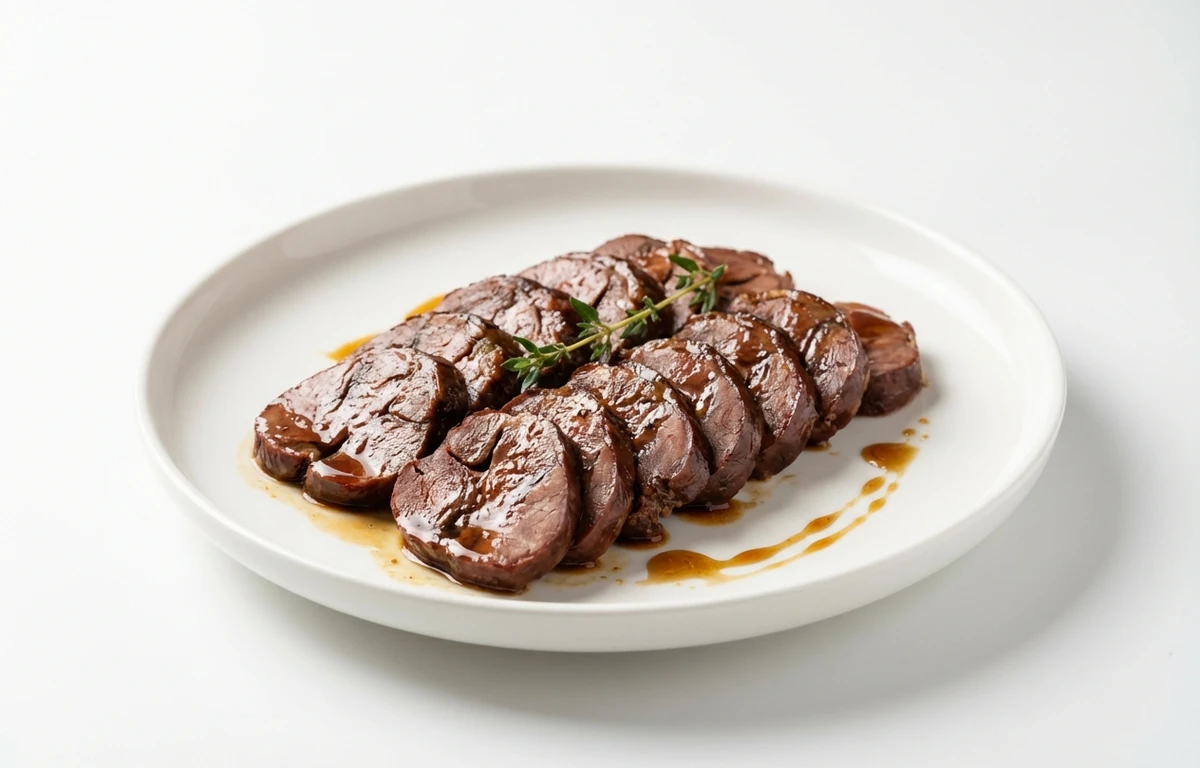
cooked braised pork heart.
VegetarianVeganGluten-freeDairy-freeNut-freePeanut-freeSoy-freeEgg-freeShellfish-freeHoney-freeAlcohol-freeHalalKosher
ALSO KNOWN AS
pork heart
SERVING
CALORIES
165
PROTEIN
26.5g
CARBS
0g
FAT
6.2g
FIBER
0g
NUTRITION PROFILE · per 100 g
Everything in this ingredient.
MACRONUTRIENTS
Calories165kcal—
Protein26.5g53%
Carbohydrates0g0%
Fiber0g0%
Sugar0g0%
Total fat6.2g8%
Saturated fat1.8g9%
Trans fat0g—
Cholesterol195mg65%
Water65.8g—
MINERALS
Sodium350mg15%
Potassium240mg5%
Calcium8.0mg1%
Iron4.8mg27%
Magnesium20mg5%
Phosphorus210mg17%
Zinc2.9mg26%
Copper0.40mg44%
Manganese0.03mg1%
Selenium38.5µg70%
VITAMINS
Vitamin A5.0µg1%
Vitamin C2.5mg3%
Vitamin D0.10µg1%
Vitamin E0.20mg1%
Vitamin K0µg0%
Thiamin (B1)0.40mg33%
Riboflavin (B2)1.1mg85%
Niacin (B3)7.5mg47%
Pantothenic acid (B5)2.5mg50%
Vitamin B60.40mg24%
Folate (B9)4.0µg1%
Vitamin B123.8µg158%
%DV based on a 2,000 cal diet. Source: USDA FoodData Central. A dash in the %DV column means there’s no established Daily Value for that nutrient.
MEASUREMENT CONVERSIONS
How much is what.
1 cup145g
1 tablespoon9.1g
1 teaspoon3g
1 ml0.6g
1 liter604.2g
HEALTH BENEFITS
Why eat it.
- ✓Excellent source of Coenzyme Q10 (CoQ10), which supports heart health and energy production.
- ✓Rich in B vitamins, especially B12, crucial for nerve function and red blood cell formation.
- ✓High in highly bioavailable heme iron, which helps prevent anemia.
- ✓Provides a lean source of high-quality protein, essential for muscle repair and growth.
COOKING TIPS
In the kitchen.
- 1Slice the cooked heart thinly and add to stir-fries, tacos, or sandwiches.
- 2Reheat gently in its braising liquid or a small amount of broth to prevent it from becoming tough or dry.
- 3The already tender meat can be chopped and incorporated into savory pies, stews, or pasta sauces.
- 4Serve chilled and sliced as part of a charcuterie or cold-cut platter.
STORAGE
Keep it fresh.
- Store in an airtight container in the refrigerator for up to 4 days.
- For longer storage, freeze in a sealed container or freezer bag for up to 3 months. Thaw in the refrigerator before use.
FAQ
Frequently asked questions.
Is cooked braised pork heart healthy?
Yes, cooked braised pork heart is highly nutritious. It is a lean source of high-quality protein and is exceptionally rich in B vitamins, heme iron, and Coenzyme Q10 (CoQ10), which supports cardiovascular health and energy production.
How much protein is in cooked braised pork heart?
A 100g serving of cooked braised pork heart provides approximately 26.5g of protein. This makes it an excellent choice for muscle repair and growth, offering a protein density similar to lean beef or chicken breast.
Is cooked braised pork heart keto-friendly?
Yes, it is very keto-friendly as it contains 0g of carbohydrates per 100g. Its high protein content and moderate fat levels (6.2g) make it an ideal staple for low-carb and ketogenic diets.
What does braised pork heart taste like?
Pork heart has a flavor similar to lean beef but with a slightly more intense, savory profile. Because it is a hard-working muscle, the texture is dense and firm rather than soft, and it lacks the 'iron' taste often associated with liver.
Is cooked braised pork heart gluten-free?
While the meat itself is naturally gluten-free, the braising liquid often contains soy sauce or flour for thickening. Always check the specific recipe or label to ensure no gluten-containing ingredients were used during the cooking process.
How do you store cooked braised pork heart?
Store cooked pork heart in an airtight container in the refrigerator for up to 3 to 4 days. For longer storage, it can be frozen for up to 3 months, though the texture may become slightly firmer upon thawing.
Can I eat pork heart if I am watching my cholesterol?
Like most organ meats, pork heart contains dietary cholesterol. However, it is very lean compared to other cuts. If you are monitoring your cholesterol, consume it in moderation as part of a balanced diet and consult your doctor.
What are the specific health benefits of the CoQ10 in pork heart?
Pork heart is one of the best food sources of Coenzyme Q10 (CoQ10). This antioxidant is essential for mitochondrial health, helping your cells produce energy and providing specific protective benefits for the human heart.
How should I serve braised pork heart?
Braised pork heart is best served thinly sliced. It can be eaten warm as a main protein, added to stir-fries, or served cold as an appetizer with a dipping sauce made of vinegar, garlic, and chili oil.
Is pork heart considered a lean meat?
Yes, pork heart is surprisingly lean for an organ meat, containing only about 6.2g of fat per 100g. Most of its calories come from protein, making it a nutrient-dense option for those looking to reduce overall fat intake.



















