
Seafood
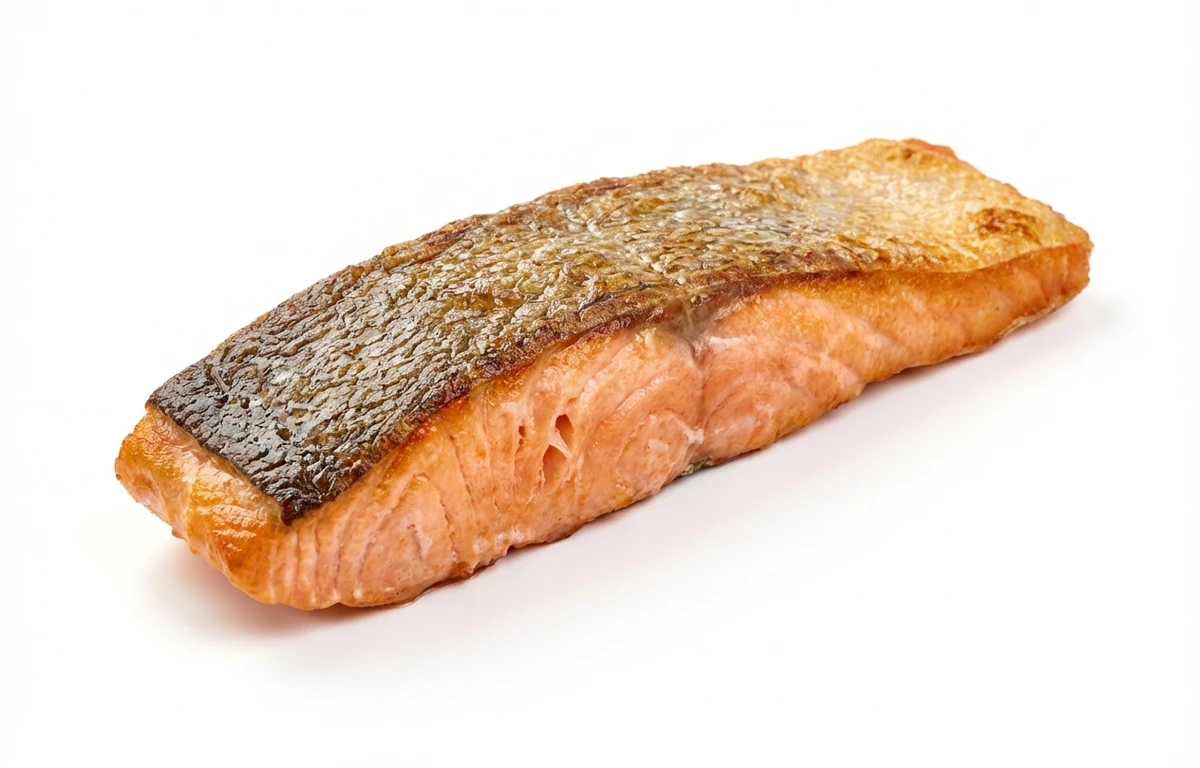
cooked chinook salmon.
VegetarianVeganGluten-freeDairy-freeNut-freePeanut-freeSoy-freeEgg-freeShellfish-freeHoney-freeAlcohol-free
ALSO KNOWN AS
cooked king salmoncooked spring salmoncooked tyee salmoncooked quinnat salmon
SERVING
CALORIES
231
PROTEIN
25.7g
CARBS
0g
FAT
13.4g
FIBER
0g
NUTRITION PROFILE · per 100 g
Everything in this ingredient.
MACRONUTRIENTS
Calories231kcal—
Protein25.7g51%
Carbohydrates0g0%
Fiber0g0%
Sugar0g0%
Total fat13.4g17%
Saturated fat3.2g16%
Trans fat0g—
Cholesterol85mg28%
Water59.5g—
MINERALS
Sodium60mg3%
Potassium505mg11%
Calcium26mg2%
Iron0.90mg5%
Magnesium33mg8%
Phosphorus311mg25%
Zinc0.60mg5%
Copper0.06mg7%
Manganese0.02mg1%
Selenium46.8µg85%
VITAMINS
Vitamin A45µg5%
Vitamin C0mg0%
Vitamin D17.1µg86%
Vitamin E1.5mg10%
Vitamin K0.50µg0%
Thiamin (B1)0.06mg5%
Riboflavin (B2)0.15mg12%
Niacin (B3)10.1mg63%
Pantothenic acid (B5)1.1mg22%
Vitamin B60.40mg24%
Folate (B9)2.0µg1%
Vitamin B122.9µg121%
%DV based on a 2,000 cal diet. Source: USDA FoodData Central. A dash in the %DV column means there’s no established Daily Value for that nutrient.
MEASUREMENT CONVERSIONS
How much is what.
1 cup136g
1 oz28.4g
1 lb453.6g
1 piece150g
HEALTH BENEFITS
Why eat it.
- ✓Rich in Omega-3 fatty acids which support heart and brain health
- ✓High-quality protein source for muscle repair and maintenance
- ✓Excellent source of Vitamin B12 for nerve function
- ✓Provides Vitamin D which is essential for bone health and immunity
- ✓Contains Selenium, a powerful antioxidant that protects cells
COOKING TIPS
In the kitchen.
- 1Avoid overcooking; the internal temperature should reach 145°F (63°C) for safety and moisture
- 2Reheat gently at a low temperature to prevent the fish from becoming dry and rubbery
- 3Flake cooked salmon into salads, pastas, or grain bowls for an easy protein boost
STORAGE
Keep it fresh.
- Store in an airtight container in the refrigerator for up to 3-4 days
- Can be frozen for up to 3 months if wrapped tightly in foil or freezer bags
- Keep at the back of the fridge where the temperature is most consistent
FAQ
Frequently asked questions.
How long does cooked chinook salmon last in the fridge?
Cooked chinook salmon typically stays fresh for 3 to 4 days when stored in an airtight container in the refrigerator.
Can you freeze cooked chinook salmon?
Yes, you can freeze it for up to 3 months. Ensure it is cooled completely and wrapped tightly to prevent freezer burn.
What is the best way to reheat cooked salmon?
The best way is in the oven at a low temperature (around 275°F) with a splash of water or lemon juice, covered with foil to retain moisture.
How can I tell if cooked salmon has gone bad?
Discard the salmon if it has a sour or ammonia-like smell, a slimy texture, or visible mold.
Is chinook salmon higher in fat than other salmon?
Yes, Chinook (King) salmon is known for having the highest fat content among salmon species, giving it a rich, buttery texture.
What are good substitutes for cooked chinook salmon?
Sockeye or Coho salmon are the best substitutes, though they are slightly leaner. Steelhead trout is also a good alternative.
Is cooked chinook salmon healthy?
It is extremely healthy, providing high amounts of Omega-3s, protein, Vitamin D, and B vitamins.
Does chinook salmon contain mercury?
Like most large fish, it contains some mercury, but it is generally considered a low-to-moderate mercury choice compared to large tuna or swordfish.
Can I eat the skin of cooked chinook salmon?
Yes, the skin is edible and contains high concentrations of Omega-3 fatty acids, though it is best when cooked until crispy.



















