
Protein
cooked corned beef.
VegetarianVeganGluten-freeDairy-freeNut-freePeanut-freeSoy-freeEgg-freeShellfish-freeHoney-freeAlcohol-free
ALSO KNOWN AS
cooked silversidecooked salt beefcooked cured beefboiled corned beefsliced corned beefcooked corned beefDeli Corned Beef
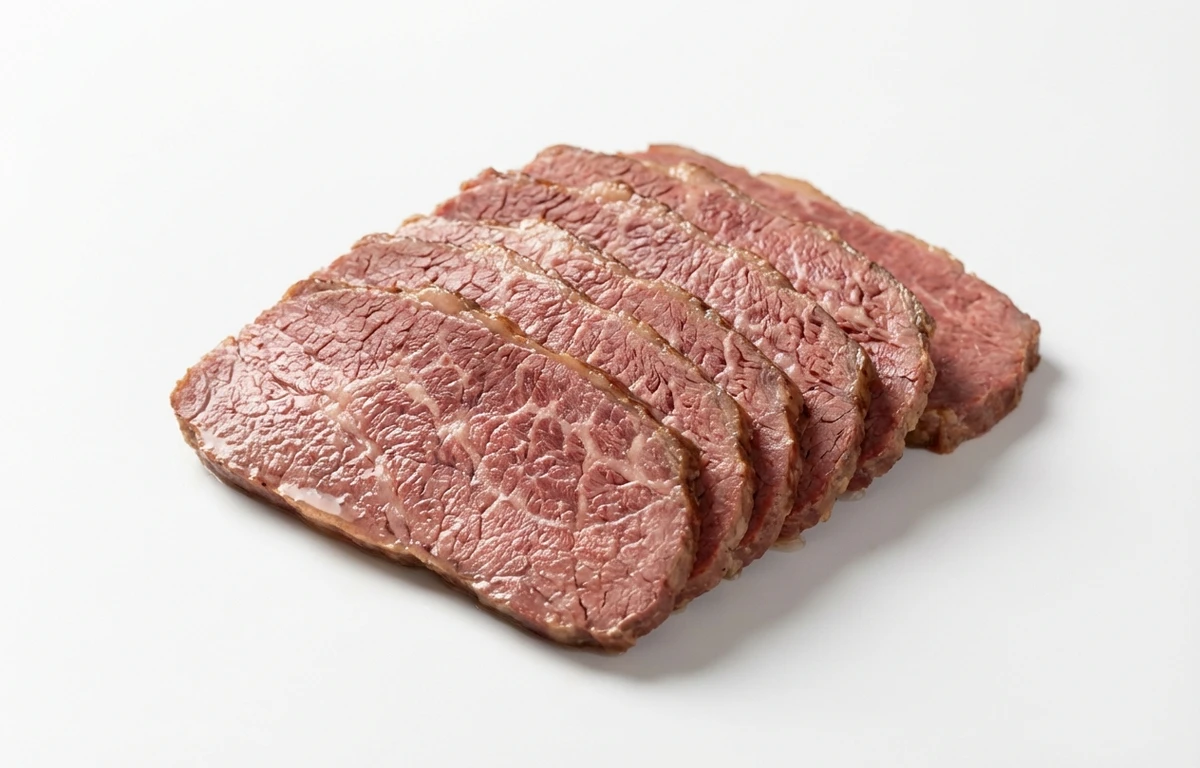
SERVING
CALORIES
251
PROTEIN
18.2g
CARBS
0.50g
FAT
19g
FIBER
0g
NUTRITION PROFILE · per 100 g
Everything in this ingredient.
MACRONUTRIENTS
Calories251kcal—
Protein18.2g36%
Carbohydrates0.50g0%
Fiber0g0%
Sugar0.50g1%
Total fat19g24%
Saturated fat6.3g32%
Trans fat0.80g—
Cholesterol98mg33%
Water58g—
MINERALS
Sodium1134mg49%
Potassium150mg3%
Calcium10mg1%
Iron2.3mg13%
Magnesium15mg4%
Phosphorus140mg11%
Zinc4.5mg41%
Copper0.10mg11%
Manganese0.01mg0%
Selenium25µg45%
VITAMINS
Vitamin A0µg0%
Vitamin C0mg0%
Vitamin D0.10µg1%
Vitamin E0.20mg1%
Vitamin K1.5µg1%
Thiamin (B1)0.03mg3%
Riboflavin (B2)0.18mg14%
Niacin (B3)3.5mg22%
Pantothenic acid (B5)0.40mg8%
Vitamin B60.20mg12%
Folate (B9)5.0µg1%
Vitamin B122.1µg88%
%DV based on a 2,000 cal diet. Source: USDA FoodData Central. A dash in the %DV column means there’s no established Daily Value for that nutrient.
MEASUREMENT CONVERSIONS
How much is what.
1 cup210g
1 oz28.4g
1 lb453.6g
HEALTH BENEFITS
Why eat it.
- ✓Excellent source of high-quality protein
- ✓Rich in Vitamin B12 for nerve health
- ✓Provides essential minerals like Zinc and Iron
- ✓Contains Selenium which acts as an antioxidant
- ✓Good source of energy-dense fats
COOKING TIPS
In the kitchen.
- 1Always slice against the grain to ensure maximum tenderness
- 2Reheat gently with a splash of water or broth to prevent drying out
- 3Use leftovers for corned beef hash or Reuben sandwiches
STORAGE
Keep it fresh.
- Store in an airtight container in the refrigerator for 3-4 days
- Can be frozen for up to 2 months if tightly wrapped
- Keep away from raw meats to prevent cross-contamination
FAQ
Frequently asked questions.
How long does cooked corned beef last in the fridge?
Cooked corned beef will stay fresh for 3 to 4 days when stored in an airtight container in the refrigerator.
Can you freeze cooked corned beef?
Yes, you can freeze it for up to 2 months. Wrap it tightly in foil or plastic wrap and place it in a freezer bag.
Is corned beef high in sodium?
Yes, corned beef is very high in sodium because it is cured in a salt brine. It should be consumed in moderation.
What is the best way to reheat cooked corned beef?
The best way is to steam it or heat it in a pan over low heat with a small amount of water or beef broth to keep it moist.
Why is it called 'corned' beef?
The term 'corned' refers to the large grains or 'corns' of salt used to cure the meat.
What can I substitute for cooked corned beef?
Pastrami is the closest substitute. Roast beef or brisket can also be used, though they lack the specific cured flavor.
Is cooked corned beef gluten-free?
Pure corned beef is naturally gluten-free, but always check the label of pre-packaged versions for additives or flavorings that may contain gluten.
How do I know if cooked corned beef has gone bad?
Signs of spoilage include a slimy texture, a sour or off smell, and any visible mold or discoloration.
What are common dishes made with cooked corned beef?
Common dishes include Corned Beef and Cabbage, Reuben sandwiches, and Corned Beef Hash.
Is corned beef healthy?
It is a good source of protein and B vitamins, but it is also high in saturated fat and sodium, so it is best enjoyed as an occasional treat.



















