
Grain
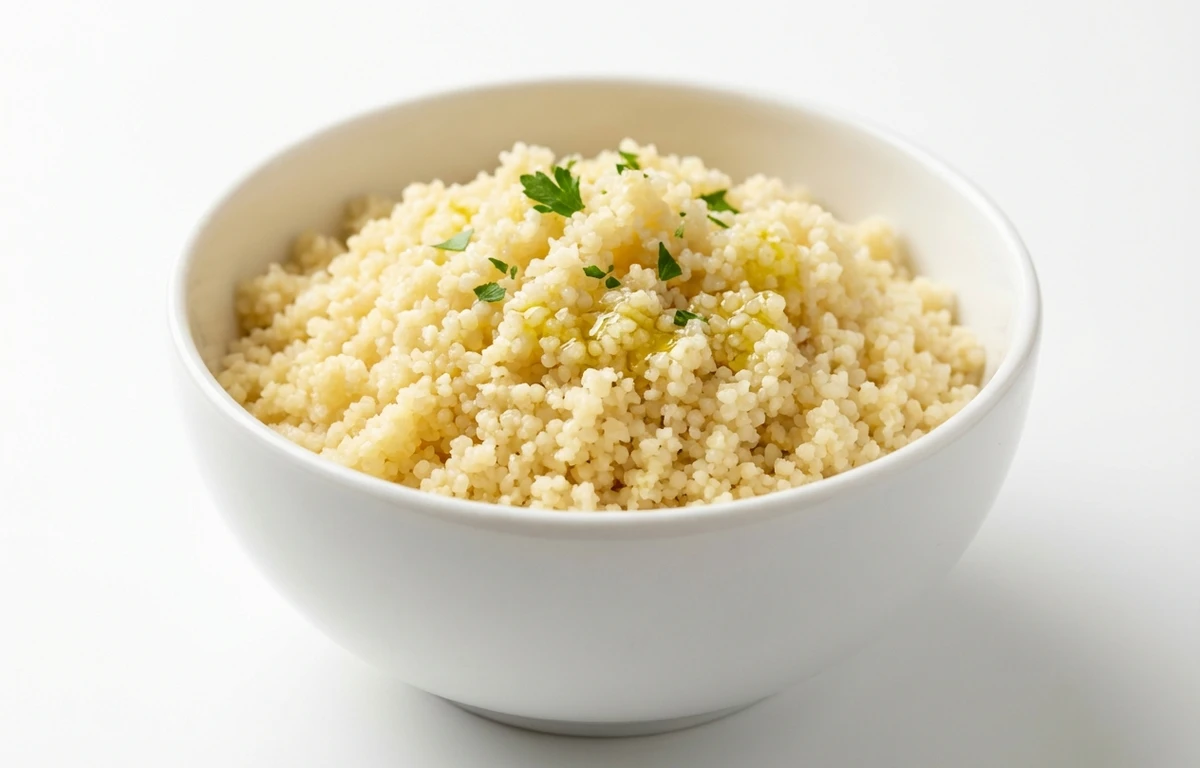
cooked couscous.
VegetarianVeganGluten-freeDairy-freeNut-freePeanut-freeSoy-freeEgg-freeShellfish-freeHoney-freeAlcohol-free
ALSO KNOWN AS
steamed couscousprepared couscouskuskuskusksu
SERVING
CALORIES
112
PROTEIN
3.8g
CARBS
23.2g
FAT
0.16g
FIBER
1.4g
NUTRITION PROFILE · per 100 g
Everything in this ingredient.
MACRONUTRIENTS
Calories112kcal—
Protein3.8g8%
Carbohydrates23.2g8%
Fiber1.4g5%
Sugar0.10g0%
Total fat0.16g0%
Saturated fat0.03g0%
Trans fat0g—
Cholesterol0mg0%
Water72.6g—
MINERALS
Sodium5.0mg0%
Potassium58mg1%
Calcium8.0mg1%
Iron0.38mg2%
Magnesium8.0mg2%
Phosphorus22mg2%
Zinc0.26mg2%
Copper0.04mg4%
Manganese0.08mg3%
Selenium27.5µg50%
VITAMINS
Vitamin A0µg0%
Vitamin C0mg0%
Vitamin D0µg0%
Vitamin E0.01mg0%
Vitamin K0.10µg0%
Thiamin (B1)0.06mg5%
Riboflavin (B2)0.03mg2%
Niacin (B3)0.98mg6%
Pantothenic acid (B5)0.37mg7%
Vitamin B60.05mg3%
Folate (B9)15µg4%
Vitamin B120µg0%
%DV based on a 2,000 cal diet. Source: USDA FoodData Central. A dash in the %DV column means there’s no established Daily Value for that nutrient.
MEASUREMENT CONVERSIONS
How much is what.
1 cup157g
1 tablespoon10g
1 teaspoon3.3g
1 oz28.4g
1 lb453.6g
1 ml0.7g
1 liter650g
HEALTH BENEFITS
Why eat it.
- ✓Excellent source of selenium which acts as a powerful antioxidant
- ✓Low in fat and cholesterol-free
- ✓Provides a quick source of plant-based energy
- ✓Contains essential B-vitamins for metabolic health
- ✓Supports heart health due to low sodium content
COOKING TIPS
In the kitchen.
- 1Always fluff with a fork after steaming to prevent the grains from clumping
- 2Use vegetable or chicken broth instead of water to infuse more flavor into the grains
- 3Add a teaspoon of olive oil or butter to the hot water before adding couscous for a silkier texture
STORAGE
Keep it fresh.
- Store cooked couscous in an airtight container in the refrigerator for 3 to 5 days
- Can be frozen for up to 3 months; thaw in the fridge before reheating
- If it develops an off-smell or visible mold, discard immediately
FAQ
Frequently asked questions.
How long does cooked couscous last in the fridge?
Cooked couscous stays fresh for 3 to 5 days when stored in a sealed, airtight container in the refrigerator.
Can I freeze cooked couscous?
Yes, cooked couscous freezes well. Spread it on a baking sheet to cool, then transfer to a freezer-safe bag for up to 3 months.
Is couscous gluten-free?
No, couscous is made from semolina flour, which is derived from durum wheat, so it contains gluten.
What is the best substitute for couscous?
Quinoa is the best gluten-free substitute. Bulgur wheat or orzo pasta are also excellent alternatives depending on the dish.
Do I need to rinse couscous before cooking?
No, unlike rice or quinoa, couscous does not need to be rinsed before cooking as it is a pasta-like product.
How do I reheat cooked couscous without it getting dry?
Reheat it in the microwave with a splash of water or broth, covered, or steam it briefly on the stovetop.
Is couscous a grain or pasta?
Technically, couscous is a type of pasta made from semolina flour and water, though it is nutritionally and culinarily treated like a grain.
What is the standard water-to-couscous ratio?
The standard ratio is 1:1. Use 1 cup of boiling liquid for every 1 cup of dry couscous.



















