
animal product
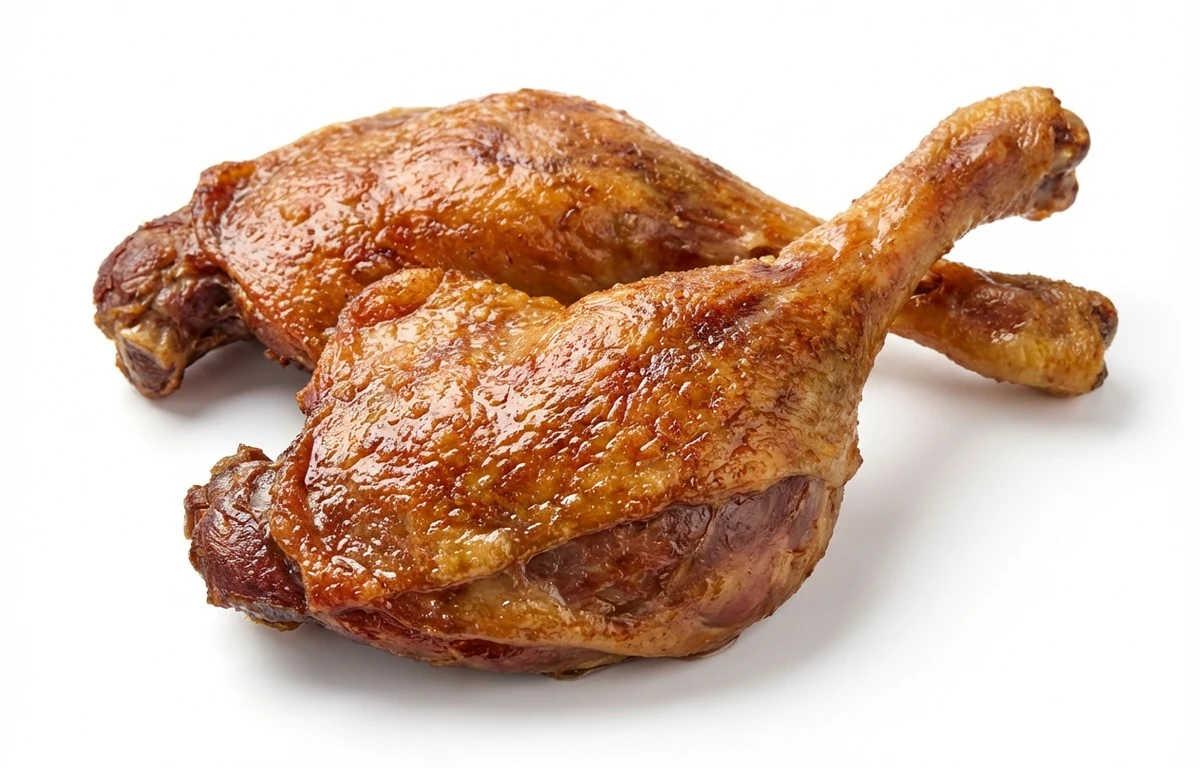
Cooked Duck Confit Legs.
VegetarianVeganGluten-freeDairy-freeNut-freePeanut-freeSoy-freeEgg-freeShellfish-freeHoney-freeAlcohol-free
SERVING
CALORIES
380
PROTEIN
22g
CARBS
0g
FAT
32g
FIBER
0g
This ingredient is flagged as naturally gluten-free. Per 100 g, it provides 2.0 µg of vitamin K.
NUTRITION PROFILE · per 100 g
Everything in this ingredient.
MACRONUTRIENTS
Calories380kcal—
Protein22g44%
Carbohydrates0g0%
Fiber0g0%
Sugar0g0%
Total fat32g41%
Saturated fat11g55%
Trans fat0g—
Cholesterol120mg40%
Water40g—
MINERALS
Sodium650mg28%
Potassium250mg5%
Calcium10mg1%
Iron2.5mg14%
Magnesium20mg5%
Phosphorus200mg16%
Zinc2.0mg18%
Copper0.15mg17%
Manganese0.05mg2%
Selenium25µg45%
VITAMINS
Vitamin A10µg1%
Vitamin C0mg0%
Vitamin D0.10µg1%
Vitamin E0.50mg3%
Vitamin K2.0µg2%
Thiamin (B1)0.20mg17%
Riboflavin (B2)0.30mg23%
Niacin (B3)5.0mg31%
Pantothenic acid (B5)1.0mg20%
Vitamin B60.30mg18%
Folate (B9)15µg4%
Vitamin B120.30µg13%
%DV based on a 2,000 cal diet. Source: USDA FoodData Central. A dash in the %DV column means there’s no established Daily Value for that nutrient.
MEASUREMENT CONVERSIONS
How much is what.
1 oz28.4g
1 lb453.6g
1 piece250g
HEALTH BENEFITS
Why eat it.
- ✓Excellent source of high-quality protein
- ✓Rich in B vitamins (B3, B6, B12) essential for energy metabolism
- ✓Provides essential minerals like iron, zinc, and selenium
- ✓Contains healthy fats, though high in saturated fat
- ✓Can be part of a balanced diet in moderation
COOKING TIPS
In the kitchen.
- 1To reheat, place legs skin-side down in a cold pan and slowly render the fat over medium-low heat until skin is crispy.
- 2Finish in a hot oven (around 200°C/400°F) for 10-15 minutes to ensure it's heated through and skin is extra crisp.
- 3Serve with simple accompaniments like potatoes, green salad, or lentils to balance the richness.
STORAGE
Keep it fresh.
- Store unopened confit legs in a cool, dark place or refrigerator for several months.
- Once opened, transfer to an airtight container and refrigerate, consuming within 5-7 days.
- For longer storage, freeze cooked confit legs for up to 3 months.
FAQ
Frequently asked questions.
Is duck confit healthy?
Duck confit is a nutrient-dense source of high-quality protein and essential minerals like iron and zinc. While it is high in calories and saturated fat due to the traditional slow-cooking process in duck fat, it can be part of a balanced diet when consumed in moderation.
How much protein is in duck confit?
A 100g serving of cooked duck confit legs provides approximately 22g of protein. This makes it an excellent source of amino acids necessary for muscle repair and overall body function.
Is duck confit keto-friendly?
Yes, duck confit is very keto-friendly as it contains 0g of carbohydrates and is high in fat (32g per 100g). It provides the high fat-to-carb ratio required for a ketogenic diet while offering substantial protein.
Is duck confit gluten-free?
Naturally, duck confit is gluten-free as it consists only of duck meat, duck fat, and seasonings like salt and herbs. However, always check the label of pre-packaged versions to ensure no gluten-containing additives or thickeners were used in the curing process.
How do you reheat cooked duck confit legs?
The best way to reheat duck confit is in the oven or a pan to crisp the skin. Place the legs skin-side down in a skillet over medium heat until the fat renders and the skin is golden-brown, or bake at 375°F (190°C) for about 10-15 minutes.
How long does cooked duck confit last in the fridge?
If the duck legs are fully submerged in their cooking fat, they can last for several weeks in the fridge. Once removed from the fat or opened from a vacuum seal, they should be consumed within 3 to 5 days.
What should I serve with duck confit?
Because duck confit is very rich, it pairs well with acidic or earthy sides. Common accompaniments include braised red cabbage, lentils, roasted potatoes, or a fresh green salad with a sharp citrus vinaigrette to cut through the fat.
SAME CATEGORY



















